Workers BushTelegraph discusses current and past events, books and film with the aim of sharing worker political education and consciousness.
WBT poses 3 questions: who owns the land, workers control of production and democratic rights.
Arrow Energy: My name is Cecile Wake I am the CEO of Arrow Energy, a subsidiary of Shell.
4PR: What are you doing in Queensland?
Cecile Wake: I am from Queensland … I graduated from University of Queensland in Economics and Law the 1990s.
4PR: No, I mean what is Arrow Energy doing?
Cecile Wake: We are fracking and mining for coal seam gas in the Surat basin.
4PR: Where’s that?
Cecile Wake: It is a big area taking in the area south of Bowen, the headwaters of the Condamine and so on?
4PR: Where are your mines?
Cecile Wake: In places like Chinchilla on the Darling Downs not far from Dalby.
4PR: How many wells do you have there?
Cecile Wake: About 40.
4PR: Are they profitable?
Cecile Wake: Not really.
4PR: Why are you there then?
Cecile Wake: We hope to expand our mine heads by a factor of ten and then we will be profitable?
4PR: How’s that?
Cecile Wake: We need to produce more gas and the cost of production is high in this part of the world.
4PR: Why’s that?
Cecile Wake: We are used to dealing with farmers in the third world, they are mainly peasants; whereas the farmers we deal here have university degrees.
4PR: Oh, that does not sound like the Queensland I grew up in … the National Party had difficulty getting farmers who could read and add up to run for state election …
Cecile Wake: Things have moved on since the days of Bjelke-Petersen.
4PR: Apart from farmers, who do you deal with?
Cecil Wake: The Minister for Energy, Renewables and Hydrogen and for Public Works and Procurement.
4PR: Anyone else?
Cecile Wake: The Minister for Resources and Minister for Regional Development and Manufacturing and Minister for Water
4PR: Sounds like the environment is pretty important in your job.
Cecile Wake: Well yes … Coal seams contain water. We pump water from coal seams to lower in-seam pressure, releasing trapped gas and allowing it to flow to coal seam gas (CSG) wells.
4PR: Did the ‘Lock the Gate’ mob oppose coal seam gas and fracking?
Cecile Wake: Who did you say?
4PR: ‘Lock the Gate’ farmers.
Cecile Wake: To be honest I have never heard of them.
4PR: They were farmers concerned that you were interfering with the ground water and that would affect the 25,000 water bores in Queenland.
Cecile Wake: We answered the complaints of the few farmers who were concerned.
4PR: So how come you have so few wells?
Cecile Wake: As I say the farmers we deal with have University degrees and drive a hard bargain. The royalties we pay them are considerable.
4PR: But the farmers don’t own the coal seam?
Cecile Wake: Well yes, the state owns the seams where we drill which can be deep beneath the surface of agricultural land.
4PR: Then how do you get at the coal seam gas?
Cecile Wake: We have come up with an innovative process. On intensively farmed land, on say the Darling Downs, we group multiple wells on single, large pads. From the surface, the bores slant away at around 70 degrees to intersect multiple, thin coal seams.
4PR: What is that called?
Cecile Wake: Deviated drilling. It lets us reach the same amount of gas underground from a much smaller area on the surface.
4PR: Which means you don’t have to deal with so many farmers?
Cecile Wake: Yes I suppose that’s true. It reduces our impacts on high-production farmland. But farmers tend to buy out other farmers and so, in the end we are dealing with some pretty big Agri-businesses.
4PR: Yes, I have never quite understood farmers who have a Lock the Gate triangle right beside a for sale sign.
Cecile Wake: As I say, I have never come across Lock the Gate.
4PR: Alan Jones the radio shock jock from Sydney was one of them. He came from the Darling Downs and knew the leader of Lock the Gate Drew Hutton who was a perennial candidate for the Greens.
Cecile Wake: Oh, I was a partner at leading international law firm Herbert Smith Freehills in London for nearly ten years so that may be why I haven’t heard of Lock the Gate.
4PR: Doesn’t the drilling cause sinkholes.
Cecile Wake: What mining operation doesn’t, there are sink holes everywhere.
4PR: What do you do in your spare time?
Cecille Wake: I represented Australia in Modern Pentathlon at seven World Championships and multiple World Cups, I am a member for the University of Queensland Senate and I have a husband and two children.
4PR: Oh, is that all (dryly). The only UQ Senators I have ever heard of are Sallyanne Atkinson, former Lord Mayor of Brisbane, an ex-ABC journo by the name of Lee Duffield and Mellissa Naidoo, a doctor and medical executive.
Cecile Wake: Oh, I don’t know them. I look forward to meeting them.
4PR: It sounds like you should be working for a bigger company rather than having to deal with 40 pesky Queensland farmers.
Cecile Wake: Oh, I am a director of Shell … we are global petrochemical company with more than 80,000 employees in more than 70 countries. I’m on the board of the Australian derivative.
4PR: Those farmers had better watch out. Are you worried that one of your kids will pick up on the words of Greta Thunberg and participate in a school strike for climate action?
Cecile Wake: What words would they be?
4PR: You know the speech where Greta furiously attacked world leaders at the United Nations. Let’s have a listen.
Greta Thunberg: This is all wrong. I shouldn’t be up here. I should be back in school on the other side of the ocean. Yet, you will come to us young people for hope. How dare you? You have stolen my dreams and my childhood with your empty words. Yet, I’m one of the lucky ones. People are suffering. People are dying, entire ecosystems are collapsing. We are in the beginning of a mass extinction. And all you can talk about is money and fairy tales of eternal economic growth. How dare you?
For more than 30 years, the science has been crystal clear. How dare you continue to look away? And come here saying that you’re doing enough when the politics and solutions needed are still nowhere in sight? You say you hear us and that you understand the urgency. But no matter how sad and angry I am, I do not want to believe that; because if you really understood the situation, and still kept on failing to act, then you will be evil and that I refuse to believe.
Cecile Wake: Do you use gas in your home?
4PR: What’s that got to do with it?
Cecile Wake: People who benefit by the use of the gas produced should not be standing on their high horse lecturing us when we are doing our best to transition to renewable energy.
4PR: But isn’t Greta criticising the whole system of fossil fuel extraction to make profits while forgetting about the harm that this is doing to Nature?
Cecile Wake: We operate in a way that respects nature, and we work to protect ecosystems. Minimising our environmental impact and setting goals to improve helps us find better ways to operate. We have had guiding principles and standards in place for many years. Now we are stepping up our environmental ambitions and shaping them to contribute to the UN Sustainable Development Goals.
4PR: But don’t you inflate the price of the gas at the well head so that you can make a loss here when you sell it on overseas?
Cecile Wake: We meet all our obligations under transfer pricing agreements with the Australian Tax Office.
4PR: What is transfer pricing?
Cecile Wake: We use the arm’s length principle when pricing our gas on the international market. This is a benchmark set by the Australian Tax Office.
4PR: Why then when I try to look up Arrow Energy’s Tax Transparency Report it comes up with a blank page on your website despite your company having an estimated annual revenue currently of $295.5M per year. Why has your tax record been removed?
Cecile Wake: That is commercial-in-confidence information. We meet all our current tax obligations. We provide 510 jobs in Queensland and safely and sustainably supply gas to the Townsville and Swanbank Power Stations among others. We have been doing this since the early 2000s.
4PR: How is that possible when all you do is provide fossil fuels for consumption?
Cecile Wake: Our parent company, Shell Global, is working to become a net-zero emissions energy business by 2050, in step with society’s progress towards the goal of the UN Paris Agreement on climate change.
4PR: What does that mean here in Australia? Cars, trucks and motorbikes are the only part of the economy producing more emissions every year … there is actually a growth in CO2 emissions in Transport, isn’t there?
Cecile Wake: Shell are addressing that by putting in charging points for electric vehicles right around the country. We have the full support of state and federal governments.
4PR: I think we should leave it there.
Song Our House is on Fire – Phil Monsour and the Crisis Actors
Photo Sandstone in Karawatha Forest – Ian Curr
Please Note: Both Cecile Wake and 4PR are played by voice actors.
John Jiggens (Bay FM), John Shipton (Julian’s dad), Barnaby Joyce (Deputy Prime Minister), 4PR – Voice of the People.
4PR – Voice of the People
It was not a good week for Julian Assange. The UK High Court overruled the lower court decision that denied the US extradition request and it was reported that Assange suffered a stroke while viewing the High Court decision. Bay FM reporter Dr John Jiggens spoke to Julian Assange’s father, John Shipton, about the High Court decision, Barnaby Joyce’s intervention and the health of his son.
John Shipton (father of Julian Assange)
… his medical condition is part of …. clearly he’s had a stroke. And he’s been given medication to address that metal. So he’s had two other lots of medications for his disposition if you wish to use that word. I don’t like saying illness. I find it fearful for me. Yeah, that’s his current mental and physical condition.
Nils Maelzer’s (UN Special Rapporteur on Torture) analysis and my analysis over the years … repeated to you is that it’s clearly ‘a murder in slow motion‘, and it is committed by the United Kingdom. It’s often done (said?) that the responsibility of the United Kingdom for this ‘slow motion murder‘ is allocated to the United States by saying that the United Kingdom is a proxy. This is not the case.
The United Kingdom is clearly responsible for the actions it’s taken and continues to intensify the imposition of these heinous is the only word I can think of … heinous impositions on Julian Assange, one after the other after the other, reaching peak of intensity just the other day, when Burnett, the Chief Justice, Burnett, Lord Chief Justice Burnett declared in the hearing the two day hearing that the Laurie Love case (British activist previously wanted by the United States for his alleged activities with the hacker collective) would not be precedent; that is, a person not to be extradited, because there has Aspergers and they may commit suicide. That’s not precedent, he said.
And then the ruling came out just the other day, confirming that it’s not precedent, and that Julian be sent to the United States to spend the rest of his days in misery dungeon. This is a responsibility on the shoulders of the English judiciary … but. I’ll say it again, this most vicious hate, the most savage mouth, the most unscrupulous, lies and calumny’s of all emanated from the institutions of the United Kingdom and with the assistance of Sweden and with the participation in the last two years of the United States and the acquiescence the Australian government.
John Jiggens
What did you make of Barnaby Joyce’s intervention?
John Shipton
The deputy prime minister, has shown most admirable courage.
Insane, while ill in a hotel room in Washington, in the belly of the beast, that Julian Assange must be brought home to Australia not sent to the United States not extradited to the United States. And with considerable pride and satisfaction, I (indistinguishable) add to everybody that the Deputy Prime Minister, Barnaby Joyce, while sick with COVID in a hotel room in Washington made the strongest possible statement, that Julian, not be extradited to the United States and sent home to Australia.
If there is a crime that is committed in the United Kingdom, then he’d be tried for that crime in the United Kingdom. Other than that, he comes home to Australia.
__oOo__
Interview with Barnaby Joyce
4PR – Voice of the People
Could we start by you introducing yourself.
Barnaby Joyce
Oh, Ok … I’m Barnaby Joyce, Member for New England, leader of the Nationals and Deputy Prime Minister.
4PR – Voice of the People
Why have you come out in support of Julian Assange?
Barnaby Joyce
I have consistently supported Assange, I don’t like the man but he does have rights. By the way, I supported David Hicks when he was locked up in Guantanamo Bay in Cuba.
4PR – Voice of the People But why do you support him?
Barnaby Joyce
I have read widely on the rights of man, Spinoza, Locke, Kant and have formed the opinion that the man deserves a second chance.
4PR – Voice of the People
So what do you find so compelling in the case of Julian Assange?
Barnaby Joyce
I find the non-anglo Spinoza in particular compelling. His defense of democratic governance, freedom of thought and expression, and the subordination of religion to the state is a political masterpiece.
4PR Voice of the People
So when did this philosophical side of your personality emerge?
Barnaby Joyce
At Saint Ignatius’ College, Riverview. Saint Ignatius of Loyola was God’s first soldier. The Yanks do not seem to appreciate that. Certainly the English don’t.
4PR Voice of the People
Is this an Irish thing, your views on the English, I mean?
Barnaby Joyce
Well I am the son of James Joyce … um, not the writer, the farmer. He was a tough old coot but fair.
4PR Voice of the People
Have you got anything to say to Peter Dutton on the return of Assange to Australia?
Barnaby Joyce
Well no, not really Peter is not much of a reader, he’s C of E and an ex copper, the Dutton’s were Scottish squatters so we have little in common really. Also Peter is not particularly up on ‘the rights of man’.
4PR Voice of the People Is there anything practical that you have in mind that you can do to assist in Assange’s release and return to Australia?
Barnaby Joyce
Not really, I’m banged up with Covid in Washington Hotel room. There is not much I can do really.
4PR Voice of the People
Oh I hope you get well soon.
Barnaby Joyce
I’m double vaxxed and getting a booster shot on Friday and I don’t feel particularly unwell.
4PR Voice of the People
Did you think supporting Julian would get you some good publicity and allow yourself to be distanced from the Libs?
Barnaby Joyce
Well no. I should probably say that I do feel some sympathy for Assange because of my own indiscretions with the ladies. I mean I don’t like his politics or respect him as a man but I am no hypocrite.
4PR Voice of the People
Ok, I think we should leave it there before we hear your last confession (smiling).
Lets go out with a ‘Song for Julian’ by Dermot Dorgan.
Pls Note – Barnaby and 4PR are played by voice actors.
Friends of Julian Assange at the Trades & Labour Council hall in Brisbane, Australia
“I don’t believe that China represents a military threat to Australia” – Associate Professor Marianne Hanson, Vice-Chair of ICAN Australia – the International Campaign to Abolish Nuclear weapons.
“When the sun scorched the earth, a child was being born in the mountain, in a cradle of hard stone that poisoned him.” – Strike The Beast Hard by Ruben Galindo
Why go to war with China when you can buy a perfectly good bicycle from there for $100 and if you have $16 left over you can add a bike rack to carry your groceries home on.
Last Friday on International Human Rights Day, the independent and peaceful Australian Network (IPAN) organized a rally at Brisbane Square. One of the invited speakers was the former Attorney General and Environment Minister Mr Rod Welford who said that the new pact with the United States and the United Kingdom is ‘an election stunt‘.
Let’s go now to the announcement of the new pact called AUKUS made by the Prime Minister, Scott Morrison.
Scott Morrison (Prime Minister): “Today I announce a new partnership, a new agreement that I describe as a forever partnership, a forever partnership for a new time between the oldest and most trusted friends, forever partnership that will enable Australia to protect our national security interests to keep Australians safe. But I’ve got to say my greatest thanks to my partners in this forever partnership, this AUKUS partnership, to President Joe Biden, and the Prime Minister Boris Johnson. I introduce them today as great friends of freedom and great friends of Australia. And they truly are. They understand what goes to the heart of our relationship, the security and defence of peace and freedom. That is what is always has sustained us.”
4PR – Voice of the People
That was the Prime Minister of Australia speaking at a nuclear submarine / AUKUS Alliance press conference on the 16th of September 2021. So this podcast is going to summarize the response to that announcement and try to analyze what is going on with it. So let’s go now to the former Labor attorney General and Environment Minister in Queensland, Rod Wellford, when he’s speaking to a crowd on International Human Rights Day in Brisbane square last Friday, on the 10th of December,
Rod Welford – former Qld Attorney General
Friends, one year short of 50 years ago, on the second of December 1972, Australians elected a government that took the first tentative steps to building this nation to be a proud, peaceful and independent nation in the world. It was the essence of those three years of Whitlam government that brought us into a more international footing. We recognize China for the first time in our short history, the position that the Australian government has put us in is effectively to say that Australia should be on a war footing with China. It is an election stunt. And there’ll be plenty more election stunts like this, designed to play to the fears of the Australian people in the months ahead in the run up to next year’s Federal election. It’s our job, today, to encourage Australians, to help Australians see through that cynicism. And when they go to the ballot box next year. See that the only way to change Australia and to change the world towards a peaceful path is to re-establish Australia as an independent and a peaceful nation. And we will only do that if we change the government next year.
Australian Prime Minister Goff Whitlam sits down with Chaitman Mao in 1972
4PR – Voice of the People
Mr. Welford, who was a minister in the Beattie and Bligh Labor governments in Queensland made no mention of successive Australian Labour government’s lack of independence from the United States. Labor governments’ willingly supported Indonesian invasion of East Timor. The Hawk Labor government supported Australian involvement in the first Gulf war against Iraq in 1991. And Labor supported for murderous war in Afghanistan where war crimes were committed and (finally) Labor’s opposition leader, Anthony Albanese, threw his support behind the AUKUS / submarine deal, saying ‘a close relationship with the US is among the three pillars of a labour government’s future foreign policy‘.
Does Mr. Wellford ‘s opposition to AUKUS and to the purchase of the nuclear submarines, does that place him at odds with his own party over the US Alliance and over the purchase of these attack class submarines?
Union Choir sings
“You are not my enemy these governments do not speak for me. And I am one just one of many who wish you well.”
4PR – Voice of the People
That was the union choir singing at the anti-AUKUS and anti-nuclear sub rally last Friday. The next speaker was Kristen Perissinotto, the media officer of the electrical trades union, and she spoke about workers rights and conditions, the impact of war on climate, (impact) on First Nations people, and on refugees and people seeking asylum. Ms Perissinotto made a simple comparison of the cost of nuclear submarines, and that women’s safety, of refugees and creating jobs for workers. Let’s go to her now.
Kristin Perissinotto ETU
So speaking, of course, I know the coalition are all about the economy. So I’ll speak their language, one nuclear submarine will cost $20 billion to build, estimated, and (its) estimated our entire cost will be $100 billion. So I thought it would be fun to compare that to some of the spendings that the LNP have committed to in the 2021 budget. And the first one, an issue close to my heart, is the spend on women’s safety. So this was Scott Morrison’s alleged women’s budget in 2021. And he’s putting aside $1.1 billion for women’s safety. That’s $86 per Australian woman. And it’s also 1%, or less than 1% of the entire cost of the estimate for all of our nuclear submarines.
Kristin Perissinotto ETU
So the Liberals go on about how good they are for the economy, but they’ve only pledged $3 billion for new jobs. And I’m no economic expert, but I do know that people need a secure job in order to contribute meaningfully to the economy and continue to do so into eternity. So 3% of what we’re going to be spending on nuclear submarines will be spent on jobs.
Kristin Perissinotto ETU
$0 was pledged for supporting refugees and people seeking asylum, although a shitload more was pledged for keeping them out of this country. Even though like I said, with Australia’s involvement in the Afghanistan war, and all of our partnerships across the world, we have a lot on our hands when it comes to some of those refugees, and yet nothing spent on supporting refugees and people seeking asylum. So obviously, that is 0% of the price the we’re going to be spending on nuclear submarines.
Kristin Perissinotto ETU
And finally, the coalition’s investment in climate action, the LNP allocated $30 million for one renewable project in the Northern Territory, nothing for just transition to workers for workers, which is what something we desperately need nothing towards a clean recovery from COVID. And nothing towards a genuine effort to decarbonize. That is less than 0.1% of the cost of just one submarine spent on our climate.
4PR – Voice of the People
That was Kristin Perissinotto from the electrical trade union speaking at the rally. Next up was a spokesperson from the International Campaign to Abolish nuclear weapons, Marianne Hanson, and she warned the rally last Friday against the acquisition of nuclear powered submarines.
Marianne Hanson (ICAN)
Here’s one of the key problems. To date, no country which doesn’t have nuclear weapons, there are nine states that have nuclear weapons … apart from those states, no country in the world has been given this technology, nuclear powered submarines. We are therefore going to break this taboo. And if it does go ahead, this will set a very dangerous precedent.
4PR – Voice of the People
Ms Hanson told the rally that other states are trying to copy Australia and get access to the nuclear submarine technology.
Marianne Hanson (ICAN)
Already, we have other states in the world saying well if Australia is going to be given this technology and is permitted to go ahead and use what is highly enriched uranium in their submarines; now, the highly enriched uranium which will power the submarines is exactly the same material that is used in nuclear bombs. Uranium which has been enriched to 95 – 96%. It can be converted into weapons very, very quickly. And that’s the problem.
Marianne Hanson (ICAN)
Already Iran has out as I say other states, South Korea, even Canada sought to have this kind of exemption and all these states have been denied. Suddenly, in AUKUS, Australia is given this technology or were promised to have this technology So there are big problems here, for our reputation and presenting a very, very risky precedent.
Marianne Hanson (ICAN)
Now, the nine states that have these weapons have promised to eliminate them, but they are not living up to their promises. And that is why I can respond, the International Campaign to Abolish nuclear weapons … we managed to get a treaty in the United Nations. Our organization won the Nobel Peace Prize for its efforts. Of course, the government didn’t even bother to phone any of us to say congratulations.
4PR – Voice of the People
After we marched across to Southbank, Marianne Hanson pointed out to the protesters that Q super, the Queensland superannuation fund for most of the public servants, is very much involved in the nuclear industry, and that people should write to that organization and say that it should divest from all of the nuclear companies that it is involved with. So that leaves us till the end of the rally, there was a resolution put to the rally that we should not support the purchase of the submarines and that we should be getting out of AUKUS, this AUKUS pact that the federal government is putting, and this is the response by the Department of Defense in regard of the concerns put forward by Ms. Marianne Hanson at the rally. And by her organization, ICAN.
Defence Dept Spokesperson
AUKUS … offers great opportunities for defense to keep that capability edge in new and different ways, moving into the future. Prime Minister, in terms of the nuclear powered submarine venture, we will over the next 12 to 18 months, undertake that detailed work with US and UK partners. I know we we’ve been directed by government to absolutely maintain the highest standards of safety and security when it comes to the development of a nuclear capability …. that is important for the Australian people Prime Minister but it’s also important for our people who will operate these capabilities for decades to come. So I reassure you and the government and the Australian people of Defence’s absolute commitment to the highest international standards of nuclear safety and security.
4PR – Voice of the People
Similar assurances were given when Malcolm Fraser and the Hawk governments both decided that Australia needed to have a uranium industry and to enter the nuclear fuel cycle. And of course, Australian uranium ended up in some meltdowns in both Chernobyl and Fukushima, despite all the assurances given at the time about the high standards of safety that would be used. Finally, Janette McLeod put two resolutions to the rally. Jeanette McLeod is from the Women’s International League for Peace and Freedom. Here are the resolutions:
Janette McLeod WILPF
So the first resolution that we’ll put today is around the Brisbane City Council. As people probably know, the Brisbane City Council has had for a long time, with a bit of a gap in the middle, a nuclear free zone policy. And that policy is still in existence. So that’s, that’s the first thing. And then the second thing is that even though there’s this in Brisbane, there is nothing at the state government level regarding being nuclear free, which is, you know, pretty absurd. So, let’s put up a show of hands to say, Brisbane City Council, please actually actively keep your pot nuclear free policy, make sure that it’s actually implemented. Let’s not let any nuclear subs sneak up the Brisbane River. And further the state government, could you introduce a nuclear free policy for the whole of Queensland because that’s what we need. So let’s have a show of hands. Great
4PR – Voice of the People
So there we have it, an Australian government that’s hell bent on testing its relationship with biggest northern neighbor, China. Of course it takes some degree of insanity to test that relationship when Australia is at the economic mercy of the Chinese government. Just about every major manufactured good that we acquire here in Australia is manufactured in China. And also so many of our natural resources are traded with China. And so to enter into a military confrontation over the South China Sea where, it would seem to me , the main objective of the Chinese is to have access to the shipping routes and the shipping lanes that it’s huge trade services. So to try to to prevent them from doing that by concocting some kind of relationship with Taiwan doesn’t really make much sense at all. So this is Ian Curr signing off from 4PR – voice of the People let’s go out with a song. This is PEGALE DURO AL FIERO or Strike the Beast Hard
Frontera (Sue Monk, Sergio Aldunate, Lachlan Hurse and others)
Frontera (Sue Monk, Sergio Aldunate, Lachlan Hurse and others)
Translated from the Spanish …. When the sun scorched the earth a child was being born in the mountain, in a cradle of hard stone that poisoned him. – Strike The Beast Hard Words and music: Ruben Galindo Original arrangement: Grupo Moncada
Frontera (Sue Monk, Sergio Aldunate, Lachlan Hurse and others)
When the sun scorched the earth a child was being born in the mountain, in a cradle or hard stone that poisoned him. He opened his eyes to the world and saw nothing but misery, he touched the cruellest inferno where the fire attacked him; he grew up among the brambles where the smoke was like grape-shot. He rises up above the Andes with his warrior’s poncho seeking a path, a path that he desired, that he wanted as a child; he never complained about being American by blood, sowing his determination and with his hands pulling out the spur of evil. Strike the beast hard because if you don’t it will leave you hunger; strike it because they’ll kill you and they’ll cover you with earth, sing your thousand songs and set out walking with your wounds, and together we’ll go to the forest to sing, then, to life. They’ve given you very little bread for the sweat which you burned, you spent your whole life extracting riches for the beast; it’s not time for fear because the sun’s gone bad, the sky’s covered over with terror and the fire’s sputtering out. Now you’ve found the road that the light gave to your life, raise the child who follows you and teach him to sing, teach him that man has a lot of struggling to do, put your cope over him and set him on the road to struggle, jump from the Andes and shout over the earth.
SPEAKERS
Scott Morrison (Prime Minister), Marianne Hanson (ICAN), Janette McLeod WILPF, Rod Welford – former Qld Attorney General, Kristin Perissinotto ETU, Union Choir, Frontera (Sue Monk, Sergio Aldunate, Lachlan Hurse and others), 4PR – Voice of the People, Defence Dept Spokesperson
Welcome to the Paradigm Shift on FM 102.1 4ZZZ Fridays at noon. We challenge the assumptions of our current society, to resist oppression …more
Wed 1 Dec 2021
Repression against Climate Activists
Paradigm Shift (4ZZZ Fridays at Noon) – December 3, 2021
This week we talk about the state repression of climate activism. I speak to Yusur Al-Azzawi from the Human Rights Law Centre about the study they’ve just published on the topic, and I also chat to two people who know it first hand – Juliet Lamont and Sergeio Herbert have in the last few weeks been given prison sentences for climate protests.
Playlist The Lurkers – Who’s got a padlock and chain? Insurge – Lock on Paul Spencer – Make some music Anne Feeney – Have you been to jail for justice?
How Abbott Point Coal Terminal Operates
Thanks to Paul Jukes we get a bird’s eye view of how Adani coal gets shipped from North Queensland near Bowen.
Welcome to the Paradigm Shift on 4 Triple Zed 102.1 where we challenge the assumptions of our current society to resist oppression and investigate alternative ways of living for a world based on justice, solidarity and sustainability.
Welcome to the Paradigm Shift on 4 Triple Zed, 102.1 FM, it is your local community radio station, bringing you all the arts and news that matters to your local community. My name is Andy and I will be with you for the next hour. And today on the show, we are going to be talking about the repression of climate activism in Australia. I did a bit of field research actually, for this show. This week, I locked myself on to the train tracks that were carrying first load of coal from ADANI’s Carmichael mine, ADANI are claiming it was just a test run. But it was a train and pretty much full of coal. It’s been a long campaign against that mine. And we don’t want to let it just go by let them export their call without people getting in the way of it.
Because that is what we need to do to avoid the climate crisis. People need to disrupt the system that is destroying our planet. And so myself and a few others, locked ourselves to the tracks were, arrested and are now in the legal system. I am on bail, hence the fact I’m not at my usual mobile studio, I record this and in fact, I don’t have my microphone because I left it there. So apologies about the sound quality. On today’s show, because I’m on bail conditions that say I can’t go back to the place that is essentially my home for half the year in central Queensland. That’s one of the things that we’ll be talking about in the course of the show, the use of things like bail conditions.
Andy
So anyway, what’s coming up, I spoke with Yusur Al-Azzawi from the Human Rights Law Center, they’ve just put out a study about the legal repression of climate activism in this country. And so I talked to her about the findings of that study. And then I talked to a couple of people who know firsthand the effects of climate repression, because they have in the last couple of weeks being sentenced to prison for doing climate activism. I speak to Juliette Lamont, who locked onto the same train as I did the other day. And yesterday was given a one month prison sentence suspended for nine months, thankfully, so she can talk to us on the Paradigm Shift. And I also spoke with the infamous Sergieo Herbert, who a couple of weeks ago, was sentenced to one year in prison for his 29th arrest for climate activism. He is out on bail with an appeal pending and so I spoke to him. The media does a lot of talking about Serge and not that much talking to him. And so I thought we’d get a bit of the the rationale behind why he does what he does. So that’s what’s coming up. Stay tuned. I think it is an important discussion and one that so rarely is talked about in discussion about climate change, we just talk about things, as they are not about what are the things behind the scenes that are making it harder for the people who want climate action to get their message across, when those who are pushing against it have so much access to political power and media power in this country. So it’s good to be digging behind the scenes of that. So let’s start off with Yusur Al-Azzawi from the Human Rights Law Center.
Andy
Could you start by introducing yourself?
Yusur Al-Azzawi
I’m Yousef al AZZAWI, and I’m a senior lawyer at the Human Rights Law Center.
Andy
And the Human Rights Law Center has just released a report and is called global warning, the threat to climate defenders in Australia, can you tell us why this report has been made?
Yusur Al-Azzawi
The report has really come about from an identification of what we see as an increasing trend of repression towards climate activists. And so we really wanted to take a closer look at the myriad of ways in which climate activists are being repressed. And to be able to pull it all together and look at what the whole picture presents. And so that sort of is really what drove it.
Andy
It seems to have been fortuitous, or unfortuitous, depending which way you look at it timing, the report came out just a couple of weeks ago. And then we’ve also had two people, two climate activists given custodial sentences in the last couple of weeks as well.
Yusur Al-Azzawi
That’s right. And really what the report reveals is that at a time when the stakes for the planet could not be higher, climate defenders are increasingly being targeted, prosecuted, intimidated and harassed simply for calling for action. And I think in the context of events that have surrounded the report being released, we really see that that just couldn’t be more clear and evident at the moment. And I’m not sure if you if this sort of crossed your desk at all, but the same the very same time the report was being released last week, the ABC broke a story about a government agency down here in Victoria, taking out, sort of allegedly spying on a climate defender who had criticized them.
Andy
Yeah, that’s another one of the things that you cover in your report is surveillance.
Yusur Al-Azzawi
Yeah, that’s right. So to sort of see this happening very much in real time. That’s why That’s precisely why we wanted to pull this report together for people to be able to see how these different threads are not isolated incidents, but rather a systematic and broad based attack on climate activism. And in terms of the surveillance. You know, Australian Governments and fossil fuel corporations have a history of engaging in surveillance and direct infiltration of charities, non for profits, grassroots organizations, who are protesting, and, you know, rarely are they held to account?
Andy
Yeah, oh, let’s go back to the start your report, its interesting that it was a report about legal issues by our lawyers. It doesn’t start with sort of something that happened in the courts or anything, but it starts with the influence of the fossil fuel industries in our parliament. Why did you start with that?
Yusur Al-Azzawi
We really saw that as being the underlying motivator. You know, the unregulated political influence of the fossil fuel industry, including through really large and often secret donations to political parties, is what we see as driving political inaction on climate change and also the repression of those calling for action.
Andy
So, speaking of that repression, he then go on to have a few different sections about the legal restriction of climate activism. So let’s talk briefly about each of them. The first is state governments bringing anti protest laws.
Yusur Al-Azzawi
So I mean, as you well know, Andy, the we’ve seen the introduction of harsh and at times unconstitutional anti protest laws in a couple of different jurisdictions across the country. These laws often directly target or disproportionately impact climate activists. In Queensland, of course, we’ve got the dangerous devices law. And in Tasmania, there is the what’s called the workplaces protection from protesters Act, which has actually been found several years ago, it was found unconstitutional by the high courts or parts of it were. And the Tasmanian Government is now up to its third attempt to bring that act into power. So it’s sort of tried to amend it after the High Court said it was a no go. That was unsuccessful. And just a couple of months ago, we’ve seen the government bring that. they’ve tried to amend that act again. And it’s really an unnecessary and disproportionate restriction on people’s right to peaceful advocacy. So it’s a bit of a bit of a watch and wait on the Tasmanian law at the moment. But as we know, the law in Queensland passed about two years ago now. And as you well know, activists are being charged under that law frequently as my understanding.
Andy
Yeah, there’s been quite a number of those dangerous attachment device charges now. So one of the other things that you talk about is the way law enforcement is used against activists.
Yusur Al-Azzawi
Yeah, that’s right. So what we really see is that police are imposing onerous bail conditions on environmental activists which stifles freedom of association and political expression. And climate activists are also facing excessive penalties for peaceful protest, including suspended terms of imprisonment. So, activists across Australia are facing increasingly repressive bail conditions. And most criminal charges that do flow from environmental activism are summary offenses or your more minor offenses, but climate defenders increasingly receiving bail conditions that are commonly imposed in circumstances of really much more serious offending, like sort of organized crime or or that kind of thing. And, you know, some of the conditions that people might be facing include non-Association conditions, place restrictions, curfew conditions. And I think what’s really worrying and important to note about that is that a bail is designed to address risk. And yet the way we see it being used against climate activists increasingly is in a punitive way, and as a deterrent to activism.
Andy
Yeah, I’m glad that the report covered this because it is one of my kind of pet topics is the way that bail is misused to restrict the protests. And it’s sort of done outside of the courts, the police do this, and often the courts will override it. But in the meantime, you’re stuck on these punitive bail conditions. And there’s nothing you can done about do about it. And the media very rarely reports on any kind of nuances of the law, because the average person’s understanding of the law is so small and so it’s very hard to ever get any media to talk about the fact that police are misusing the law in this way to restrict activism.
Yusur Al-Azzawi
Yeah, that’s right. And that’s part of what we wanted to do with this report is just bring to light that there are tactics at play here that are a deterrent are repressive and are also having a really chilling effect on freedom of speech, freedom of association, people exercising their right to protest
Song … “Down at the Metro mine down at the Metro mine who’s gonna lie on that hard rail line stop Peabody is coal digging crime, coalmining takes yr life laugh away. ….It’s a dead end job by saying get dust on your lung get a cold black and tongue and a dead plan back with your pay. Who’s got a pad looking shining? Who’s got a pad looking chiming, looking on tight to that Coltrane’s and not tell me who’s good …” – The Lurkers – Who’s got a padlock and chain?
Andy
That is an Australian environmental civil disobedience anthem. They’re from the Lurkers. That is ‘who’s got a padlock and chain’ yr on the paradigm shift on 4 triple Zed we are speaking with Yusur Al-Azzawi from the Human Rights Law Center about their recent study on the legal repression of climate activism in Australia. Let’s go back to that interview.
Andy
So the other section that he talked about here, which I think, again, is another one that not people who are involved in the environmental movement know about but outside of that a lot of people wouldn’t is the pressure that the government puts on our institutions for a civil society, the Nonprofits and Charities.
Yusur Al-Azzawi
Yeah, that’s right. So a number of Australian government agencies, as we’ve spoken about have been captured by fossil fuel interests, which has then resulted in the suppression of accurate information to the public about climate change risks. And it’s perpetuated the spread of climate change, misinformation. And then alongside that, as well. You know, charities and nonprofits who engage in climate change, education and activism are an essential defence against such misinformation. But they too, are under pressure and attack. And very recently, in fact, the same day that this report launched, I’m not sure if you were aware of the proposed changes to the ACNC governance standards, which sort of basically was an attempt to stifle charities who engage in climate activism and by threatening them with deregistration. So that was sort of proposed change. range that was causing a really great deal of concern to the entire charity sector. And it would have sort of significantly expanded the offences upon which the ACNC which is the Australian charities and non for profits commission could do de-register a charity and it would include an employee of that charity committing really minor offenses like, you know, entering or remaining on property or things like that, that could see that the charity itself deregistered. So very happily, last Thursday, those that proposed standard was disallowed.
Andy
Yeah, there’s a range of attacks on the nonprofit’s of Australia that people don’t necessarily know about. And one of them is just set the ACNC head is Gary John’s who was once a labour politician, but who before he ever got that job, had carved out this persona of himself as a guy who complained about Nonprofits and Charities like overreaching their remit. That was all he did. And then the Abbott government appointed him as the guy who was going to oversee charities essentially like putting the wolf in charge of the sheep paddock.
Yusur Al-Azzawi
The .. what we have at the moment is at the federal level, we have an implied freedom of political communication, which is … the flows from our Constitution, and has come out of a case. And that is the protection that we have, in terms of our right to protest. Really, that’s the main protection. At the federal level, we need really stronger legal protections for activism than just that. And until such time that we get it, we’re going to keep seeing climate defenders be targeted, prosecuted, intimidated, harassed, just for calling for change.
Andy
Okay, so the report was published two weeks ago. What do you hope that it achieves?
Yusur Al-Azzawi
I hope that it helps people stitch the picture together. And to understand that we’re not talking about one or two isolated incidents, we’re seeing a systematic and broad scale attack on activism. And in being able to see the picture. We hope that people will understand and there will be sort of greater support for what really needs to change which, like I say, is strengthening our political integrity and strengthening our legal protections.
Andy
Okay, thanks very much Yussur and if people want to read the report, how can they do so?
Yusur Al-Azzawi
you can head over to the reports website and just download it for free. So if you type in global warning, go threat to climate defenders. It will take you to a landing page on Google at the Human Rights Law Center website hit that page download the report for free and get on board.
Andy
okay thanks very much Yusur.
Yusur Al-Azzawi
thanks so much Andy
Song …. lock on if your hard enough …” – Insurge – Lock on
Andy
that is InSurge there with ‘lock on’ a tribute to one method of civil disobedience favored by the Australian environmental movement. Before that we were speaking with Yussur Al-Azzawi from the Human Rights Law Center about their study into the legal repression of climate activism. And the second half of this show, we are going to be chatting to a couple of people who have tasted it firsthand very recently. They’re both been sentenced to prison sentences for doing climate activism. Thankfully, they’re both currently on the outside with us. So first off, we’ll speak to Sergieo Herbert, who was given a year in prison. Serge has been at it for a few years now with a particular tactic of civil disobedience. And I thought it’d be worthwhile talking to him to get a bit of the the person behind the caricature often painted in the media, which is quite critical of him. So let’s have a listen to serge. Can you start off by introducing yourself?
Sergieo Herbert
So, my name is Sergieo. I’m 22. I’m a climate activists. I’ve been a climber just for last five years, I guess I believe in civil disobedience and civil resistance. And that’s how I spend my time doing civil resistance to try to solve a climate crisis.
Andy
So many of our listeners will be aware that not long ago, you were given a sentence of a year in prison. You’re currently out on bail with an appeal pending? Can you give us a bit of an update of your legal situation?
Sergieo Herbert
Yes. So it’s on bail, currently awaiting appeal about, we’re appealing the severity of the sentence. That appeal will be the first will be in March, but it’s likely to take maybe six months or more. And yet, basically, if I fail, that appeal will have that 12 months imprisonment sentence. But hopefully, that sentence can be reduced, or it can not be a sentence. And otherwise? Well, I’m on bail, meaning that I have a whole bunch of really strict conditions. I have to I’m not allowed to go to another state to see my parents for Christmas. I have to report to the police station three times a week. I have a curfew from 6am to 6pm. And the police are allowed to appear at my residence every three times a week to check that I’m here. Yeah, otherwise, I’m about to be of good behavior. And someone had to pay a $2,000 bail to get me out as well. Yeah. And I’m also not allowed anywhere near the Newcastle area, about six different local government areas that I’m excluded from.
Andy
Now, you’ve been arrested a number of times, and you presumably suspected that a prison sentence was coming at some point. So I wonder why I keep going doing these kinds of arrestable actions.
Sergieo Herbert
Well, I guess I admire those in the past that have gone before me. And I see that yeah, imprisonment is part of civil resistance. So I’ve been processing that, I guess, since I’ve been involved in civil resistance. I’m sort of trying to figure out, yeah, trying to be okay with that reality. So, but ultimately, why I keep going, was because im dedicated to solving the climate crisis. And I know that mass participation, civil resistance to the point of imprisonment or worse is really required from everyone. So I guess I’m trying hard to demonstrate and try to do that in myself, in order to, I guess, pave the way for those to come after me. And people were thinking that I would get in prison sentence after five or six times of being arrested. However, 28 times seems to go by without anything. And even before that, there wasn’t actually much hinting at escalating toward a prison sentence. It’s this sort of did come out of nowhere, statistically speaking. So it’s like it, it may very well be that my appeal’s successful. And my continued civil resistance in the future, after my appeal, doesn’t result in a prison sentence until I’ve been arrested by the know, over 50 times. There’s people in Australia that have some activists in Australia that have been arrested lots of times in the past and haven’t been to prison. So I guess you’ve got to try your hardest. And that’s the risk. And I guess, you know, ultimately, I need to be me. And that means engaging in civil resistance.
Andy
Yeah, the media sometimes likes to paint you as just kind of a pest but there is a theoretical basis to what you do, isn’t there?
Sergieo Herbert
Yeah, so I use the non violence theory, I guess ultimately layered on top of what my friends call the civil resistance model. So non violence is primarily about bringing violence from the shadows or somewhere that it’s hidden in the system out into the public eye through civil disobedience.
So through doing stuff in public and and yeah, basically, drawing that violence out for for it to be seen by the public and then addressed if the public thinks He is unjust. This is ultimately what the predominant theory of civil rights campaign in America and in other places. And then the civil resistance model is really about using people’s bodies in their, in their innocence, en mass, sacrificially to transform a society, whether from a dictatorship to democracy, in the most extreme circumstances, the civil resistance model, which is a model where basically, everyday citizen converge on the capital city, basically, and sit, they sit on the road or sit in the ports, causing economic and social disruption en mass until their demand is met.
And obviously, that comes with massive imprisonment, massive violence. But ultimately, yeah, people take out as much time as they need from their lives, they put their lives on pause, just like people do when they you know, go to war, or do some other sort of extraordinary thing in their lives. And the civil resistance model was, you know, was built around. Yeah, basically, impoverished peasants reclaiming power from a violent ruling class. And that’s where, yes, we have some of that, in our context, a little bit different. But these are the theories that my work is based on. And I’m looking to find the way to use these mechanisms of change to solve the climate crisis.
Andy
As we’ve said, you’ve been arrested a number of times, and I’ve been doing this for a few years now with Extinction, Rebellion and Blockade Australia, do you think that this course of action is having an effect?
Sergieo Herbert
when I was in prison, watching the free to air TV, you know, the ads are full of greenwash, which means that definitely feeling some, some public opinion is shifting. And the other thing is, basically, all the car ads are about electric cars. And so the a large section of the of the corporate class, the owner class, is actually looking to begin their shift, at least in writing or, you know, with fancy words and PR campaigns, we’re still firmly in the grip of the fossil fuel industry as Australia, which is subservient to it.
But ultimately, I think that as we demonstrate what real resistance looks like, people are going to see how to take back power in this very comfortable land for the majority of us. There’s been massive, massive shifts globally, and nationally, of how people engage in democracy, we’re seeing much more civil disobedience in this country than we were previously, especially in regards to the climate change movement. And that civil resistance is maturing, developing.
And I know that the work that we’ve done in Australia has, has directly influenced and became a scaffold for other climate change movements in other countries. Because I’ve, I’m currently working in a sort of mentor kind of role in a bunch of different countries are looking to develop their movements. So it’s making a shift in terms of what’s acceptable in our society. And it’s also making massive shifts in the way that people engage and their values and they struggle for, I guess, survival in this case.
Andy
Over the last couple of years, the media has certainly taken notice of your actions, and there’s been quite a lot of criticism and personal attacks. What’s been the effect of that on you personally?
Sergieo Herbert
Yes, it’s very strange to be walking down the street and in essence getting death threats from people mumbling either to themself, or there’s someone they’re walking with. Behind you.
Yeah, I I’ve experienced a lot of, yeah, threats of violence, ridicule and stuff like that. It’s scary at first. But, you know, ultimately, I’m, I don’t know, I’m a young person trying to do the right thing. And so, I guess like, I don’t know, for me, I’m not doing this to prove how good I am more. To be honest. I don’t think I’m a good person.
And I think that me, doing this work is me trying to at least trying to do good things within a society that has, you know, made me that who I am, which is an imperfect person, you know, socialized to oppress and and recreate hierarchies and all these sorts of things that this society does. So yeah, I don’t get value from others, other people’s opinions of me I get value from my own opinion of me, this work is me fulfilling my purpose in life, which I’ve decided is to prolong the existence of consciousness in the universe. So my metric isn’t how many, you know likes I get on Facebook, or how many people are nice to me, my metric is, how many lives have I saved? How long? Have I delayed the eventual sizzling out of consciousness in the Universe? So honestly, I don’t give a fuck what people think of me.
Andy
the other side of that equation, I guess, is that when you were in prison, there was a lot of solidarity shown with you from around the country. What effect did that have?
Sergieo Herbert
Yeah, so I had been in prison in custody for about six days before I was able to contact anyone but my, my lawyer contacted me. And, yeah, told me that there was snap rallies being planned, and stuff like that all over the country. And that felt really good, I almost teared up, it was really significant.
And, yeah, I just value being part of such a powerful set of people with really strong values that have each other’s backs. And to be honest, it’s somewhat predictable.
The non-violence theory suggests that basically like the more violence that is done to a person or a movement, or the more people sympathize with those that were non-violent in the scenario, and back them up, or whether by joining them, or ridiculing their opponent. So that’s ultimately called the ‘backfire effect’. And we were able to see that. So it’s just a testimony to the fact that we are all human. And the normal traits of humans, you know, supporting the people that are getting abused and attacked is all still working. So basically, that’s good news, folks, it turns out, we can employ the nonviolence theory, and it should work. So …. it gives a little bit of confidence.
Andy
All right, so you’re on bow, you’ve got an appeal pending? What does the future look like for you?
Sergieo Herbert
Yeah, well, I guess ultimately, I if I’m arrested or breach any of my bail conditions, I will be Yeah, basically sent to prison during awaiting that appeal. So that’s definitely scary. I live with a bit of fear now. Which sucks. But yeah, so basically, I’m looking to be a mentor, and I want to be training the next surge, as we may say, of activists on the frontlines on the Vanguard, you know, I was able to develop really effective strategies that made it so you know, at least 28 times seems to be all good in the hood in terms of dealing with their oppression.
So yeah, I’m looking, I want to be training people I want to be basically like getting people to seriously sign up to face what I’ve faced, because I think that if we shy away from it, if we remain in fear of it, then they win, right? Then their oppression is effective. The way we make the repression, ineffective and this happens everywhere in the civil resistance model, is you sign people up, you sign people up to suffer that amount or more.
And you remove the fear through that. Once the fear is gone. Their violence, their control has no effect. It’s one of the most powerful things in a movement when the fear goes. And that happens from people transcending their fears into their courage, and a community staying strong, no matter the costs. So I’m looking to Yeah, I’m doing a courage in action training on Sunday. I’m going to be doing that weekly, and building up really powerful young people that can take on Australia in 2022 to force climate action and to not fear. Alright, thanks, Serge. Thank you so much.
Song … I hate the liberal party with a passion so I voted for the Labour Party man. But the lying little weevil turned just as evil ….” – Paul Spencer – Make some music
Andy
I am loving the chance to play a few civil disobedience anthems that is Paul Spencer there with ‘Make some music’ before then we were speaking with Sergieo Herbert, who is currently appealing his one year prison sentence for doing repeated climate actions. I think there are people out there who disagree with Serg’s politics or ways of going about it. But I think he certainly can’t argue with his dedication and his courage to keep doing what he does. And as somebody else who has done repeated civil disobedience actions over a number of years and who has recently been given a custodial sentence that fortunately she is not currently locked up because of …. is Juliet Lamont… she was arrested earlier this week for blockading Adani’s first trainload of coal from the Carmichael mine … was held on bail, and eventually given a one month sentence suspended for nine months. Let’s have a chat with Juliet. Could you start off by introducing yourself?
Juliette Lamont
My name is Juliet Lamont. I am a mother of two daughters, and I’m an independent documentary filmmaker.
Andy
And Julia. Yesterday, you were in court in Bowen Magistrates Court to do with some climate activism. Can you tell us about what happened?
Juliette Lamont
On Tuesday, myself and my 20 year old daughter Ila walked on to the rail corridor that had a train that was transporting Adani slash Bravus’s first coal. The train was stopped and we both locked onto that train in a you know, in a really kind of united show of force that we need to end coal now. And also in the belief that nonviolent direct action was a really legitimate and powerful way to make that protest. We were arrested and cut out of the lock on devices and then taken to Bowen police station after being arrested.
Andy
And after being arrested, you were then refused bail, not for the first time?
Juliette Lamont
Yeah, I was refused. I mean, what was really interesting, though, is like even before I was processed, the Superintendent Craig Shepley, I think his name is or whatever his surname is, um, had said that they put bets on … in the police station as to whether I would do it again. And he had lost money thinking that I wouldn’t be that stupid. And the fact that I was there, and I had done that he was really angry and it said, you’re going to go to Townsville, you’re going to go back to prison for this. So I’d already made that judgment call before that even lay charges was I thought was in a year anyway, it freaked me out because I thought, oh my god, that if he’s got the power to do it at this point, I probably will be given a prison sentence.
Andy
Because a month earlier, you had done a couple of actions that had led to you also being refused bail then and you’d spent a week in the Townsville prison.
Juliette Lamont
year. So I’d already been in Townsville prison because we’ve done two actions that were specifically and strategically targeted to happen during the climate talks in Glasgow. So I locked on with Kyle McGee to Hay Point terminal in Mackay. And we stopped operations there, and then a week later, and that was, that was a bail breach, because I was I had actually, you know, had said not to, you know, commit any further offenses and knowing that, but still really wanting to highlight and put, you know, pressure on the Scott Morrison government in Glasgow, I locked onto Abbott point again. And so that was a bail breach. So, yeah, then I was I was basically, till my first matter could be heard. I was incarcerated for seven days in Townsville Women’s Correctional Facility, which was, yeah, a warzone in amongst itself, really, it’s a high security prison for women, you know, have had very broken lives and really traumatized and it’s a place that it’s broken and sick, which was really sort of startling to see.
Andy
So after a week in the Townsville prison, then you went to court and were sentenced to time served and let out, and then you’ve done this latest action again, for Adani’s first call. And I you refused bail again. And then yesterday went in front of the Bowen Magistrates Court.
Juliette Lamont
Yeah, yeah, it was really, um, in the way that it rolled out … because he decided that he needed a night to kind of deliberate, in my head, I thought, well, that’s the rap on the knuckles that I’m getting, which is another night in the watch house, I kind of got feeling thought that that would be his way of saying Juliet, you know, you’ve been punished and you know, don’t disrespect my authority. And I have I have the power to put your way. But I’m not going to do that. But the way that it played out, and his narrative in his rhetoric really was that I was a repeat offender that it was aggravated criminality. And I was never going to learn my lesson. And so the way that his judgment went was really, you know, leading me to believe especially when he said, I was going to be given concurrent, one month’s two lots of one month for two of the offenses. Yeah, I thought that I was going to prison. And then I was taken in handcuffs to the police station. And even the police didn’t know if I’d been released. Or if I was going, they didn’t know. So I had an hour of being back in the watch house in the lockup not knowing and the police couldn’t tell me either until the paperwork was processed. And then I realized, holy shit, I’m actually getting out of here. So that was a massive relief. But it was this weird feeling of I’d totally prepared to just be, you know, sent Townsville prison. So it was a kind of like, it was disbelief, it was relief as well. But yeah, I thought that there was kind of mixed emotions, because I’d psychologically prepared for that, you know, that was my fate, and how I was going to strategically deal with that place, because it’s pretty rough.
Andy
So you must have known that there was a real risk of going to prison, but you decided that doing these kinds of civil disobedience actions was a course that you wanted to continue to take, why did you decide that?
Juliette Lamont
Well, I sort of feel like, you know, at the heart of every, every social change, you know, in women’s suffrage and civil rights movement, and, you know, same sex marriage, there’s been, like, at the heart of that, and the kind of driving engine of of that has been the use of non violent direct action. And that’s really effective, you know, the world being a more kind of equal and just price. And so my part in in involving myself in those tactics is because I think that they really work. But then the secondary part of that is, I also feel like, if I did nothing, I couldn’t look at my daughter’s in the eyes, knowing that we’re in this climate emergency. And I’ve just been at home, watching Netflix and you know, getting Uber EATS and, you know, living in this kind of fucked up really denial , in this consumerist culture. And so for me to put my body on the line and be prepared to sacrifice my freedom is, is a part of a moral code that I feel absolutely sort of is in every kind of atom of my being.
Andy
Okay, so you now have a one month prison sentence suspended for nine months. What’s next for you? Um, well,
Juliette Lamont
I mean, I do sort of feel like I’m kind of still on the fence about whether I’m going to involve myself in any direct action in those nine months. You know, I sort of feel like that guy could potentially be prepared to serve a prison sentence. But, you know, if that doesn’t happen on the sideline for that I’ve got a Environmental film that I started seven years ago that starts in Russia. With the Arctic 30. And it’s kind of ends at Bimbi. It ends with the Adani stuff. And it’s a personal story, but it’s also about the campaign. So I’ve got about 350 hours of footage that I need to start kind of siphoning through. And yeah, and really focusing on making a really good powerful call to arms environmental documentary to get more people involved. So yeah, there’s that.
Andy
That is Juliet Lamont there, thankfully, she is still on the outside with us with a suspended prison sentence for taking civil disobedience against Adani coal mine, with her daughter Isla, and great little family moments there. During the week, we are just about at the end of the show, look, as ever, the Paradigm Shift is a bit biased in its reporting.
Andy
We’re on the side of the people who are standing up for our planet, against those who are destroying it for the profits of multinational companies. And so we need to work out a way to stop it, we’re going into ecological crisis, the governments of the world have agreed to this, the climate scientists of the world agreed, (to) it and yet we are keeping on a trajectory towards climate destruction. And so we need to work out how to intervene.
Andy
And I’m certain that that involves ordinary people having a say, equal to the disproportionate power of big mining companies. And how do we do that? Well, we’ve got to be smart about it, we’ve got to be tactical. And one of the ways historically, this has been done is civil disobedience, both because it gets you into the media discourse, but also, it physically stops that machine and is a symbol of the real life disruption that we need to do if we’re going to avoid catastrophic climate change. It’s not enough to make a plan, like the Scott Morrison government’s done, it’s not enough to talk about it, like our green washing companies, we need real life changes. And we need a way to get everybody on board with that, and give everybody the power to believe that these changes are going to make a difference. And so civil disobedience is one way of doing that. I believe in it.
Andy
And the government repression of climate activism is a sign as well, that civil disobedience is having an effect on in the corridors of power. So good on all the people out there are fighting to protect our climate. And if you’re listening, and you’ve been inspired by today’s show, well feel free to join in. There’s plenty of climate groups, both in Brisbane and around the country. That’s it for me this week. I’ll leave you with one last classic civil disobedience anthem. This is Anne Feney with “Have you been to jail for justice?”
Song ….” Was it Cesar Chavez? Maybe it was … some said Dr. King or Gandhi said them on their way? No matter who your mentors are? It’s pretty plain to see. If you’ve been to jail for justice. You’re in good company.” – Anne Feeney – Have you been to jail for justice?
I remember when David McBride’s father William McBride was presented to the world as a hero for exposing the drug thalidomide. Both David and his father, William, are whistleblowers – David in The Afghan Files and William about the abnormalities produced in children by Thalidomide. David is charged with breaching The Defence Act for releasing ‘information to people that weren’t entitled to it, and it wasn’t his duty to do so.’
A question of duty – military whistleblower David McBride, interviewed by Michael West, gives some insights into why he went to Afghanistan as a soldier.
McBride: “I went to grad school in Sydney, I joined the British military first, I went to Sandhurst, I went to Oxford University. I was never like Julian Assange, I was never sort of against the Americans. I was never against the British. I really believed in the rule of law. I did a tour of operations in Northern Ireland.“
David said that he was an idealist and believed in authority and that he believed Australia (and Britain) were doing the right thing.
“That’s one of the misconceptions: that whistleblowers are activists or bomb throwers; generally where people (whistleblowers) very much believe in doing the right thing, when we believe we believe the propaganda that actually the government is good and the government follows the law.” – David McBride.
What does that make whistleblowers who are at odds with military industrial complex from the outset? Are we to infer that Julian Assange, is an ‘activist or bomb thrower? And what about Grace Tame and Britanny Higgins, are we to think that they have a political agenda when they exposed our parliamentarians for their lies and hypocrisy in their treatment of sexual harassment and abuse?
Dr McBride’s letter to the Lancet 1961
David McBride was nearly 30 years of age when his father was exposed as a fraudster and was struck off the medical register. Many women suffered as a result of his father’s falsification of drug trials. William McBride got away with it for years because he had been made a hero for detecting that thalidomide caused abnormalities in children. Was McBride the elder looking for recognition? He was not a researcher he was a pediatrician.
It may not have been William McBride who discovered that thalidomide caused defects in children … at least one ABC report claims it was a midwife at the hospital, Sister Pat Sparrow. [ABC: “Dr William McBride: The flawed character credited with linking thalidomide to birth defects” @ https://www.abc.net.au/news/health/2018-06-29/thalidomide-william-mcbride-flawed-character-norman-swan/9920608]. In the end it was a geneticist and paediatrician Professor Widukind Lenz who discovered how thalidomide caused abnormalities.
Iraq Since the early 1990s the ‘coalition of the willing‘ was using depleted uranium (DU) causing widespread abnormalities in Iraqi children.
“The Gulf War may have been a triumph against Saddam Hussein, but increased numbers of cases of cancer among war veterans and Iraqi civilians have been alleged ever since, and have been linked to the use of DU” – The Lancet February, 2001 @ https://doi.org/10.1016/S1470-2045(00)00208-4
The effects of depleted uranium was exposed by The Lancet, the same medical journal that published his father’s letter, in December 1961, about Thalidomide. So, as it turns out, David’s father was a whistleblower as well.
David McBride went to Oxford … so what did he learn there? He joined the British Army went to police Northern Ireland for the British and did two tours of duty in Afghanistan? Young men and women in the British Army got blown up by IEDs throughout that twenty year war.
David gives his own testimony of the murders and horrors by Australian soldiers.
McBride: “It’s just, it’s just disgusting. Bs, it’s not national security information that a crime occurred and a child was murdered, and it was covered up by a government official. That’s a crime. And people need to speak (out) and no matter. I will, they could, they could execute me. But I will never say that it’s okay for the government to stop people talking about murders of children by soldiers because the government says (so). That’s wrong”
According to David McBride the Australian military was ineffective against a part time insurgency in Afghanistan.
McBride: “But we couldn’t even beat the Taliban with all these fancy drones and supersonic jets … one things I got angry with, there was a very good plane they used over there … it’s a cold war 50s design called the Warthog, it flies slow. Got a big cannon on it, it was perfect for fighting the Taliban, when you’re stuck down and they’re surrounding you … this slow plane comes in it’s like (you think), you know, you’re going to be alright. Anyway, they had plenty of them. They could have kept making them. But they phased them out. And the soldiers on the ground said what are you getting rid of our best weapon for and they bought in these, the F35 $6 billion plane, which wasn’t even as good. You know it because it flew so fast. (It) couldn’t just hit the targets on the ground, you have to come back for another one (fly over). By that time everyone was dead, you know, but because Boeing or McDonnell or whoever was pushing them in Washington.”
Response by the Australian government “It would be inconceivable that Australia as a US alliance partner, would not join in military action”. – Minister for Defence, Peter Dutton in response to former Prime Minister Keating’s contention that Australia should not follow the United States into a war over the South China Sea.
Does the defence minister seriously think we should have another Vietnam, this time against a numerous and well-armed military, the largest army on earth?
Are people more likely to listen to an ex-soldier (sprouting patriotism as part of his spiel) than to peace activists or to people like Assange, Snowden, Manning, Tame or Higgins?
Plenty of people went to Oxford. But few chose a path to Northern Ireland to fight republicans or Afghanistan to fight the Taliban.
McBride seems to have learnt his lesson … he is pretty anti-establishment now. Or perhaps this was a family thing … his father paid the price of being a whistleblower one too many times … it turned out William was wrong about the anti-nausea drug used in pregnancy called Debendox, taken by around 30 million women with no evidence of harm. McBride the elder was labelled ‘a man of misplaced conviction’ and got struck off the medical register.
David McBride’s Road to Damascus David McBride found his own road to Damascus. He spoke to Michael West about how it was the CIA that grew the poppy (heroin) in Afghanistan and not the Taliban.
“And it is particularly ironic and disgusting to me because we … I did years and years of training both at law school and Oxford and in the military. And I knew that that wasn’t right, I knew that you couldn’t kill people (the farmers who grew the poppy) for being even involved in organized crime, you couldn’t just make that connection and to say, Oh, well, you must be part of an insurgency. Not necessarily and they don’t, you can’t just do the death threat. But they’ve got away with that. And the police come back, and now the city and there is credible evidence that the CIA are involved growing the poppy. So it’s become it’s become sort of disgusted, we try to paint the Taliban as as evil people, and there was a lot of propaganda that said they were behind the poppy and whatever. Actually, the opposite was true.“
Trust in the system David McBride learnt to distrust the system, at least parts of it. The question is what do we put in its place?
McBride: “I’ve got to admit I’ve been treated very fairly by the AFP, by the Crown prosecutors, by all the the Canberra judges and magistrates. I’ve appeared (before), I can’t speak highly enough of them. They’ve been so good. I’ve got no fear of the judiciary. And I if we have to have a secret trial, a judge alone trial, I’d say that’s fine.”
It takes a long time to work out an alternative (to the system). Truth is, an alternative is as elusive as ever.
Every war throws up its whistleblowers, often because of their own experience of injustice in war. The Vietnam war threw up its most decorated soldier as a whistleblower, Colonel David Hackworth. Whistleblowers often come from the ranks of conservatives. Hackworth’s dissatisfaction with the Vietnam war ultimately culminated in a television interview with ABC. On June 27, 1971, he appeared on the program Issues and Answers and strongly criticized U.S. commanders in Vietnam, said the war could not be won, and called for U.S. withdrawal. Hackworth often appeared at anti-Vietnam war rallies until the US was defeated in 1975.
Hackworth made one last appearance on the world stage as Lieutenant Colonel Bill Kilgore, a character in the film Apocalypse Now. Like Hackworth, Kilgore was an air cavalry officer, played by Robert Duvall made famous for the line “I love the smell of napalm in the morning”. The character, obsessed with surfing, thought napalm was ‘the smell of victory’.
David Hackworth was buried at Arlington with full military honours
Isn’t the real problem is our relationship with the United States? Australia followed the US into Vietnam, Iraq, an Afghanistan. Some of the massacres become more comprehensible when a whistleblower comes out declaring we have gone too far. That person may or may not be turned into a martyr. In the case of David Hackworth, the Generals decided that his career accomplishments outweighed his supposed misdeeds, and that prosecuting an outspoken war hero would result in unneeded bad publicity for the Army.
But do soothsayers like Hackworth, McBride, Assange, Snowden, Manning and others do anything to prevent countries repeating their mistakes by going to war?
On the evidence, it would seem not.
Ian Curr 4 December 2021
Please note that the recording of David McBride’s comments are excerpts from an interview he did with Michael West entitled: A Question of Duty – Military Whistleblowers.
The full transcript of David McBride’s talk with Michael West is below. [Please let me know down below if you spot any errors].
A Question of Duty – Military Whistle Blower
Image circulated by a minor Chinese official that caused a storm
Michael West
We’re here today with the Afghan files whistleblower, David McBride, who is facing a lifetime in jail for doing the right thing by exposing war crimes by Australian troops in Afghanistan. David, thanks for agreeing to chat with us. Can you give us a bit of background to start off what you’re actually facing in terms of your prosecution at the moment?
David McBride
Well, you rightly said I’m facing a possible lifetime imprisonment. And there’s actually an unlimited upper limit. So I could die in jail and my late 50s. Now, even if they say, Well, you could have got 200 years, we’re only going to give you 20. That’s obviously it’s a big, it’s a big thing. And suddenly, that I’m not complaining about though, and I, I liked it emphasize, I don’t feel sorry for myself, this is something I’ve gone into with my eyes wide open. I believe it’s an issue that needs to be sorted for Australia’s future. And I’m proud to stand up for our belief, and if I’ve committed a crime, or I’ll go to jail, or all about the rule of law. So I’m not trying to get sympathy I’m I’m trying to get justice.
Michael West
And your situation, in some respects mirrors that of a number of Australians who have acted on principle, and have come out and said, This is wrong in their various professions, and have been persecuted for it. We have witness K and Bernard Collaery. We have, of course, Julian Assange, the most globally recognized of this type of prosecution. We have Richard Boyle, who took on the ATO, there are a number of Austrlians How would your situation do you think differ from theirs?
David McBride
It’s very similar. And there’s more similarities and differences. And the key thing, this is why my case is so important. We need to work out whether it’s okay. When the government can say it’s illegal to report government crime. Now, there haven’t been a majority, they can do that. I believe if they can do that, there’s no reason why they can’t pass a law to say it’s illegal to vote for anybody but us. I think that’s wrong. I think it doesn’t matter whether parliament has passed a law, legislation. If it’s fundamentally goes against the spirit of democracy, it cannot be law. I don’t think you can ever make it illegal to report government wrongdoing. And that’s what my case is all about.
Michael West
So can you tell us just give us a background? A bit of a briefing on the timeline and what actually happened in terms of your involvement in the armed forces in Afghanistan and things that happened subsequently, that brought you to this position? It’s been going on for decade?
David McBride
What are the similarities that I have with the ATO whistleblower Richard Boyle, and Bernard Clary, that the cases that you’ve mentioned, and in fact, Jeff Morris, the Commonwealth Bank was so worried that we were all actually relatively conservative minded people who believed in the rule of law and believed and doing our job. That’s one of the misconceptions that whistleblowers and sort of our activists or bomb throws generally where people very much believe in doing the right thing, when we believe we believe the propaganda that actually the the government is good and the government follows the law. And when we see something wrong, we think that it’s actually our job to speak up. I have a very sort of blue chip background, I can’t and I’m from a wealthy family. I went to grad school in Sydney, I joined the British military first, I went to Sandhurst, I went to Oxford University. I was never like Julian Assange, I was never sort of against the Americans. I was never against the British. I really believed in the rule of law. I did a tour of operations in Northern Ireland. I came back, I was a barrister in Sydney, and I joined, I found the law a little bit too, lacks the public service that I wanted. And I rejoined the Australian Army at my wife’s suggestion, but this time as a lawyer before I was just a soldier, but as a as a lawyer, and I found that the perfect combination of what was important to me, I was half lawyer, half sold half defending the country. Using my legal brain. I had a good career. I did two tours of Afghanistan and not everybody gets selected to go to Afghanistan. I became increasingly concerned that we were talking the talk or not walking the walk. We had a case in 2009 where we killed five children. And there was a trial but the trial was axed before it got to court. And I think as a result of conservative pressure, I began to realize or or suspect that polling and public perception was really running the war in the sense that even if someone had murdered five children, in this case, if if it was, you were going to lose votes by having a trial, there would be no trial. And that’s been borne out in England. And increasingly, the war was being run, like a crooked real estate operation where we were putting out false information all the time, we made heroes of people who weren’t heroes. We made villains of people that weren’t villains. And that’s one of the important things, while I’m known as the sort of war crimes was where it first started, because I could see that’s good soldiers were being scapegoated for just doing their jobs because the political winds have changed. And they needed scapegoats. So they found some scapegoats. It’s a bit like the NRL analogy where some some famous players get into trouble, but you don’t want them to go down because the club gets going to go down. So you find some 19 year old new recruits, and you’ll make an example of them. Because that won’t affect the club’s bank balance. And there was more and more of that going on. I think one of the best illustrations of what I was talking about happened in recently when the the Afghan nation that we built or the government we built collapsed in a hit days after Americans left. And that showed what a lie it was for for 20 years, we said it was going well, publicly. Everyone in the military knew it wasn’t. And it showed that we were we were pumping out things that had no relation to the truth. And that in itself was a cry. We were fooling the Australian public with aligned to the Australian Parliament, saying everything was going well. Our allies were often criminals, drug dealers, pedophiles, but we pretended that they weren’t. In order to sell a good news message. It was a bit like, and your viewers will understand this. It was a bit white the war was it was a huge military, Enron and that we were putting out good news information.
David McBride
Things were going well, but it was a it was a house of cards, a Potemkin village which was about to fall down. I could see that in all sorts of levels. We were putting out PowerPoint to say, Oh, look how well we’re doing when it when it had no. bearing on the truth. We were sharing metals on people who were murderers that ended and we knew that. And occasionally we’d make a scapegoat of someone who was just doing their job. So it was it was a big problem. It was hard to get people interested because it just sounds too big. And you would have this as well. I mean, if you start to talk to someone about it, especially but I was a true believer. And I believe the whole stuff I still do, I still do believe that democracy is good. And we you know, we should be fighting for freedom. All that stuff’s good. It sounds good. But when you began to see the seamy side of it, it’s a bit like a police force, which is which has become corrupted, you become quite revolt. And it was hard to be taken seriously because people didn’t want to believe that it was so rotten at such a high level. Because you look like a conspiracy theorist, and you look like you’re sort of hate on everything, but I don’t I don’t I love the American people. I think that they, I think that their government and our government have been hijacked by some of the most cynical people and they use patriotism, they use words like freedom and democracy in order to sell a product, which is not, not the product, we’re actually getting talking
David McBride
about the selling products. The the opium trade obviously didn’t stop. So that was still a huge source of income and the spectacular collapse. And, you know, the Taliban coming back after 20 years, and then, as you said, evinced the failure of the nation building thing, but just on that IBM tried thing, was it interrupted during the time or was it just allowed to continue? AndI’m glad you mentioned it, has there been any change?
David McBride
This is one of the things which illustrates how topsy turvy our worldview was, or the propaganda. I was privileged enough to go to Afghanistan in the year 2000. When the Taliban are running. I travel all around or making a travel documentary. And being a former soldier, even though they were the Taliban were already demonized around the world. I had some sympathy for I knew that they were an amateur government and I knew they were a product of the Civil War and the Russian and 20 years of terrible things. So the Taliban actually destroyed the poppy because they decided Mullah Omar decided it was anti Islamic and that people would be addicts were bad. Afghan addicts would die. And he probably didn’t think it was good for American kids to be dying either. So they actually destroyed it great. They were desperate for money, they have 1000s of people dying of famine, but they still destroyed the puppy. And I know that because we drove around and we saw the fields and and they were the sort of people if they said something they did, you know, they weren’t like us. And yeah, when we came back in 2000, the terrible thing was we put in Hammid Khazi’s brother and family. And they started growing it again. And because they were anti Taliban on our side, they were allowed to grow. And we probably also had terrible wheels within wheels, where we killed a lot of poppy growers, and then we just killed them dead. And that was that was against international law. But the Americans just decided as they do with it, with their very questionable interpretations of international law to say, if you’re growing poppy, you’re going to give the money to the Taliban, therefore, your Taliban and we’re just going to kill you. That’s wrong. And that was actually murder. But the Australians were involved in it a lot. This is one thing that hasn’t come out yet. We’re involved in what they called a lot of anti Nexus operations where we just killed Poppy growers. And it was illegal, and no money in within the Australian, rather had enough backbone to say, you know, wish for we can just kill people for growing poverty. And it is particularly ironic and disgusting to me because we I did years and years of training both at law school and Oxford and in the military. And I knew that that wasn’t right, I knew that you couldn’t kill people. For being even involved in organized crime, you couldn’t just make that connection and to say, Oh, well, you must be part of an insurgency. Not necessarily and they don’t, you can’t just do the death threat. But they’ve got away with that. And the poppy has come back, and now the city and there is credible evidence that the CIA are involved growing the poppy. So it’s become it’s become sort of disgusted, we try to paint the Taliban as as evil people, and there was a lot of propaganda that said they were behind the poppy and whatever. Actually, the opposite was true. For all their kind of medieval ideas. They didn’t … they killed the poppy, they thought it was kind of evil. And when we came back, it was this toxic nationality that we were right. And they were wrong, meant that we we grew Poppy. We use the money for ourselves. We got allies who are openly pedophiles, openly murderers, we would we would engage with anybody as long as they would be on our side. And it made me it still makes my skin crawl now as a saying it particularly for someone who grew up as such an idealist, I began to see that we were the bad guys. You know, we were full of it. You know, we said the stars and stripes and we talked about democracy but we were drug dealers. We will poppy grow as well …. we were we were murderers, we get Abu Ghraib which had no you know, no one high up got punished. We did we we cynically did Quantanamo Bay a no. And they actually came they said all well, if we bring these prisoners back to America, they’re going to have rights. Even if we hit them in Afghanistan, they’re going to have some rights. But if we bring them to someplace which has a questionable legal status, we can torture them, you know, and the rendition was the same. We can’t bring them back to America and torture them, we’ll take them to Kazakhstan, and we’ll pay them a couple of billion dollars, so we can torture them in Kazakhstan. That’s our ally. And that goes against all the training I had. And I was repulsed by it. And the more I looked into it, I actually started it relatively small. And this is a point worth making. As well as that I didn’t go straight to the media. I wrote a very
David McBride
diplomatically worded 20 page document with with 400 attachment. This was in what year? This was in 2014, after my 2013 deployment when they’d threaten to arrest me because they said I was obstructed justice, but I was actually standing up for these soldiers who were being made scapegoats. I said, You’ve got to apply simply I just said we have got to apply the law in investigating SAS people … by this stage in 2013, the winds of change, and they were looking for some SAS scape goats, I believe, and they were trying to put some people on trial for murder, who had simply just done a job and may have may have shot one someone by mistake in the heat of battle. But they, they had not committed murder. But the military bras was so cynical, they needed someone to go to jail and they were looking and I stood up for this guy and said No, I didn’t say he was innocent. I said, we just need to apply the law. And they tried to put me in jail for that.
Michael West
What charge what charge did they lay?
David McBride
… ‘obstruction of justice’. And that was never going to work. I just laughed a bit like you did what your defamation I was like, How can a lawyer be guilty of obstruction of justice by giving a legal opinion, you know, I might be, you might have a different legal opinion. But if you don’t want a lawyer to give a legal opinion, why you send them to the battlespace, anyway. But I began to see the reality of the military structure. And it wasn’t about the head lawyers just for show and wasn’t really I didn’t expect me to follow the Lord and help essay and soldiers, they wanted me to follow waters. And if the politicians water is a scalp and wanted me to bring on a scalp and I didn’t like that, and then I got back, I wrote a 20 page, complaint, internal complaint, even a complaint because, you know, it’s a very hierarchical structure, and you lose your job for being rude to say you’re off and they can’t actually escape the cold insubordination, which just means having an attitude and put you in jail. So I couldn’t have an editor I wrote this thing. And I did it in my spare time. And it took me months and months and months. And now even when I read it back, I’m quite impressed by it. I even saw the AFP I contacted the AFP hotline. And I said, I think there’s something wrong in the defense wasn’t that we don’t follow our own law . And we don’t we do it deliberately. And if nothing else, it’s a spending of it because you’re only meant to spend money on legitimate goals for the pub that is fighting the war. But we were spending money on false media messages, which is not fighting the war. And we were spending money on scapegoating people again, which is not fighting the war. And it was because they’ve worked out that if the if the electorate likes the military, they will tend to reelect the the incumbent government. And so they were important, it was important for them to the electrical like the military. So they were spending money was a way to get around adverts government or election advertising or spending a lot of money on making the military likable, regardless of the facts. And so I said even even if it’s just on a pure spinning law, we need to have a look at this. So that the AFP fought me off. They said, if the government does it can’t be illegal, basically. And they said, anyway, you’ve got your own military police. And if they will find out the military police work for the generals. They’re gonna they’re not gonna, they’re not gonna investigate their own generals. So don’t expect them to do anything. and I were like, in Warsaw, they were quite good. I mean, they weren’t they weren’t evil, but but they were they were just like, they’re, that’s, you know, that’s a bad world we live in, you know, the government can do what they want. So anyway, I wrote this long internal complaint, and I was trying to say, look, we need to follow the law. We can’t just scapegoat people one day. lionize lionise people, the next we do if there’s, if there’s an allegation of murder against the famous person, we have to look into it, you know, we’ve got Carrie and I, that time, I was still a true believer. And I was hoping they’d come back to me and say, with a deep breath, they’d say, look, you’re right. We’re fighting a war, we got carried away. And yeah, we did start to run a bit fast and loose with it. As I was trying to say, draw the analogy to say, if the military are allowed to continue in life, and and murder for for political purposes, whereas again, I’m gonna fucking go and kill the Labour Party guy and say it was a suicide. You know, there’s no difference. There’s no legal difference between doing those things. We can’t mislead the Australian public. And we and it’s all very well to say, Oh, we never do that. But a military don’t think that way. If you say to them, it’s alright to kill people and lie, but they’re going to continue to do it until you tell them that’s not.
David McBride
And it was a worrying thing. So I tried to make this point. As diplomatically as I caught, I still had a career at that stage. And although I was rapidly that was going down the tubes because I’ve seen as a travel, you know, equipped people couldn’t I was surprised a new might find this. I was surprised how many people ran for cover and couldn’t believe that I wanted to make travel. Even at this stage. It was just a relatively polite letter saying Are you sure? We don’t want to have a second look at this and at the time, I was prepared for them to say yeah, yeah, I can see your point. I thought I might get a pat on the back and now Who knows maybe even a promotion for doing what? Taking that hardcore,
Michael West
inhabiting corporations to precisely this slide as to debate somebody being deemed to be not part of the team. But a troublemaker, of course that can either they buckle under and put up with it or but in your case, of course, you, you didn’t you continue to do what you thought was the right thing? Well, I took them a whole year
David McBride
to decide. And they and they eventually came back with it. As I expected. This is one of the frustrating things about being a military lawyer is that you’re wanting your bread and butter jobs is putting down complaints. So I kind of knew how they were going to handle it exactly the way I would have handled it, draw it out, write a very long response. And so on balance, we’ve decided he’s got no case, which of course is what they did, but I still have to go through that motion. I knew I wouldn’t get any sympathy if I went straight to the press. And I didn’t really want to I was still very much I’m wanting to stay in military labor. It was the perfect job for me half lawyer half soldier. That was quite … it was a very hard time for me. I searched for what I was going to do. I did in 2014 I spoke to Chris Masters. I chose … I didn’t want some little bit of the universe I didn’t know his full history when I chose him … I knew he was a relatively conservative guy who wrote positive things about the military had been to Afghanistan had been with us … so I thought he would care. I thought he’d say look we are scapegoating SAS people when they don’t deserve to be …. and I think that the reason we’re doing that is to cover up some really serious crimes by famous people. He seemed to get it and I wasn’t I’m not ashamed of speaking to him …. I might go to jail for speaking to him but I’m not a sound but he was a he was a bit like the the Watergate affair in that it wasn’t going to fix itself without the media …. I tried to ask the the military to fix themselves they weren’t and he
Michael West
You went through the proper whistleblower channels?
David McBride
…. through the channels and actually under the Act, the Public Interest Disclosure Act you are allowed to go to the media if you make a complaint and then the complaint is fobbed off. And I waited over a year and they fobbed it off that off eventually and said you’ve got no grounds and and then I started going to people like masters who are very responsible This is one of the annoying things it’s not like I went to the Chinese like on a solid secrets I had I had a top secret security clearance. Access to a lot of things could have got me a lot of money if I wanted that way. I didn’t want that. I am I went to a very responsible journalists who I thought like Bernstein and would would could could could really start asking more questions and get some action, which is what I really wanted the problem with all this it’s not about you know, me having a tantrum about it. Them not doing what I wanted. If if the military is corrupt, if the military doesn’t do what it says it is doing and doesn’t spend money, the work meant to Australia’s not protected. And that bothered me as a lifetime soldier that bothered me to say we’re not even protecting the country. We’re pretending to protect the country. But if this present government fought the Chinese as they seem determined to do, they would consider it acceptable if Darwin was totally bombed by getting a green screen of Darwin. Dutton standing there go, Darwin is safe. Instant soldiers … just that’s how they fight wars with phony phony stuff, they don’t really care about what happens. I don’t care whether you I don’t think they care. But how many civilians got killed? As long as no one fell. Now. It’s all about public opinion that bothered me. That really bothered me because not only was it wrong, it meant we weren’t going to win wars.
Michael West
Did you know though, that what sort of apprehension did you have, what sort of feeling did you have that your taking this next move? To release the information more broadly in the public interest in the national interest indeed would end up … You must have known the risk of rolling the dice on this?
David McBride
Yeah, I did. And that’s why I don’t want sympathy and but I wasn’t …. it never occurred to me. I never had any fear. The journalists always said they were fair to me and they always said, you understand that you’ll be in the frame for this. And I can understand I guess that shows you the sort of disconnection between being an investigative journalist within their brave people they do a good job and actually being a soldier. I mean, they they didn’t really want to go to jail for doing their job, which is fair enough,
Michael West
They’re exposed too, career wise.
David McBride
Yeah, yeah. And I get that …. but I was a soldier and I was …. the reality it’s not been melodramatic, but the reality of being a soldier is that you might have to die for your country. You can’t if you don’t like that you shouldn’t be a soldier. So I was and I was so angry by what I saw as the absolute trashing of everything we were, we were meant to stand for that. I was like, bring it on, you know, I don’t care about going to jail. I just want justice. It was a bit odd, like Rambo in the sense that I was so angry about what we, what we’d become. Because even from the early days, I saw the hell they said, Jim, you know, I said, Look, I’ll do a bloody public appearance in my uniform, if necessary, if I think it’s going to achieve. I don’t want to self destruct. The only reason I needed to sort of stay out of jail for as little as I could, as I needed to win the case. And I wasn’t going to win the case from a jail cell. But I certainly was never afraid of that. And that’s because I was I was a true believer in Australia. I was a true believer in democracy. I was a true believer in America. And I was so angry when I saw that it was we were increasingly becoming a nation of car salesmen. And it’s unfair to car salemen, but the worst kind of comment, and I was angry, I wanted it fixed.
Michael West
And that conviction, the rule of law state stays today. It doesn’t, because you’re not contesting that if they want to hold these trials that David McBride trial in secret and camera, neural, contesting that you’re saying, Well, if that’s the case, you’ve still got a reasonable view of the judiciary and that they will come up with make the right decision in the case is that is that correct?
David McBride
That’s the case, I wasn’t even going to get lawyers to begin with. I’m satisfied. I’ve got I’ve been treated very fairly by the AFP, by the Crown prosecutors, by all the the Canberra judges and magistrates. I’ve appeared before), I can’t speak highly enough of them. They’ve been so good. I’ve got no fear of the judiciary. And I … if we have to have a secret trial, a judge alone trial, I’d say that’s fine. I am i I’m about jail, I, from the very beginning against all the legal advice I had, I’d spoke to the police, I said, Yes, I gave the documents over. I don’t want the case to be run about whether I gave the documents I did. I did it because I was justified. I did it because I think that it’s in certain circumstances like a holocaust or whatever. You must be justified in speaking to the press. And it’ll be a question of fact about whatever the circumstances were bad enough. But I’m happy to have that issue ventilated and happy to have that issue. Just you
Michael West
didn’t pass on operational. So there, but there’s no operational things of risk here. This was about historical things that had happened, again, about breaking the law basic
David McBride
that the government and that’s why that’s where I get angry. They’re all the judicial people have been fantastic. The government is not the government has been totally disgusting in that regard. And they know there’s no operational. What happened, you know, if someone murdered someone on a hill in Afghanistan 10 years ago, that’s not national security information. That’s just a crime. And the idea that that would somehow endanger us to the Chinese. It’s just, it’s just disgusting. Bs, it’s not national security information that a crime occurred and a child was murdered, and it was covered up by a government official. That’s a crime. And people need to speak and no matter. I will, they could, they could execute me. But I will never say that it’s okay for the government to stop people talking about murders of children by soldiers. Because the government say that that’s wrong.
Michael West
Just another issue here, in the aftermath of Afghanistan since the withdrawal, of course, the people that are sticklers for we should have been there in the first place and our contract was fine. The basically the people, the promoters of it. They’re now saying that women are in danger. Now, is that the case? Because this is the obviously, you know, from the conservative side with Vietnam War, that we’re not the refusal to, to embrace the fact that it was a complete farce and that many people died unnecessarily, in that case, millions and then Iraq, of course. The propagandists of course, continued to find justification. And it seems to me that the central justification is now that we are trying to do the right thing for women, a Taliban are going to be bad for women. In fact, they haven’t got a great track record on women and masking. Generally, what is your view about the Taliban women you must have got a reasonable feel for it while you were there?
David McBride
That’s all a crock … the only reason they even say that is because they know it’s likeable. When the progressive …. one of the things I used to do as a military lawyer was sign off on what they call Information Operations files which is false information we put out in order to win the war, whatever that may be, of course, a bit like the murders and covering up, it’s been abused. So it’s like you might have seen in the Syrian war when fighting ISIS. There were things on social media about here’s pictures of ISIS, killing a gay person, or throwing a gay person off the road. And as someone has been involved in those I can You can see that that’s a fault. That’s a fake for ISIS make your gay people but that is not for a real photo. It’s convenient to win the progressives over to the war. You know, we will make up stuff to win progressive or conversative votes… led just
Michael West
to get just to get consent. Yeah, national consent for the for the war.
David McBride
And, and if you asked an Afghan girl, what they most want, they would say not to be killed by American bombs (??), thank you very much. I mean, we we killed 1000s and 1000s and 1000s of young girls with our fucking bombs. So it’s just it’s it’s disgusting to hear George W. Bush say with his wife, oh, it’s all about Afghan women’s and girl he doesn’t care about Afghan women and girls anymore that he cares about Texan women and girls. He cares about saying something which will touch a chord. We we we we killed so many Afghan women and girls and we continue to. And there’s no justification for starting a war. Because you’re worried about human rights. That is it. It’s a whole new level of cynicism, to show that we weren’t we were we weren’t in the war to help Afghan women in the world. We were there for all sorts of reasons, Mainly for revenge, mainly to win elections. We didn’t care how many people were killed. and Afghan women and girls, if they’re honest, can’t stand George W. Bush and and he’s phony sentiment and anybody else that kind of says the same thing. They know that they’re not that we don’t really care about Afghans that that is something that we use to sell a product, which was a war, which was run for political purpose.
Michael West
So tell me we’re up to exactly now now you’ve had the proceedings delayed for another year or so because this hanging over your head until the kickoff isn’t over until for another year or so
David McBride
it’s not even really kickoff and preseason. In the sense that there’s a there’s a first as an original trial, a pre trial about whether or not I’m protected under the Public Interest Disclosure Act, which is an act, which you would expect, judging by the name is out there to protect people who do public interest disclosure. And they’ve already admitted that it was a public interest because they’ve dropped the well, they’ve decided not to continue with the charges against the ABC journalists. And the reason that they gave was because it was a public interest story. And they don’t prosecute people for public interest stories. Right. Okay. So that’s on the record that they know it was a public interest story, and you think I’d be protected by the act. But the public interest Disclosure Act is a bit like the Fair Work Act. It seems to be the opposite to what it actually proclaims to mean. So first of all, got to decide whether that I don’t know I’m not actually confident that act is going to protect me only because the act is so ridiculous, and it’s not even now we’ve got this ridiculous Kafka situation where the government has admitted the act is pretty hopeless and needs to be rewritten. But I’m still going to go to trial under the old act, go figure, you know, taxpayer money, not their money. Why not? And I’d rather just go straight to the the jury trials going to be a jury from God knows how they’re going to have a secret top secret jury trial. I imagine everybody in the jury might be they’ve all got security clearances, it might be a very, very conservative pause, but
Michael West
they need to have security clearances? Well, it’s
David McBride
all if the government the government are going to be hoisted on their own petard has said he said one hand they’re saying this is all super super duper information. And the other hand, they’re gonna have to find 12 People who can hear it superduper information who don’t work for government, or maybe they do so
Michael West
the jury selection process will be interesting won’t it?
David McBride
And they gotta even if they get people from the street, they got to have to get they gotta have to give them security classifications, and it’s gonna make a mockery of the idea that the information was that secret if they got to pick people out of suburban Cameron’s it’s the security clearance to get to my level takes two years. I have to ask all sorts of questions. Look at your bank details find out about your sexual past every hotel you’ve spent in so that’s it’s just it’s a ridiculous idea. And that goes but the government don’t want to have to admit that it’s really not. The information wasn’t really. It was about murders. It was about crimes. It’s not actually about our secrets, you know.
Michael West
So it seems that the government’s playing a drag-it-out type of game. Yeah. So often the case with whistleblowers, they like to make an example. Yeah. And to create a lot of problems in somebody’s life and the life of the family and the children. Yeah, that sets an example. Don’t go blowing the whistle. Just shut up and do Yeah, which the government wants you to do.
David McBride
Yeah. And we touched on it. And they like to think and this is my message to the people who worked for the Attorney General’s department and the Australian Government’s this is, you know, you are the bad guys. My mother was 92. And she was trying to hang in here for the end of my trial. And she’s recently passed away last week, she died. And there’s no doubt that my trial contributed to her death. She was a ????. And it was it was an extra bit of anxiety and pressure to have a son maybe going to jail for life. So I decided the AGs and you are the bad guys, my father died after I was, I was on the run when he died, wasn’t actually charged. I couldn’t go to his funeral because I knew I’d get arrested. You know, we are we are basically a pretty good Australian family, the government would like they would like to see me commit suicide, then it’s not a it’s not like two equally match sporting teams fighting each other. They are pretty bad. And if you you know, if you work for the government on this, they they wouldn’t say it out loud, but they would be happy for my children to self harm. For me to self harm. They really want to destroy me. And they think that that’s part of the job. And I say it’s not that’s not the Australia I grew up in.
Michael West
Well, it’s certainly the case with Assange, who has effectively been tortured by his incarceration, isn’t it? So it’s part it’s part of the playbook. There’s no doubt.
David McBride
It’s part of the playbook. And I think that it’s clever, but it’s not great.
Michael West
No, but extreme pressure on people certainly seems to be part of the playbook. Now. What about the other proceedings? And what’s one of the other acts that they’re that they’re pursuing you on?
David McBride
Well, there’s a whole lot of Acts there. I don’t read them too much. One thing that’s in my favor is it’s not a it’s not a pure Official Secrets Act is not like the simple act of giving documents to the ABC is not enough of that. There’s a gap of legislation on charged under the Defense Act with an oldy worldy thing which says I, I gave information to people that weren’t entitled to it, and it wasn’t my duty to do so. Now that I love that phrase, because I want to run the case. On the idea that exactly was my job. I had a practicing certificate as a lawyer. I was a military officer who went to the military schools where they talk about honor and ethics and moral courage meant to have moral courage as mirror is one of the sort of touchstones of the Australian Defence Force. And I reckon I did exactly what I was meant to do.
Michael West
which you’ll be able to say in court.
David McBride
Yeah. And I want to I want to have that in judged in court. Did he do his duty? Or did he not? What is it? What is public servants duty when they see the wrongdoing?
Michael West
So in a public sense, the media coverage of this and then the fact that you went public? intrepidly gave you positive coverage, generally. But how have you seen the media cover it since then? And you’ve decided to keep it in the public domain rather than keep a lawyer to lawyer because you feel that you’ve got a better chance of justice? Or because you because you’re doing the right thing by talking about these issues publicly?
David McBride
It’s always a gamble. And I have I have argy bargy with my lawyer who is an ex newsman, so he knows a lot about it. My attitude is I haven’t been fingers burned a few times, but my attitude is I’ll speak to anybody, anytime. But that’s a bit of a gamble. And I’d had a bit of beginner’s luck. I got set up once by a piece at the Sydney Morning Herald and I think the guy had been, he was a defense writer. And he was quite clever. And this is what it was quite a good illustration about a clever hatchet job. And then he talked, he said, a lot of sort of relatively puffy things about you know, I’ve been to Oxford and I was boxing and whatever. But he put the burden and a few if you file paragraphs if there is if a judge or someone was reading it, they kind of implied that I was a little bit unbalanced that I was that I was a little bit you know, wound up a bit too tight and just did it subtly. So I got my fingers burn on that one. Luckily, people don’t read things very closely anymore. I was very angry about it. Most people were like, good I go, I didn’t get to the last five paragraphs. You came across very well. And there was something in there about me biting someone’s finger off never done. That’s fucking great. But it’s interesting how people don’t really read stuff but I think it’s been helpfully the Twitter has been really good for me, I need to sing your praises, because you the independent media is so powerful. And you could easily be the best intention person in the world. And you could go down the drain pretty quickly. Because you weren’t, there’s no guarantee the mainstream media will help you. And they might and I haven’t been treated particularly badly, but they. It there’s a lot of
Michael West
we’re sensitive to government sensibilities, perhaps
David McBride
I think certain journal been not mentioned a particular papers, but I think certain journalists have a lot of personal sympathy with me, but of course, that they are Yeah, they got the government is a huge advertiser in The Australian and they don’t want to miss the government off the first time it was covered. I spoke to a journalist in his very positive fashion, and yet the first thing that was covered and all said was I was charged with theft …. you know charged with theft. And even though we talked about all the major issues, you know, and they have done some very good things for me, they have covered what, you can’t get everything. I mean, there’s so many wheels, the wheels, The Australian have covered the fact that the the leadership, I’ve got questions to answer, which I like, and I’m very grateful for them doing that, because that’s my key thing.
David McBride
Obviously, the the nine newspapers are covering the war crimes trial, which I think is, is really good.
Michael West
And you’re the substance of your your own work has ended up before the Bereton commission as well. So that’s, that’s being tested. Yeah.
David McBride
Good. And that was covered well, I was happy with that. And I got good press after Bereton came out. And that was very good. I can’t certainly can’t complain about that. Again, I my, as a lot of people have said to me, it’s funny how you have seen this in you would say this in the in the Trump and Brexit, there is a disconnect between the mainstream media narrative and what a lot of people actually think. And people often say to me, we can’t believe Bereton’s conclusion that no General knew anything. That’s just totally improbable. And so people say that to me, and that’s my one complaint about that is to say, we need to look at the leadership. This is not just a problem of a few people at the very bottom. I mean, if I was, putting those people in jail would solve the problem, but that won’t. And I’m more worried about the next board and the last war. And if we have shonky people at the top, we’re not going to win it. And this is one of the things I say to the conservatives say, the theory of being conservative and freedom was all very well, but look at what happened in Afghanistan. I mean, it was a failure, it was an absolute $6 billion failure. So if if your team are that good, we would not have had had been beaten by a part time insurgency. And this is where I laugh about the the arms manufacturer lobbyists. If equipment was enough to win a war, we would have won the war. But we couldn’t even beat the Taliban with all these fancy drones and supersonic jets and so we need a bit more than that. And we saw it …. and one of the things this is as I was becoming one things I got angry with, there was a very good plane they used over there it’s it’s it’s cold war 50s design called the Warthog, flies slow. Got a big cannon on it, it was perfect for fighting the Taliban, when you’re stuck around and they’re surrounding you in this slow plane comes in it’s like and again, they may May May May, May may remember, you know, you’re going to be alright. Anyway, they had plenty of them. They could have kept making them. But they phased them out. And the soldiers on the ground said what are you getting rid of our best weapon for and they bought in these, the F35 $6 billion plane, which wasn’t even as good. You know it because it flew so fast. He couldn’t just hit the targets on the ground, you have to come back for another one. By that time everyone was dead, you know, but because Boeing or McDonnell de whoever was pushing them in Washington, they were getting them orders for them. I think this is one of the reasons is very cynical, but I say now I’ll talk from an insider has seen a lot of secret documents. I think one of the reasons that they’re pushing China and Russia again, is there much more lucrative war markets in that if you’re fighting China, you can sell 1000s of F 35s and new aircraft carriers were the problem with fighting the Islamists is that you couldn’t justify, you know, new fighter planes and aircraft carriers. And and that was a problem. And the
Michael West
reality, of course is though the following is that most you can keep the wars going for a long time. And then what would happen if China did actually decide to have a crack at Australia We did get involved in a war with China?
David McBride
Well, this is the thing as I say, I really speak to your conservative viewers here. Our team are so rubbish in the sense that our leadership, I mean, I so idiotic military leadership, and we would we would we couldn’t be Fiji in a war. Not that we don’t have the equipment. We just do not have anyone with any backbone. We would never tell it like it is, we need people who tell the truth, if things are not going well, we need to say I mean, we lost to the Taliban, they weren’t that good. We lost to them over 20 years. We need to monitor things. That is good. We’re having a Senate inquiry. I hope there’s a Royal Commission, I don’t care, I can’t find out what happened. Should we need a Royal Commission in the Defence Force to find out whether they are phony or whether they actually know what they’re doing. I mean, I’ve got a, I’ve got a view on that. And I’m happy to have a judge look on it. But it’s a bit like the banking thing, I suspect. well, there’s enough evidence to suggest we don’t know what we’re doing in the defense space. And there’s a lot of lobbyists. And there’s a lot of careerists who tell you the right thing, but there are very anyone that actually tells the truth ends up like me shunted out. And that’s a problem. Because at the end of the day, we’re meant to be defending Australia, and everything we believe in for our children, our children’s children. And if we’re …. bullshit will not defend them. We need people who actually talk the truth. And it’s again, it’s an incidence disgusting development, that they’re putting people who tell the truth in jail. And again, I an even worse twist on the one. A lot of the a lot of things went wrong in Afghanistan. There is one person in Australia who’s going to go to jail for Afghanistan. And that’s me,
Michael West
the guy that’s telling the truth,
David McBride
the guy that told the truth, and they’ve have never proved that I haven’t told the truth, even even even my haters say, Oh, you shouldn’t have released a dog. No one’s ever said I made them up, I printed them in my garage. And it was all wrong. The real numbers, real documents, you know, and how dare you let anyone else read them? By God, if the Australian public found out, you know what we’re actually doing? It doesn’t make sense. People just don’t. But psychology is an important thing. A lot of people hate me and say he broke the rules.He broke the rules is like, Well, I think the military broke the rules. And I think someone who understand up and accountable.
Michael West
Do you have background silent support from people in the establishment that would be too scared to say anything publicly, but will feel that you are doing the right thing?
David McBride
I think so. I think a lot of judicial people, I think people I admire know that it was it was a hard road and I did itboth David and his father, William, were whistleblowers – David in the Afghan Files and William about Thalidomide.. A lot of people are frustrated people in public service support me because they know the public service has been very political completely politicized. And that now they’ve got the senior executive officers that get huge pay rises for basically doing what the government wants, and not actually helping Australia. And they’re all very frustrated, because they know that they have to do it, they lose their job, and they’re on the scene about the last guy in Canberra who didn’t get the memo, that you don’t really work for the Australian people, you work for the government, and that’s wrong, but I’m going to fight that.
David McBride
So a lot of people support me in that people are quite scared. Yeah, I do get whispers to say we support you. We, I don’t know … in the defence force …. it would be … they would be in trouble even for having my phone number. Such is the sort of witch hunt. But I I like to think there’s …. a what I love …. is a lot of everyday Australians write to me, you know, farmers and retired cops and things like that. And they say we know where we’re grey nomads now … we’ve seen what you’ve done is great his 10 year olds would love that. I think the average Australian is a really good person. What what has disappointed me is the intellectuals … I don’t think … I don’t know that they’re doing enough … anyone that scratches their chin and goes that’s a grey area …they don’t really help and that’s a bit of a failure of the private school system.
David McBride
The people who really should be standing up for what is right. seem to be more interested in counting their job-keeper millions. And building a new house in Palm Beach or Balmoral and that’s a shame. But the average Australian is good. They get it. And they can see whenever you tell your story to someone in the pub whatever they say that sounds right and that you tried to do the right thing about war crimes. Yeah. And they’re trying to put you in jail now. Yeah. So I’m hopeful about about Australia’s future. But we need to win this case. And I don’t see winning the case as necessarily being acquited is not about … I could go to jail. But as long as people hear about
I was sentenced to 12 months in prison for having a political opinion near the scene of a crime, which is a coal port. – Sergieo.
It is strange that less than 40 years ago working class people in Britain were fighting for the right to work in the coal mines. Margaret Thatcher reduced an entire class to poverty from south to north by attacking the miners and their union. Thatcher destroyed the coal mining industry in Britain in the 1980s. Then UK’s energy came from North Sea oil and gas, from nuclear power and some wind power in Wales.
In Queensland yesterday Extinction Rebellion made the call along with Greens councillor Jonathan Sri: No peaceful activist should go to prison. A young man from the Sunshine Coast has been sentenced to a year’s jail for standing in the way of the fossil fuel madness. He is currently out on bail but a protest about the sentence was on in Brisbane today.
The activists are calling for a rapid phasing out of fossil fuel extraction and export, with an equitable transition plan for affected workers, and practical measures to support oppressed communities on the front line who are already feeling the negative impacts of global warming. Their aim? To give our political ‘leaders’ something to think about over their Christmas holidays.
Greens MP Michael Berkman being interviewed by Channel 9 journo and 4PR’s Ian Curr outside parliament
A peaceful march through the city on the morning of Thursday, 2 December, coincided with the Queensland Parliament’s last sitting day of the year, to say ‘No!’ to the jailing of peaceful protesters and ‘Yes!’ to climate justice.
One retired civil engineer on the march said that the turnout (of about 100 people) was disappointing.
SPEAKERS Eric Herbert, Jonno Sri (Councillor), Michael Berkmann (MP), Ian Curr, Andy Paine, Paul Jukes, Channel 9 journo, Anon. Song: Feraliza – Like It Or Not
Andy
The Australian government has shown that they are either not capable or not willing to take the action needed to stop climate disaster. It is people power that has slowed down and downsized Adani Carmichael mine and its people power, people of conscience with courage and creativity. That is going to be the only thing that can save us from climate disaster.
Anon
We are in the middle of the climate breakdown, and we have to stop burning coal to provide a safer future.
Sergeio (Eric Serge Herbert) I’m Sergeio or Eric Herbert, I’m a young 22 year old climate activist. On Monday, I was sentenced to 12 months in prison for having a political opinion near the scene of a crime, which is a coalport. I’m currently on strict bail conditions, while the appeal is going ahead to see if I do actually have to spend a year in prison, that appeal will be in March, we hopefully I will not have to spend a year in prison. But I’m willing to and I’m calling on others, to face up to the reality that civil resistance is what we have left. been arrested 29 times now. And I’m now the first person in Australia to have been sentenced to a prison sentence for climate action.
Ian Curr This is Paul Jukes speaking from Abbot Point terminal, high up in a coal stacker as the Adani coal rolls underneath and police are trying to get him down from a very high vantage point on a girder. This is his what he’s describing what is going on. As this happens,
Ian Curr
This is Paul Jukes speaking from Abbot Point terminal, high up in a coal reclaimer stacker as the Adani coal rolls underneath and police are trying to get him down from a very high vantage point on a girder. This is his what he’s describing what is going on. As this happens,
Paul Jukes
So I’ve come back up onto the girder, because it’s literally not safe for them to cut me out of what was a safe situation for me down there. And so I presume when they get up here, they’re going to somehow try and get me …. so I really don’t know how this is gonna go. Because I’m happy to self rescue, I’ve said that I’m happy to self rescue. That that’s no problem for me that I could do it safely. And clearly, clearly, that wasn’t the case. Or maybe they were just lying all the time, or I don’t know what to make of that. But you know, it’s a bit of a shame because I like to come from a position of trusting people and and I do recognize that he’s only negotiating with me. He’s not, he’s not making the decisions, his boss is. But you know, the negotiation went on for a long time,
(speaking about negotiations with police) … now we’re going to have a bail condition that allowed me to go back out to the area of the mine site or get some consultancy work that I was going to do. But all the other bail conditions I you know, in any of this sort of infrastructure, we’re going to stay in place, and they’re going to write some nice words on their QP9 (police charge form) if I self released at 4:15, he actually recommended three o’clock as the time. And I thought we had a reasonable negotiation anyway, put that to his boss. And his boss basically has just sent in the rescue crew immediately.
I actually think really, what’s happened is they just were waiting for this crew to get here. And it’s taken them this amount of time, and they probably had no intention of actually fulfilling any promises they made to me. In the end with the bail conditions, All it required was them sending the bail form up, so I could see what they were gonna be. That’s not a really big ask. I’ve give an undertaking that I’m not going to
(speaking to police down below) …. if you want to come up, we can have a chat like I’m happy to do this peacefully. No rushing things OK? I can I want it to be safe. (reply inaudible)
Well, because you’ve come urgently, it means that my ropes down there, I’ll need to fiddle around with some stuff so that I can actually upsell down, which I’m happy to do but not in the sort of urgent way where you’re running up the stairs to get me down.
(To the audience on the mob) I mean, it’s going to take ages to set up all the gear to get me down and I’d actually be down by the time. By the time that happened, if
So this is a Reclaimer Stacker, which I’ve been up on top of all day, looking out over the Whitsundays looks like there’s a cold (??) event happening at the moment. I could smell it when I was coming in this morning. But you can definitely see it on the ocean out there. Now, those shady bits out there. You can see all the ships out there and there’s one at the port there all day waiting to be loaded.
They’re going to put my life at risk because of some money. When I’m actually quite safe. I know what I’m doing. I’ve been rock climbing for 30 years so so I don’t see any need for them to be doing what they’re doing.
Ian Curr That was Paul Jukes speaking from the top of a coal stacker. Now let’s go to the railway line from Carmichael to Abbott point where there are two people on the railway line locked-on preventing a train from passing with the Adani coal. Let’s go to it now.
The Australian government has shown that they are either not capable or not willing to take the action needed to stop climate disaster. It is people power that has slowed down and downsized Adani Carmichael mine and its people power, people of conscience with courage and creativity. That is going to be the only thing that can save us from climate disaster.
Feraliza sings: How’s things been going mate? How was your day? Trust the activists? Locked my fuckin’ fate(?) Dude, I’m so sorry for ya sounds like a real shame …. evacuation is a real pain maybe somebody’s got to do something about climate change …. my mother with her hands in a lock on pipe … bringing the message doin’ what’s right …. my mother dragged off by the cops politicians don’t listen … that (?) she got …. she’s a mother protecting her kids but she says she’s a mother protecting her kids … not enough beds in the hospital. Too many people struggling for oxygen topsoil blowing smoke in our lungs no water in the top again. Welcome to Queensland sunshine banners don’t know where to go get a job in the ?? we’ll never have enough coal they have emergency burning out of control … my mother with her hands in a lock on pipe …type bringing the message right my doctor dragged off by the cops … politicians don’t listen what choice has got … she’s a doctor with a duty of care doing what she can She’s a doctor with a duty of care doing what she can …. my kids been skipping school. Why get an education when the experts are ignored how dare you steal our scientists … fairy tales of eternal economic growth millions of kids saying we’ve had enough changes coming whether you like it or not in bring in the message right my teacher dragged off by the thoughts politicians. Listen to the teacher knows she knows she has to act. She’s a teacher who know what is fact … Get out of my way. Arrest the rebels get them out of my way … turn off turn off the fire alarm …. Go back, go to sleep.
Playlist Feraliza – Like it or not
“Rock’n Roll for Blockin’ Coal” album is available here and supports Front Line Action on Coal (FLAC) and contains a whole list of songs from artists who have been involved in the anti coal movement in Queensland: https://frontlineactiononcoal.bandcamp.com/…/rocknroll…
Cuba has brought COVID under some level of control again, thanks in part to a massive Cuba-wide vaccination program using vaccines developed in its own labs.
Cuban vaccination rates are among the highest in the world.
The number of COVID cases has decreased from a daily average of 10,000 in the summer to 243 on last count.
__oOo__
The news was…. There was no news.
On November 15, the US media primed us for a repeat of the events of July 11 in Cuba — only more massive and more dramatic.
In July, tens of thousands of Cubans took to the streets to express their frustrations with their government and, more generally, the state of their country and its economy.
In the lead-up to this month’s announced protests, Archipiélago — a broad umbrella of dissident groups led by well-known dramatist Yunior García — boasted a Facebook group of 37,000 members. It publicly identified rallying points around the island where demonstrations would begin that day at 3 pm.
But nothing much happened. Organizers asked Cubans to take to the streets to demand radical changes in the government, but only a handful responded. They invited Cubans to bang pots later that night to show the world their frustration. Even fewer did. Despite predictions of violence and vandalism in the streets, CBS Miami reported only 11 people arrested, with another 50 barricaded in their homes by government agents and supporters. By the next day, García himself, without telling any of his fellow dissidents, decamped to Spain.
What went wrong?
The media knew — or claimed to: “By suppressing protest, Cuba’s government displays its fear of the people” (Washington Post); “Cuban government quashes planned march by protestors” (NBC News); “Cuba Crushes Dissent Ahead of Protest” (New York Times).
The media was not totally wrong. The Cuban government does have a long history of repressing dissent, which it claims is largely fomented by the US, and which it considers an existential threat. (Those claims aren’t wrong either, though their implications rarely get explored in the media.)
Certainly, some Cubans were dissuaded from demonstrating by the large police and military presence on the streets.
But that alone doesn’t explain the lack of outcome.
What did the US media, which generally parrots Washington’s malign interpretation of anything that happens in Cuba, miss in its myopia?
Plenty. Start with some significant events that actually did happen in Cuba on November 15.
On that day, for example, the country’s critically important, pandemic-ravaged tourism industry reopened to fully vaccinated international visitors after 18 brutal months of COVID-19 shutdown. In the first week, international flights to Cuba were scheduled to increase from 67 a week to over 400.
That became possible because Cuba has brought COVID under some level of control again, thanks in part to a massive Cuba-wide vaccination program using vaccines developed in its own labs. Cuban vaccination rates are among the highest in the world. And the number of COVID cases has decreased from a daily average of 10,000 in the summer to 243 the day of the planned protest.
Not coincidentally, November 15 also marked the much-delayed return to in-classroom learning for 700,000 Cuban children, a major return-to-normal milestone that helped buoy spirits.
So too did a series of free concerts and art exhibits to celebrate the upcoming 502nd anniversary of the founding of Havana.
Beyond those markers, there were other pragmatic reasons for Cubans to feel more hopeful as protest day dawned. Venezuela, the major supplier of oil to the island, increased its supplies from 40,000 barrels per day in August to 66,000 in November. Power has become more stable, with fewer blackouts, and the cooler weather has helped ease pressure on the grid.
It is also fair to note that the Cuban government — caught napping in July — learned lessons too. But not — as the US media would have it — simply how to intimidate and control its citizens.
Cuba’s leaders acknowledged many of the frustrations that led to the July protests were legitimate and set about making changes, particularly for women and young people, and those in marginalized zones in larger cities. There are 62 projects in Havana alone as job creation, infrastructure development, housing repair, all became priorities.
The government launched additional economic reforms too, offering greater freedom for self-employment, access to hard currency credits for the private sector and opportunities to collaborate with foreign investment partners. Over 16,000 self-employment projects have since been registered, 416 requests to establish small and medium-sized enterprises approved.
At the same time, the Cuban government launched a massive media campaign to make the case to Cubans and the world — rightly again — that much of what ails the Cuban economy is still the result of the ongoing, never-ending US embargo and US-financed efforts encouraging right-wing regime change of the sort promoted by Miami-centred dissident groups like Archipiélago.
None of this is to suggest Cubans are suddenly universally satisfied with their government or with the pace of change. But it does indicate Cuba’s November “normal” appealed more to Cubans than Yunior Garcia’s call to the barricades.
And that should make us all question what we read and see in the media. Cuba is far more complex, its citizens’ views far more nuanced, than the simplistic media caricature suggests.
Liberal Democrats are running for the Senate in the next federal election. One candidate, Krystle Mitchell – had a career in policing then resigned because of police response to attacks on CFMEU union offices in Melbourne during an anti-lockdown riot in Melbourne
Running for the Lib Dems in Qld is Campbell Newman. Is this the same Campbell Newman who sacked 14,000 Queensland public servants?
The same Campbell Newman, as Premier, ringed Musgrave Park, a sacred place for aboriginal people, with 350 fully armed police and had them arrest 32 people standing up for their culture.
This occurred during the opening proceedings for Queensland’s new Parliament on 16 May 2012. The Lib Dems do not sound very liberal to me.
Oh goddamn
We drained the dam
Now the kangaroos
Are drinking from the pool
- Jen Cloher
Sticking Together – 3CR Melbourne
I’m Jackson McInerney. You’re listening to Stick Together on three car and broadcast around Australia on the Community Radio Network.
The climate debate in Australia has been one characterized by profound levels of government inaction. So often, this lack of committed change and institutional level is excused by profit commitment to the fossil fuels industry and the workers it supports. Government officials love to talk often erroneously about the numbers of people rely on coal for their incomes. In truth, thermal coal workers make up just 0.29% of so called Australia’s 13 million employees. The political clout of this relatively tiny industry worker wise comes from the billions of dollars of dirty profit that flows into the coffers of wealthy executives and shareholders. much effort from the ruling classes goes into painting, the myopic picture of what work is the exchange of labor for capital to the benefit of a powerful few.
Jackson McInerney Last week, we witnessed work of a different kind. The full time hard work of environmental activists from Blockade Australia was on display in Newcastle as they shut down the biggest coal port in the world for 11 consecutive days, from the eighth to the 18th of November. We’re lucky to be joined now by Emma from blockade Australia, who has been with the group through these actions which use lock ons, tripods, absailing attachments and machinery shutdowns to stop the bigger machine for more than a week. Emma, Can you talk a little bit about why you’re doing this work?
Emma (Blockade Australia)
Yeah, thanks so much for having me, Jackson. So I’m doing this work, because I’ve come to the realization that the climate crisis and broader systemic crisis that we’re in is not going to be changed or brought down by electoral politics or solutions within the system, because, you know, it is creating the problems itself. So, you know, people have formed a collective called blockade Australia, that is organized offensive resistance to Australia, and its extractive exploitative regimes. And the climate crisis that it’s causing. And so lots of people, including myself, have, you know, given up their lives and jobs, you know, as a midwife and left my job to do this work full time, because you know, it, it’s unpaid, and it’s hard, but the solutions aren’t going to come from within. And obviously, this work is never going to be paid and valued under the system, which is devaluing life itself, and its actions.
Jackson McInerney
How do you think the coal industry impacts workers in this country? We hear that a lot in the mainstream press. Did you? Did you run into any coal workers during these actions?
Emma (Blockade Australia)
(Indistinct) No, I ran into a very few workers, there’s obviously the train drivers is usually a couple of them, they usually work in the mines themselves. And then at the port, there’s pretty much no workers, it’s all automated. There’s massive monstrous machines, which are loading millions of tons of coal rich from the earth to be exported. And there all automated, you know, pushed, you know, people pushing buttons in a room far away control, lots of machinery. And so that takes very few workers. And then the only workers at the port really are the security who are there, you know, protect this exploitative extractive supply chain. So yeah, unsurprisingly, very few workers in the industry.
Jackson McInerney
Yeah, I mean, I think it is surprising from the rhetoric that’s deployed by politicians about coworkers. But yeah, it was a feature of the footage that blockade Australia had been broadcasting that there was nobody in the background of the activist, maybe a few security guards, as you say, and it’s a frightening factor of capitalism around the world that, you know, one of the jobs you always see advertised is military and police and jailers. You know, these are the, these are the careers that are on offer. To the young, you know, I think it’s a striking feature.
Emma (Blockade Australia)
Yeah, that’s right, because they’re, they’re, you know, enforcement arms of this of this system, you know, to because, I guess, you know, from the beginning, people have been resisting this, you know, extractive exploitive system since colonization 250 years ago, and before that, you know, across the world and People, it didn’t make logical sense to treat the land in the way that we do and to treat people in the way that we do. And so, you know, we need all these like, you know, paid incentive buyers, gang members like police and politicians arrested them that kind of enforced these draconian laws, which don’t make any sense that prioritizing, you know, ripping up this over, over caring for what sustains us.
Jackson
So I just want to play a bit of audio from Hannah, who’s suspended herself from a stacker Reclaimer, which moves coal from trains to boats in Newcastle as she explains how she made up her mind to do this action.
Hannah
This is humans trying to survive this is humans trying to overcome the system that is killing us that is enslaving us. And we’re trying to induce the social tipping points, which will give us a chance at another generation. What a wild thing to want. We can be brave. Then, I reckon we’ve got the upper hand. And we have to be brave. I was thinking about this the other night, I was like, yeah, definitely scares me the thought of running through piles getting bullied by a police helicopter. That’s not fun. That sounds terrible. But you know, it scares me more. I just think back to New Year’s Eve, when I thought I was gonna die in a fire that’s caused by climate change. And that’s the barest glimpse of what’s going to happen.
Jackson
So Hannah’s description there of the 2019 2020 bushfires is familiar to far too many people in the shadow of these catastrophic fires, and after all the collective gasping and cooing cop 26. What’s your sense of the urgency of this matter?
Emma (Blockade Australia)
Yeah, I think that the number of disasters that (indistinct), you know, once in a lifetime, when natural disasters supposedly, then people have reached through and are living through right now. And then just like that, you know, yeah, absolutely joke that COP 26 is like, kind of proves the responsibility, that we have to take this work into our own hands, the people at COP 26 who are causing these problems, we’re never really going to come together and, and, and just like magically change the attitudes of this conference, when they’ve been intentionally, extracting and exploiting land for profit, and reviewing everything in this capitalist framework. And, yeah, so they were just never really going to create solutions that were going to give us a way forward.
Jackson McInerney
It’s interesting, isn’t it, that there’s so much language about criminal activity, you know, like Hannah, you know, spoke there about her fear of being chased over coal stacks. But, you know, the retribution of the state doesn’t end there. So called Environment Minister of all people in New South Wales, Matt Keane, called for activist to have the book thrown at them in court and Labour’s opposition police spokesperson, Walt Secord, supported the creation of a special task force to deal with environmental activists. And the charges that have been laid against members of your organization are really intense, like ‘intent to kill’ or ‘injure a person on a railway’, for example, and carry prison sentences of up to 25 years. Why do you think these types of actions frighten the ruling class so much?
Emma (Blockade Australia)
Yeah, great question, I think, I think because they’re very effective, where, you know, we’re doing politics in a different way. And we’re using collective action that they don’t have a mechanism to really stop at the moment. You know, we saw them try with the task force and things but people No, no, these extra charges and other repression tactics that you mentioned, and more, and people continue taking action, because, you know, like you said before, this is urgent, in response to what you actually mentioned earlier, is and why this is urgent that people involved who were continuing despite this refreshing, you know, multiple people involved in this, like, I’d say, half a dozen or so, you know, the 28 people arrested have had to actually are in their 20s and have had to flee their homes multiple times because of bushfires because of floods, you know, and live with them multiple times, you know, in people in the Pacific Islands, you know, having to re bury their dead who are washing up on the shores because because of ocean level rises. So you know, yeah, they they tried all these repression tactics because I think these these things are very effective. Were actually We are targeting like strategic, economic and political bottlenecks. And when I say economic, I don’t just mean money, I mean, the actual supply chains of how the economy functions, I don’t think we can beat them on capital on money, they’re always going to have more money than us. So but what we’re doing is actually affecting the supply chain so that they can’t function and their extractive exploitive systems cannot function. So they tried heaps of different repression, tactics to stop this. They had, this task force had helicopters out, it had police dogs out, they were giving people those ridiculous sentences. And it’s not really something that we expect to stick in the courts. But it’s something that they’re using to scare people out of further action. You know, they raided people’s homes, who weren’t even involved in this. They seize people’s cars, and they did pain compliance techniques on people who are immobilized or locked on, you know, all kinds of different things. And they’re all just scare tactics. And it all just proves that the state doesn’t know how to deal with this or stop it from happening. So they’re just going to kind of scare you out of trying to do it. But the reality of the situation is that the crisis that we’re facing is so much scarier, and will result in so much more suffering and death, then, yeah, what we’re facing now and what we will face because of this action.
Jackson McInerney
Yeah, it’s really inspiring. I recommend everybody checking out the blockade australia.com website where you can read stories and quotes from all of these people. You know, I think there were 20 actions over the 11 days. Is that right, Emma?
Emma (Blockade Australia)
Yeah, that’s right, those anywhere between one to three actions each day, which targeted the rail line going into the world’s largest coal port, Newcastle, coal port, or in the port itself. So yeah, for most of the 20 day, and sorry, 11 days, and the 20 actions that that supply chain was out of action, only took about 28 people kind of putting their bodies on the line and getting in the way of those extractive industries to do that.
Jackson McInerney
Yeah, it’s really interesting, what you say to about economic bottlenecks, like as you say, it’s it’s a complicated process to take on international finance and capital, and you know, the way they can redirect funds and redirect ships and whatever. But if you can stop people in mind, you know, receiving critical supplies or supplies from reaching port, you know, that there can be a really profound impact on their profit, but also just their, their functioning. And we’ve seen that historically, too, with, you know, actions and secondary boycotts around ports, and, you know, stopping medical supplies and things like that, to really put the squeeze on the system. I wonder what you guys have planned next, if you wanted to talk about that?
Emma (Blockade Australia)
Yeah, definitely. I’m saying next we are going to Sydney that is from the June 27 to July 2, so there will be a week of organized direct action. In Sydney. Again, we’ll be targeting like economic supply chain choke points that really affect the flow of resources or capital or the system from functioning. Because that is unfortunately what we need to do to stop what is happening.
Jackson McInerney
Can I ask it’s a new wish organisation blockade Australia? It seems to be applying some similar tactics to extinction rebellion that have been running for a few years now. What’s the kind of reason for the creation of blockade Australia? And how does it different differ from that organization? Yeah, I
Emma (Blockade Australia)
think it’s quite different. Because we, I mean, obviously there are, you know, similarities across direct action tactics, you know, the world over in groups over the years, a lot of similar tactics, but obviously, that’s kind of a, you know, prominent one in the environmental sphere, but I think we’re blockade Australia differentiates is the effective, sorry, the offensive tactics on those economic and political bottlenecks and supply chains. And so rather than were necessarily just disrupting, or doing it actions or direct action, wherever you are, it’s actually going we need to work we’re creating mobilization so that go, that is spaced out with organic organizing time in between to build power and, and then have disruptive mobilizations that will you know, increase in, you know, capacity like numbers. and frequency and and the duration that it’s able to go for as well. And you know what we’re doing? Yep. So we’re doing these periodic mobilizations that target these kind of choke points. And going, we can’t just necessarily mobilize where we are, we need to pick the, you know, biggest target that has the is the most effective and gonna affect, you know, the system in Australia the most. And so, we’ve started with the world’s largest cohort. And next we’re going to Sydney, which is pretty much in the heart of where colonization and these like this extractive exploitative system began on this continent.
Jackson McInerney
Is there any specific targets in Sydney? Or is that something you’re kind of not discussing at this stage?
Emma (Blockade Australia)
And, yeah, it’s something that I can’t really discuss at the moment, you know, Barnaby Joyce’s suggested shutting down the Sydney Harbour Bridge. So, you know, but who knows? Really? Yeah, we won’t be saying just yet. But if people kind of do want to get more involved and find out more, we are doing an online info night, soon, on the 24th of November. That’s
Jackson McInerney
actually tonight, when this will go to air. So that’s tonight for listeners? Oh,
Emma (Blockade Australia)
okay. Great. Yep. Yeah. So tonight, 7pm. And there’ll be a bunch more in person ones as well just check our website at brocade, australia.com, or our socials on Facebook or Instagram. And we’ll be doing some more in person ones in like Sydney and Melbourne, coughs Brisbane, Newcastle, in the Northern Rivers and a bunch of different places.
Jackson McInerney
And how are the spirits of those that are facing the courts? Like how are you supporting people after these actions?
Emma (Blockade Australia)
Yeah, so it’s generally, you know, very supportive community. Unfortunately, some people have, you know, been just given ridiculous and repressive bad conditions, which are intended to punish people and deter people. You know, some people were told to leave the state whilst on bail. So yeah, obviously, that’s sad for people here and someone, and not being able to have that same community around. And someone actually at the moment is still has been remanded in custody, and is going to court tomorrow, they were arrested. Last week, they’d already actually been remote, held illegally, and just kind of with no explanation, no further court date, the week before when they did an action, standing on top of a coal train. And then, yet the next week, they were also arrested near the port. And they yet have been held in remand until the court in on Monday, so we’re hoping they will be out and with us, then they just didn’t get sentenced at the last court date. So it’s, it’s just ridiculous, ridiculous, but also expected when you have such organized resistance to Australia that Australia would kind of deploy these oppressive tactics, which they’ve always deployed on poor people. I mean, Australia was set up as a penal colony. So yeah, but generally, people are in good spirits. And it’s a very supportive community. But yeah, obviously some articles that can’t be with us, and I’m still in prison in the prison. So right now.
Jackson McInerney
Yeah, it’s honestly horrendous. How many people are in prison, in prison, just awaiting their sentence to be heard or awaiting trial? At the moment in Australia, it’s criminal. I’m sure lots of supporters around the country would like to help make bail for these people and support and I think all of you can make donations through the website. Is that Is that correct? To support? Your battle through the courts?
Emma (Blockade Australia)
Yeah, that’s, that’s right. We have a chapter on the blockade Australian website and on our stage shows, that goes towards Yeah, various things organizing kind of this resistance. Yeah. We’ve got some lawyers who are doing some pro bono work and helping these people out there that need it. Yeah.
Jackson McInerney
Awesome. Well, thank you so much for talking to stick together today. Mr. And thanks for you and your comrades work out there in Newcastle, and you’re all the best.
Thank you so much for having me. It’s a great discussion.
Jackson McInerney
Thanks very much for listening to this episode of stick together. My name is Jackson McInerney. After that interview, I was wondering whether there was a union for people engaged in direct action. And it turns out there is in Ukraine anyway. It’s called direct action, and it’s a student union trying to fight for student rights. Take care and remember whoever you are and whatever you do there’s a union for you stick together we’re going to go out with a little bit of music from Australian musician Jen Clover This is called analysis paralysis.
3CR person
You’ve been listening to a 3CR podcast produced in the studio’s of independent community radio station three car in Melbourne, Australia. For more information, go to all the w’s 3cr.org.au
Locked away on an island
Not allowed to see the world
Guarded by a thousand rifles
In a prison lined with dirt
There's a man who inspires millions
to live like they are free
He's a guerrilla in the greatest sense
A revolutionary
He took up arms in '84
to fight the Turkish state
              - Lee Brickley
Paradigm Shift 4ZZZ Fridays at Noon – NOVEMBER 26, 2021 This week’s show is all about Kurdistan. We chat to Rebekah Dowling from Christian Peacemaker Teams (CPT)* about struggles for peace and justice in Iraqi Kurdistan, and also to Fionn Skiotis from North East Syria Solidarity for an update on Rojava’s attempts at creating a green direct democracy in a warzone.
“We were just peacefully asking for our rights,” recently released Badinan Prisoner, Badal Barawri, told a room full of international representatives in Erbil in early November 2021.
Christianity has a long history in Iraq. The Assyrian people adopted Christianity in the 1st century[4] and Assyria in northern Iraq became the centre of Eastern Rite Christianity and Syriac literature from the 1st century until the Middle Ages. The Kurds have had a troubled history with Christianity so it is interesting that they should invite the CPT into northern Iraq to assist them in their struggle for autonomy.
Northern Iraq remained predominantly Assyrian, Eastern Aramaic speaking and Christian until the destructions of the 14th-century Muslim warlord of Turco-Mongol descent, Timur (Tamerlane), who conquered Persia, Mesopotamia and Syria.
The Kurds moved into northern Iraq in the 16th century from Persia.
During World War I the Assyrians (many who were Christian) of northern Iraq, southeast Turkey, northeast Syria and northwest Iran suffered the Assyrian genocide which accounted for the deaths of up to 65% of the entire Assyrian population. In the year of Iraq’s formal independence, 1933, the Iraqi military carried out large-scale massacres against the Assyrians who had supported the British colonial administration.
The Christians of Northern Iraq were tolerated under the secular regime of Saddam Hussein, who made one of them, Tariq Aziz, his deputy.
Which brings us to the 21st century.
Christian Peacemaker Teams (CPT)* is a multifaith NGO in Iraqi Kurdistan that “partners with local communities, grassroots organisations and civil society to transform violence and oppression.” Christian Peacemaker Teams came to Iraq just before the 2003. The invasion by the United States was justified under the lie that Iraq had weapons of mass destruction. After the invasion persecution of Christians in Iraq increased. CPT was started and is funded by the Mennonite Christian Church in the United States. This is a pacifist religion.
One of the human shields in the first Iraq War (1991 Gulf War) built our first radio transmitter (4PR – Voice of the People) in the late 1970s. We used it to make Pirate Radio broadcasts from Mt Cootha in Brisbane. We used to call Steve ‘George Orwell’ because he shared the real name of the original G. O.
Notes by Ian Curr 28 Nov 2021
Ocalan
Transcript of Paradigm Shift 4ZZZ fm 102.1 Fridays at Noon Fri, 11/26 5:22PM • 40:55
Welcome to the Paradigm Shift on four Triple Zed 102.1, where we challenge the assumptions of our current society to resist oppression and investigate alternative ways of living. For a world based on justice, solidarity and sustainability.
Welcome to the Paradigm Shift. For 4ZZZ is the station you are on 102.1. FM, or on the internet as you may be listening to it. My name is Andy and … we are going to be talking about Kurdistan.
Of course, it’s been a long struggle for freedom for Kurds. Ethnicity, divided between different nation states, and we’re going to hear from a couple of different people about what’s going on over there. First off, we will hear from Rebecca Dowling, who is a very good friend of mine. And it’s very exciting to have her on the show. She is currently in Iraqi Kurdistan, where she works as a human rights worker for Christian Peacemaker teams. And we’ll hear all about what’s been happening in Iraqi Kurdistan, some inspiring stories of struggle there.
And then after that, we will hear from Fionn Skiotis from North East Syria Solidarity, a group in Melbourne that’s just formed North a serious solidarity, who are trying to support the Kurdish people in Syria, what was previously known as Rojava, and who have had plenty of struggles, but who are committed to democracy, gender equality, and ecology. And that’s pretty inspiring, too.
So that is what’s coming up. Hopefully, it will be educational for us all because we don’t hear much about Kurdistan in the media. And there’s all kinds of issues.
One being that groups like the PKK, who advocate for Kurdish independence are considered a terrorist group. And so, journalists report on what they do at their peril. But stay tuned in and by the end of it, we will be better acquainted with the Kurdish struggle and Kurdish music. Let’s start off with hearing from Bek.
Andy
Can you start by introducing yourself?
Rebekah
Hello, my name is Rebecca. I’m working in Iraqi Kurdistan with Christian Peacemaker teams.
Andy
So before we get on to what Christian Peacemaker teams does, a lot of people probably have heard of Kurdistan, but maybe don’t know much about the Iraqi part of Kurdistan. And it’s kind of status of semi autonomy and things like that. So do you want to start by giving a bit of a brief background about Iraqi Kurdistan and how it came to be?
Rebekah
Sure, it will have to be very brief. But after World War, one Kurdistan was split up by France and England and split into Turkey, Iran, Iraq, and Syria. And the Kurdish people in those current trees became persecuted minorities. And in all of them, they started struggles against the ruling party powers there. And so in Iraq, this armed struggle continued through the 60s.
And Saddam began the The Anfal Campaign when he was in power, which was a genocide against the Kurdish people in Iraq. And this continued through to the 90s, with the chemical bombing in Balisan, where most of the population was killed, and the mass exodus of Kurdish people trying to get to Iran, where a lot of people died in the mountains in the modern rain. And so, the world began noticing what was happening and a no fly zone was imposed in 1991. Over the Kurdish area, and Saddam could no longer control it, and it became semi autonomous. And this power was kind of cemented in 2003 with the invasion of Iraq when Saddam was overthrown. And since then, Iraqi Kurdistan has achieved quite a level of autonomy from the rest of Iraq, although technically still under the power of the central government.
Andy
So then, the organization that you’re working for Christian Peacemaker teams was also in Iraq around the time of the Iraq War (2003), one of a number of kind of peacemaking organizations that made their way there amid the kind of carnage of that war. How did they end up in Iraqi Kurdistan as a permanent presence?
Rebekah
So CPT had decided to move out of Baghdad, and then they were invited up to Kurdistan by some activists living up here. CBT never goes into areas unless they’re invited there by local people. And so they ended up moving up there this year is 15th. Here, we’ve been in Kurdistan.
Andy
But there’s other CPT groups in other countries around the world conflict areas.
Rebekah
Yeah, so CPT was started by the Mennonite Church, and kind of came out of the US. And their mission was to go to areas of conflict and non violently resist or end oppression. With his idea, they came from a pacifist tradition. So this idea that if they truly believed in the nonviolent message of the Bible, they should be willing to risk their lives to protect people non violently. And over the years that mission has changed. And so now, the mission statement is building partnerships to confront violence and oppression, transform it. And we have groups in Lesbos in Greece and Palestine, in Colombia, in Iraqi Kurdistan, and also a presence on the border of the US and Mexico helping migrants there, and in Canada, working with First Nations people.
Andy
So in Iraqi Kurdistan, what projects does CPT work on to try to make a more peaceful and just society there …
Rebekah
are main projects working on the cross border bombings. So for the past 35 years, the border areas of Iraqi Kurdistan had been bombed by Turkey and Iran. And we work with a villager communities, their farmers and pastoralists who are impacted by those bombings and very little notice is taken of, they’re killed, their livelihoods are lost, their farms are burnt. They’re displaced regularly. And so part of our work is amplifying their stories and trying to tell people here and internationally what’s happening, as well as working with other organizations to provide support for them, and documenting what’s happening.
Andy
And then there’s an ongoing civil war in Turkey between Kurds and the Turkish Government.
Rebekah
Yeah, so like I said, Before, the Kurdish people in all those countries have been mounting an armed struggle against the oppression they’ve received and in Turkey, that groups of PKK and which is now registered (as a) terrorist organization. And they believed in the unified Kurdistan, and don’t recognize these artificial borders put in place, originally by the UK and France, and traveled regularly across the mountains. So they exist in Iraqi Kurdistan as well. And that’s kind of the reason Turkey gives for bombing these areas, is the presence of the PKK. And there’s a similar group in Iran. And so Iran uses the same excuse. But they show very little regard for the fact that there are a lot of civilians living in these areas that have lived there for 1000s of years, and don’t want any part in this war.
Andy
So as well as the border bombings is other projects that you’re involved in it.
Rebekah
Yeah, so we work closely with civil society here as well, supporting civil activists and independent journalists, who are both documenting those border bombings and corruption within the government here. This year, we’ve been focusing on the case of 81 Badinan prisoners, who were journalists and activists from the bottom nine region of Iraqi Kurdistan and were imprisoned last year and a series of arrests that was really a crackdown on freedom of expression here by the local government. So a few of them, we had no one where that from where there were intersected with the cross border bombings, and they were documenting what is happening there and protesting the presence of Turkish bases. And in 2019, there was a number of arrests to do with people protesting the presence of Turkish bases and the deaths of five civilians in dere, Luke, and then, last year 2020, a number of those same people were arrested again, along with some others, and they were accused of being a threat to national security, and on spying on the Kurdish government passing information on to the German, US, UK and French consulates, and a number of them had since been released.
Andy
You’re on a Paradigm Shift, and that song you just heard was Farhad, Bandesh with ‘You can’t kill me’. Of course, Kurdistan seems a long way away. But there are a number of Kurds in Australia, people who’ve come as refugees over the years, one of them being Farhad Bondesh, who spent a long time in Manus Island and then in detention in Australia, but he’s now out and free to play music. Before that, we have been talking about Iraqi Kurdistan. And with Rebekkah Dowling, and we got up to talking about the Badinan prisoners, group of 81 journalists and activists who were arbitrarily imprisoned by the Iraqi Kurdish government. Let’s go back to hearing a bit more about that.
Andy
So these activists and journalists locked up, they didn’t have contact with their families. And then there was a Kafka-esque kind of court process.
Rebekah
Yeah, that’s right. So the arrests themselves were illegal, they were often arrested, from their homes in the middle of the night, by people who had no identification that they were and police were wearing masks and had guns and would handcuff them put bags over their heads and carry them off, and their families would have no idea where they were, or who had taken them. And that’s kind of the point where we would be contacted. And we would work with the families and lawyers to try and locate them in prisons. And then once that had happened, try and advocate for their release, and also for them to have access to their families or to lawyers. Some of them were able to see their families, but most of them didn’t have any contact apart from a few phone calls here and there.
Rebekah
And all the trials I attended, the prisoners hadn’t seen a lawyer until the first trial where they would arrive in court. And this volunteer group of lawyers who had got together to represent them would say, do you want us to represent you? And in front of us all, they would have to say yes or no. And we also heard from a number of them that they were being threatened, that they shouldn’t have legal representation, and that they might be released if they didn’t. However, most of them chose to take on these volunteer lawyers, who then represented the people in all the cases we attended. However, there was some people as well who were convicted in secret trials, so didn’t even have access to that volunteer group. And no one knew their trial was happening until afterwards, where maybe a family member would get a phone call with them. And they would say, oh, no, I’ve already I’ve already had my trial. It was held in the secret court, and I’ve been sentenced to seven years in prison. So we were advocating for these rights as well to be met alongside … and some of the consulates here.
Andy
So it sounds like a pretty terrible situation for civil society in Iraqi Kurdistan, although some of them have subsequently been released.
Rebekah
Yeah, and that? Well, we can’t really know that all the reasons that we believe it’s because of the pressure being put on the government here. Like I said before, it’s been all over the media, these cases, and there’s been a lot of protests. And now a lot of foreign governments involved, especially after they were accused, through their prisoners being accused of espionage and spying for them. And so … (sighs) … there’s 27 released last week, and there was a trial where five of them were released, and also another trial where one of them was released.
Rebekah
But a number of the release still contain convictions because they’ve been in prison for over a year. So they will be convicted with the charges of threat to national security or similar charges, but then be given time served and released, which is still an issue because those convictions mean they can’t be employed in their original jobs often, and it’s on their record and they also there’s some distancing from people that I knew previously who don’t want to get caught up in the similar situation.
Rebekah
And it’s a, it’s proof that the government here really has absolute control over these things, even though they’ve come forward and made statements about not wanting to get involved in the court process and how they can’t overturn the decision. It’s been very obvious that they’ve, previously before the court even began decided what sentences they were going to give out. And, like a number of family members said to us, these courts are just a theater, there would be evidence presented by the Security Council, and then the lawyers for the defense wouldn’t be able to pursue it properly, they wouldn’t be able to ask questions. They tried to present evidence in the defence, and it would be dismissed. And the primary accusations would be these witness statements of witnesses who were never brought into court whenever cross examined. And while the prisoners denied all the accusations, and their own confessions, were read out, and then by the judge in court beginning with, ‘I am a criminal, I’ve done this, I’ve done this. I organized this assassin, I’d planned this assassination. I wanted to overthrow the government.’ And then the prisoners would get up and say, That’s not my statement. I’m not a criminal, either. I didn’t sign that at all. Or I was forced to sign that. And I never got to read it.
Andy
Well, for people of Iraqi Kurdistan, there’s border bombings on one side and a repressive government on the other. Are there other issues facing people living there?
Rebekah
Yeah, I mean, we’ve got a lot of issues with climate change now, as well. There’s been a big drought this year (2021). And there’s a lot of talk about how Iraq has grown to be one of the most severely affected countries with climate change. A lot of the border that comes through Kurdistan and then flows further down into Iraq, comes from Turkey and Iran. And they’re building dams that cut off that water flow, which is a real issue, both for drinking water and the farming, that many people are subsistence farming that many people rely on, as well as general pollution, oil wells being built and blocking farmers off from access to their land.
Rebekah
The war with ISIS, which is still affecting parts of Kurdistan, continued conflict between the Kurdish Regional Government and the central government over wages and these disputed land areas that are rich in oil. And then also, the another big concern is the withdrawal of the US, which is meant to be happening at the end of this year. And what that will mean for areas like Kurdistan, which was surrounded by countries like Iran and Turkey, and then groups like ISIS and al-Hash’d al-Shaabi ( a para militry group in Iraq) as well. And what that could mean if there is not the US support here.
Andy
Well, certainly some issues there, what you’ve lived in Iraq and Kurdistan now on and off for a few years. And I guess it’s not all negatives for people there. What are the things that you see as positives about Iraqi Kurdistan or positive signs for the future?
Rebekah
Yeah, I think the people here always inspire me this year, this week sorry, again, it’s been mass student protests in Soleimani, the city I live, in protesting against the government, which hasn’t been paying the students allowances since 2014. And that’s what sparked it. But the students are saying, that’s not all that the issue, that’s not the only issue. The issue is also an education system, and the lack of opportunities for them once they finish study.
Rebekah
And we went out yesterday to one of the protests on the street on the main street of Soleimani (?). And there are hundreds of students there from all the different universities. And they were being met by the security forces who were using rubber bullets live ammunition shooting in the air, lots of tear gas and water trucks to push back the students and try and disperse them. And they were still they’re refusing to move and calling for their rights and then coming out the next day as well. Refusing to be silenced and not afraid of these threats.
Rebekah
There’s one of my friends was telling me about a video they saw of two of the students sitting at the front of the protest line, which had started completely as a peaceful protest marching from the university to the center of town. Then they were met by security forces at one of the political buildings. And these two students were sitting on the ground, legs crossed, just sitting in front of the advancing security forces, and the water truck was spraying water all over them. And they were just continuing to sit there refusing to move, there was the smoke from tear gas all around as well. And in our work, we meet lots of people like that, who are standing up to this oppressive regime, as well as to the bombings and refusing to give up or move. We met so many families on the border regions, who are losing their livelihood from the bombings have lost family members from the bombings. And now with the new Turkish bases being built in the area, continually having their movements monitored, and unable to move freely, because the truth is soldiers are setting up checkpoints and not letting them through, and they’re still refusing to leave. They say this is our land. We’ve lived here for generations, and we’re going to stay here and resist by refusing to give in and be displaced.
Andy
Alright, thanks very much Bek, if any of our listeners are interested in finding out more how can they do that?
Rebekah
We have a website, https://cptik.org/ And it’s got all our reports and articles on that. We also give regular updates through our Facebook page, Christian Peacemaker teams, Iraqi Kurdistan, and you can follow us on Twitter and Instagram as well.
Andy
Alright, Thanks, Bek. Thanks.
You just heard they’re one of the biggest Kurdish rock bands and that song, they’re a bit of a protest song called democracy.
We have been talking about Iraqi Kurdistan with Rebekah Dowling. And it’s not the only region of Kurdistan. Of course, there’s a long struggle from within Turkey by Kurds for independence struggle in different ways. In Iran, there’s plenty of Kurds and many who have come to Australia as asylum seekers, which is another political issue. But of course, one of the most prominent struggles of Kurdish people in recent years has been in Syria, where there was the Syrian civil war, and then there was Islamic State.
And in the middle of all this, the people of Northern Syria, who mostly Kurds, tried to set up a kind of direct democratic society that would be ecologically sustainable and have a real focus on gender equality. It’s an incredibly interesting story and inspiring, and plenty of people around the world have tried to show solidarity in different ways. In Australia, there has been groups doing that and there’s a new one as well called North East Syrian solidarity.
And I spoke with Fionn Skiotis from the group about what’s latest in North Syria and how can we show support? Could you start off by introducing yourself?
Fionn Skiotis
Yeah, sure. My name is Fionn Skiotiss. I live in Melbourne. I’ve been involved for a few years with a solidarity group called ‘Australians for Kurdistan’. And recently I’ve set up a new group, or myself and some friends, have set up a new group called North and East Syria solidarity (NESS) with the aim of providing aid and support where we can to the people of North and East Syria.
Andy
So north and east Syria was in the news a few years ago. People may remember then being referred to as Rojava when during the Syrian civil war, but also due to some of the ways are setting up society there. Can you give us a bit of background around North and East Syria?
Fionn Skiotis
Yeah, sure. So in the north and east areas of Syria as a Kurdish majority of the population, it’s also a very diverse population in 2012, but in the middle of 2012, the Assad regime withdrew its forces from that area in a largely peaceful way. And the Kurds who were had been organizing for many years prior to that organizing resistance They took that opportunity and began to organize themselves along autonomous lines, they established communes, work in cooperatives, and other systems, councils and so on, which would allow them to manage their own affairs in a way that’s quite decentralized, very democratic. And they also have very strong principles of pluralism, or multiculturalism.
So all peoples, all faiths, ethnicities, and so on in the region, respected. Now they’re also extremely strong on women’s rights and gender equality. And the fourth leg to their system of beliefs is a strong support for environmentalism or ecology. And since that time, they’ve been able to do a great deal, despite very significant challenges, probably the most significant was the invasion of the region in 2014 by Islamic State, which was catastrophic, they succeeded in occupying most of the region.
And it wasn’t until the Kurds and their allies stopped the invasion at Kobanî, towards the end of 2014, that the tide was turned, and then the Kurds and others, supporting them with a bit of help from the international community, mainly in the form of air support, they managed to beat back Islamic State until the territorial defeat in 2019.
Fionn Skiotis
So that was really quite a significant achievement, good for the Kurds in that region, but good for the world as a whole. And, and that’s something that the North and East Syrian region has never really been properly thanked for, or taken into account. It’s largely just been taken for granted, I think.
Fionn Skiotis
So they’ve, they’ve organized themselves in very interesting ways. They’ve achieved a lot, as I said, they’ve looked after huge numbers of, you know, hundreds of 1000s of displaced people, and are caring for guarding and caring for a very large number of Islamic state prisoners and their families. And have, you know, run and organize this society, a very vibrant way, very interesting way. Quite a radical approach to organizing their political system and social system, their economy. And they’ve done that against many, many challenges, including invasion by Turkey and its proxies.
One of the regions of northern Syria, called Afri (?) was invaded and occupied in 2018, the beginning of 2018 and late 2019, Turkey invaded again, we stumbled on quite a lot quite a broad front and occupied quite a significant zone coming in from the border about 20 to 30 cars. That was eventually stopped through international negotiations and other things. Once again, today, Turkey is threatening to invade even further. That’s, that’s in the hasn’t done it. But that is a constant threat. And in addition to that, Turkey does attack on a smaller scale on a daily basis in quite a few areas, and does other things to undermine the region. Just one example. The region’s going through a significant drought at the moment. And Turkey controls the water of the Euphrates and other rivers I think, up upstream and it is chosen to use that as a kind of weapon against the people of Raja by reducing the water flow significantly. So, water has become a really critical issue for the people their
Andy
That is KEDER SALIH there with the song Ez Şervanê azadî me, which does translate as I am a freedom fighter. And Keder is from Rojava, North Syria. We have been speaking with a fuel stewardess from northeast Syria in solidarity about what’s happening there in North Syria, with Kurdish people and others.
And let’s go back to hearing from Fion. They certainly have the challenges there and like any oppressed group deserve our support. But there are interesting things, as you said about how they structure their society. He has to elaborate a bit more on that on how they try to, you know, live democratically.
Fionn Skiotis
Yeah, look, from what I understand there’s a there’s a system of smaller bodies that federate up to larger bodies that go across the nine regions that make up Rojava, and ultimately cover Rojava as a whole. So, they start at the bottom level with what are called communes. They can be, or they are local areas in towns, they can be as small as 150 people or up to I think 1000, I’ve seen that figure. So that so, they generally local in nature, a small area in a town or a larger area in the rural areas, or they can be workplace based. And these, these elect representatives up to councils. And there are a whole range of these, which in turn, elected delegates up to high level councils, and so on.
You have 10, councils covering broadly what we would consider sort of ministerial areas of responsibility, health and so on, in each of the regions. And it says, I think there are nine regions. And then there are also the same 10 areas covered at the across all of North and East Syria, Rojava.
So it’s, it means I mean, not every single person is about every single decision, obviously, but it is a system for control from the bottom up. So delegates sent to represent the views of those who are sending them, they can be recalled at any time. And also the very work very well established system now of gender equality. So that every organization, every committee, every council, has uses what’s called the co chair systems has to be teachers, one female, one male, which effectively means that women are, you know, they’re at the forefront running, helping to run every body in northern Syria.
They’re also women only bodies, in many areas as well. So it’s a form of, I guess, you’d call it decentralized democracy. And direct democracy its direct control. It’s different to our parliamentary system where we put a vote in a box once every three or four years. And, and to a large degree, between those events, we don’t control what are politicians do with the power that we supposedly give them?
In Rojava very different, there is very direct control and very direct participation. You know, anecdotally, I’ve heard, for example, that there’s just so many meetings going on all the time, and Rojava. And of course, that’s, you know, perhaps one of the burdens of direct democracy, you are expected to step up, take part in meetings, discuss things and exercise that control that you have.
Andy
Well, there’s great things going on there, as you said, and but also a lot of threats to it from Turkey and other hostile neighbors. So you’ve mentioned that you’ve just started a new group, new solidarity. Can you tell us about that?
Fionn Skiotis
Yeah, so we just started a new group called North and East Syria, solidarity. So ne Ws, we’ll be launching our website and starting to get active soon. Our aim is to, you know, show solidarity with the people and the institutions of northern east Syria. We think that’s all worthwhile. We think it offers a, what’s been called a beacon of hope in that middle east and region, in fact, to the world.
It’s a different way of doing things based on equality based on participation in running their own affairs, based on gender equality, as I said, care for the environment. So a whole lot of really good things that are happening there. And unfortunately, they’re just facing these very significant challenges. on many fronts, you know, they have Turkey has invaded some areas that’s threatening to invade again, they have the Assad regime on the other side, relations are not quite that bad, but they’re trying to talk to each other. But it’s not an easy discussion. The Assad regime isn’t into direct democracy or anything like that.
Then they have, you know, the KRG government in Iraq, which is very different to the approach taken in Rojava. That sometimes they blockade the border. So they can be quite isolated at times. Then you have, of course, the COVID 19 pandemic is going on at the moment that as I said, there’s a severe drought. And Turkey is using water resources to you know, as a weapon against the people of Rojava.
They have to care for and guard the very large number of Islamic state prisoners which countries around the world will not repatriate, be great if they did So I think there’s something like 60 or 70,000 prisoners and, and their families as well. So it’s a really big burden on a under resourced region, then have very large numbers of displaced people internally displaced, including from the Afrin region, which was occupied by Turkey and its proxies. So, you know, they’re really behind the eight ball as they say. And they could really do with people’s help, and support and advocacy.
So what we seek to do here in Australia is to provide some support. So we’re looking to ship for example, a container of medical equipment and medical supplies, as soon as we can organize that. We’re also seeking just to raise awareness about North and East Syria here in Australia, many people don’t know that they don’t know what they’re about. They don’t know what the issues are. So we will try and get the word out about that.
We’ll try and do what we can to advocate for north and east Syria here in Australia, the government generally isn’t very interested in what’s going on there. And for many people, it’s seen as being a long way away, which it is, but we think there is still a lot of relevance. And it’s good for people to know about what’s going on there and to, you know, act in support. So we’ll try and do what we can here with various, you know, political parties and systems, civil society, and so on to enlist and encourage support for northern and east Syria. And we’re working in close contact with the Kurdish community here our friends in that community. And we have to give them the best shot we can.
Andy
Okay, thanks very much Fionn.
Fionn Skiotis
No problem. Yeah, thanks for the opportunity.
Andy
That is Fionn Skiotis, they’re talking about northeast Syria, also known as Rojava, one of the parts of Kurdistan, of course, that are not recognized as a united nation. But that group, they’re really interesting ways of organizing society, and trying to live in a just way and now actually trying to break out of just Kurdish ethnic nationalism, hence, the fact that it is no longer being called a Rojava, a Kurdish word that they’ve gone for north-east Syria as a way of including other ethnic groups in the area, which we certainly need. There’s enough ethnic nationalism in the world already. And so yet another thing that we can be inspired by from the Kurds.
Of course, on this show, we also spoke to Rebekah Dowling about what’s happening in Iraqi Kurdistan, where there’s been some really inspiring struggles from journalists and activists fighting for transparency and democracy in that country paying the price but staying true to their struggles. So if you do want to hear more about what CPT up to Iraqi Kurdistan, CPTIK.org is the website and north-east Syrian solidarity, I think he’s just starting up as a group, but they will have presence soon, I’m sure.
And, of course, all humans deserve our solidarity, across any borders. But Kurds in particular, as we’ve heard, they face their own unique challenges, and are trying to struggle in a way that is very interesting and inspiring and so, it’s very hard to do as well with hostile neighbors.
It’s very hard to get good democracy working in Australia, let alone in places where you’re essentially in a war zone. And these activists really have targets on their head.
One of the things that we haven’t mentioned is that there is a kind of father figure of Kurdistan, a figure of great political influence. His nickname is Appo which means Uncle, but his name is Abdullah Ocalan, and he has been in prison in Turkey for almost a quarter of a century.
And, from there, he’s continued to write political theory about a democracy about a non western way of thinking about democracy, about ecology, about socialism, and anarchism. And he is a lot of the inspiration for some of those experiments in democracy that are happening in North Syria, so Ocalan and he can read his writings, translations of his writings, very interesting and in a great contribution to global political thought as well from behind prison. walls.
And so there as well as campaigns of solidarity with Kurdish people. There is a global campaign to free Ocalan and we will go out with this song dedicated to Ocalan from Lee Brickley. It’s an interesting thing as well, I haven’t mentioned that there is a lot of music from around the world made in solidarity with Kurds and with people of North Syria in particular, there’s a punk label, I think called punk for Rojava, which has put out a bunch of records, especially in the hardcore, cross punk kind of style, and electronic artists as well. And then a lot of protest folk singers like Lee Brickley here who are inspired by what’s going on there.
Andy
So that’s all for us on Paradigm Shift for another week. I’ll see you next week.
Plus archive of Paradigm Shift (4ZZZ fm 102.1 Fridays at noon)


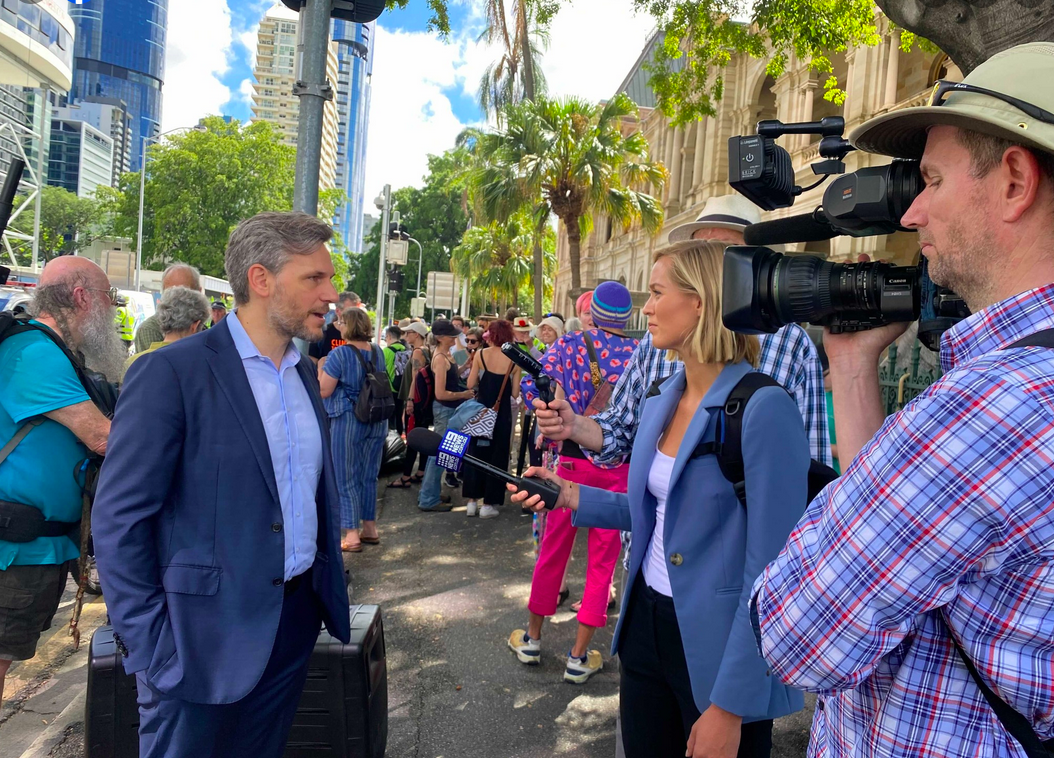
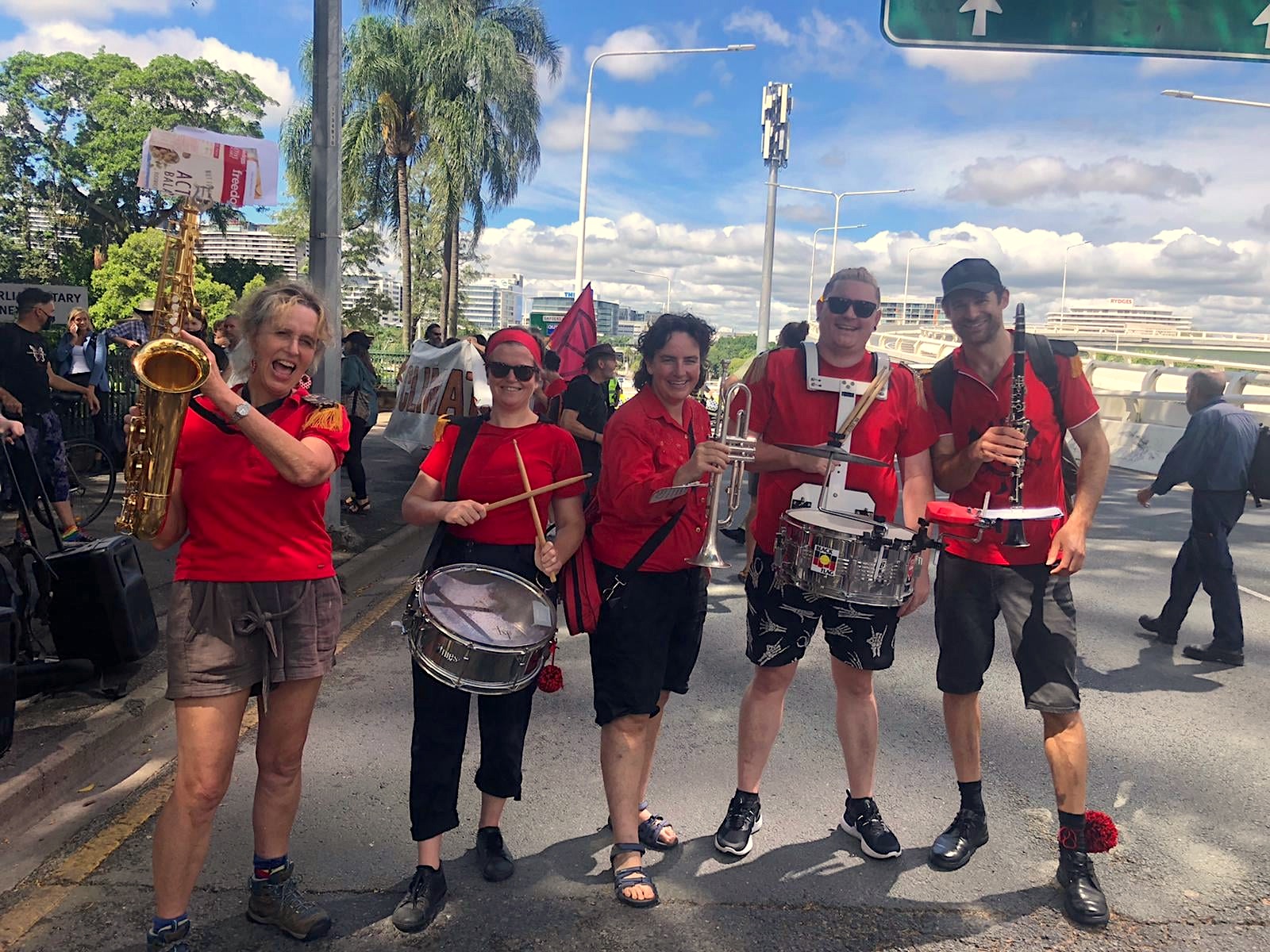

 4PR - Voice of the People