Workers BushTelegraph discusses current and past events, books and film with the aim of sharing worker political education and consciousness.
WBT poses 3 questions: who owns the land, workers control of production and democratic rights.
On the 29th of November, 1947 the United Nations adopted resolution 181 which called for the partition of Mandatory Palestine into an Arab State and a Jewish State. (Mandatory Palestine, under British control, was established by the League of Nations in 1922).
The associated 4-part Plan, devised in cooperation with Jewish organizations, was accepted by the Jewish Agency for Palestine, This was the first Deal of the Century (20th).
The Palestinians who were not consulted, fought back, arguing that the partition violated the principles of national self-determination in the UN Charter which granted people the right to decide their own destiny. The Plan was never implemented.
Announcer: This is Ian from 4 PR – voice of the people and we’re presenting a speech given by a registered nurse over the weekend during the anti-vaccination demonstrations in Australia. It is interesting to listen to this speech, it makes a number of good points about the importance of a community response to the pandemic. At the same time on a political level, there are issues that should be raised.
Firstly, the anti-vaxxers that demonstrated over the weekend in Melbourne, Sydney and Brisbane; you will never hear them acknowledge that the reason why they were able to demonstrate, particularly in Brisbane, in the first place was because a generation ago thousands of people put their bodies on the line and challenge the right wing government that its laws restricting the rights of assembly and of marching.
Thousands of people were arrested (over 3000), and during that time, a number of people were thrown in jail and a number of people also lost their jobs because of the interference of Special Branch. You won’t hear the right wingers who are crying out for freedom from vaccination and lockdowns, you won’t hear them talking about the reasons why they were permitted to march over the weekend.
Anyway, the other points that should be made.
Australia has achieved a high level of vaccination by people over 16 – children haven’t been vaccinated yet – when they talk about how 90% of people have received their first jab … That’s only 90% of the adult population; the entire population (who have received the jab) is really not much above 50 or 60%. The other thing is that there’s a general ignorance about how the human body responds to a disease like COVID-19 – basically the immune system of the body. People are playing upon those that ignorance in order to achieve political objectives.
So we should be wary of the opportunism that is inherent in a number of the speeches that are being made. However, we’d like to present the speech from the two groups that organize the small rally over the weekend. In King George Square. They were the Socialist Alternative and the Anarchist Communists Meanjin.
Antibiotics, vaccines and Covid-19 I’m going to explain the difference between an antibody and a vaccine. There is widespread confusion and ignorance about how the immune system works and how the human body reacts to COVID-19.
Firstly, an antibody is an agent that attacks bacteria. So if you get a bacterial infection, then antibodies are created against that infection. And an antibiotic is an artificial way of introducing antibodies into your system that will attack a bacteria. Now, antibiotics do not attack viruses. COVID-19 is a virus. There are some anti virology drugs, which do attempt to do that, but the antibiotics that we get for, say, a pneumonia, they are attacking bacteria not viruses.
Now, when a COVID-19 virus gets into your body, it tries to enter the cells of your body. And that’s the reason why an antibiotic doesn’t work against a virus because bacteria are cells themselves, and they can be attacked by an antibiotic. But a virus cannot (be attacked by antibodies) because it’s already got inside your cells. However, your immune system develops proteins, which can stop that virus from reproducing itself and making the proteins necessary for it to take over your body. And it does so by attaching itself to the virus in various ways.
Now, that’s not the totality of your immune system. There are other things: cells for example, called macrophages, mast cells, and other cells i.e. leukocytes that also go and attack the bad cells that have been infected, and they filter this through your lymph system. This is a complex response, a complicated system which is not fully understood.
When you get a vaccine, it introduces a protein that’s a bit like COVID-19, but it’s not COVID-19. And all it does is to alert your body to the fact that when COVID-19 comes along, and tries to spread through your body, via the nose, throat and through your respiratory system; your body will be ready with its own antibodies, its own response. So it can expel the virus quicker than someone who hasn’t been vaccinated. None of this is rocket science. Vaccines have been around for a long time. They have helped eradicate polio and smallpox from the planet. It appears that some people don’t show any response when they get infected by COVID-19 … They don’t have any symptoms. And they have an immune system which just seems to be able to tackle the virus. If they get re-infected the same thing will probably happen again.
But most of us, our bodies need to be made alert to the fact that when the virus comes, so they can challenge those viruses. This all relates to the fact that COVID-19 is a unique virus that hasn’t occurred in human populations before. So our bodies have no experience of it. We need vaccines to help us fight it.
Ian Curr 4PR – voice of the people 22 Nov 2021
__oOo__
With large numbers of people rallying against covid vaccines, lockdowns and mask wearing, a small group in Brisbane organised by Socialist Alternative and Anarchist Communists Meanjin rallied in support of vaccination and lockdowns. Axel, a registered nurse and UQ Union Medical Officer, spoke to a small crowd in King George Square on Saturday, 20 Nov 2021.
I would just like to also begin by acknowledging the Yuggera and Torrubul people, the elders past and present, whose land we’re rallying on today. Land of course was never ceded, it was stolen and this movement, our movement for public health and social justice should be framed in light of that historical reality.
So why are we rallying here today? In my mind, there’s a few reasons.
We’re here to show our support for the vaccination effort and for sensible public health measures to curb the spread of the virus.
We’re here to advocate for lockdowns when the necessary with proper government payments and job guarantees so people can say.
We need to push for sensible quarantine requirements and suitable quarantine facilities with proper ventilation to allow people to come home or traveling to state safely.
We need proper ventilation in our workplaces in our schools to reduce transmission. We know the virus is spread by airborne particles, so air filters and proper ventilation facilities are an absolute requirement.
And importantly, for today, we’re here to counter the dangerous conspiracy, tinfoil hat brigade that are rallying on the other side of the city today and in other cities across the country.
These people would like to put out the message that they are the voice of a silent majority of people who are opposed to government overreach and government lockdowns and vaccination requirements.
We’re here today to show them that’s not the case. These people are in fact a tiny, petulant minority.
We shouldn’t underestimate the movement were rallying against. They’re a dangerous political force, albeit chaotic, and we must make a stand against them .
The issue of vaccinations and lockdowns has been cynically exploited by nefarious political actors who seek to push their far right agenda. It has been used to undermine Social Democratic politicians, such as in Australia, Labor premiers Dan Andrews, Anastasia Palasczuk and Mark McGowan.
And more frightening than that has been used to undermine our collective solidarity as people and as workers and to undermine the union movement (Crowd: Shame!).. And no more clearly has been seen than the attack on the CFMEU headquarters in Melbourne a couple of months ago (Crowd: Shame!). This is a frightening example of how the far right are becoming emboldened by this movement. The anti vaxxers compare COVID restrictions and vaccines to Nazi Germany while they quite literally marched alongside Neo Nazis at their rallies. (Crowd: Shame!). In rallies this week, protesters held Trump flags alongside Eureka flags, disgracing the legacy of the union movement and had effigies of labour premiers and gallows. Shame on them (Crowd: Shame!)..
(People come around speaker to support him) This rise of Trump style libertarian ism is a massive regression in politics in Australia, this bankrupt ideology. It’s an ideology of a child refusing to do their chores to contribute to the household (laughing to something off camera) demanding all the benefits of a civilized society without any of the responsibilities (Crowd: clapping)..
But I stress again, these people are a minority. This week, Australia has reached a milestone of 90% first dose vaccinations for people over 16; which is a great step towards having good vaccine coverage. But complacency is the enemy and we still have a long way to go.
Unfortunately, in Queensland vaccination rates are lagging far behind the rest of the country. (???) With states opening up in coming weeks and restrictions on international arrivals likely to be loosened in the coming months. We need to keep up this effort to implore people to get the job for the safety of our communities.
So why has become such a point of contention? Vaccination is a very minor imposition or inconvenience on the individual for the most part, but one with a tremendous benefit for society. It’s become a political tool and my theory is because the benefit of vaccines is not clearly apparent when you have them and it’s the same with lockdowns. You can’t experience the disease that you don’t catch. And you don’t see the outbreak that was prevented.
When preventative measures work, you don’t see the effect. It requires a trust in the science and I get that for some people that’s a big ask (something happening oof camera) for both the government and the medical scientific establishment that means Trust is not enough founded. Preventive Medicine is a hard sell to ask someone to take a medicine for an illness and they don’t have a hard sell. But there are far too many people in the anti-Vax movement were willfully ignorant or disingenuous, and who are by their own choosing jeopardize our collective efforts to survive this pandemic. (Crowd: Shame!).
Vaccinations work on an individual level, they drastically reduce your chances of getting severe COVID and ending up in hospital. on a population level, they reduce transmission by juicing the amount of time people are infectious, and reducing respiratory symptoms which spread the disease.
When Sydney opened up out of lockdown recently, what seemed like a reckless decision at the time, a lot of people were concerned … myself included that we were on the brink of a massive COVID outbreak in Australia. Instead, daily case number stabilized while COVID is still well and truly out in the community with around two to 300 cases a day in New South Wales. And I don’t want to minimize that fact. The fact that there was no huge spike in cases should be evidence enough that the vaccine works. (Crowd clapping).
But as our international borders open, people’s immunity from their second dose will begin to wane. If we can’t encourage the last 10% of people to get vaccinated, and if people don’t keep on top of their booster jabs, their third job and beyond will begin to see a tsunami of cases. Next winter will be a harrowing test for our public health system. As COVID becomes endemic and a potentially large influenza season takes hold.
Having worked as a nurse in the public health system, I can tell you it is bursting at the seams and I will not cope with a surge in infections. So for the sake of protecting ourselves, protecting our communities, protecting our health system, we need to keep getting vaccinated. Keep wearing masks and social distancing. Keep staying at home when we’re sick and keep coming out to counter these reality denying lunatics because next year and beyond, we’re going to face the real test.
SUMMARY KEYWORDS
lockdowns, rallying, vaccination, vaccine, people, cases, australia, undermine, proper ventilation, vaccinated, movement, political, reduce, work, vaccination rates, public health, outbreak, system, anti vax, union movement, weekend, brisbane, hear, opportunism, ignorance, anti vaxxers, lockdowns, number, people, speech, registered nurse, demonstrate, political, anti vaccination, right wingers, vaccination, socialist alternative, pandemic, talk, australia
“UK comedian Deborah Frances-White was about to quit comedy due to the grind of dealing with sexism in the industry. Instead, she decided to start a podcast: The Guilty Feminist. When she shared her experiences, she found a community of like-minded people and created a much-needed space for diverse comedians.” – Frances-White, D., 2018. The Guilty Feminist: From Our Noble Goals To Our Worst Hypocrisies. London: Virago.
Corey Green
The Podcaster’s Audio Handbook: A technical guide for creative people by Corey Marie Green …
Corey Marie Green is an audio engineer from Melbourne, Australia, who specializes in podcasting and radio. She has filled many roles in her radio career, including journalist, producer, editor, and sound engineer at live events. Through her business, Transducer Audio, she provides a range of services for podcasters including editing, content development, and training.
Corey Marie Green – The Podcaster’s Audio Handbook Monday 29 November 2021 6:30 PM – 7:30 PM ZOOM Online Register until 29 November 2021 4:00 PM Register for book launch at Avid Reader HERE
Take control of the technical side of podcasting so you can concentrate on making great content.
You’ve got a great idea for a podcast, but you aren’t sure where to begin. Or you’ve jumped in and interviewed an amazing guest but you find that the audio isn’t quite right. You go online to look for a solution but come across a dizzying array of often contradictory information, written in highly technical terms. What you need is a guide that lays out the technical side of podcasting in easy-to- understand language, preferably with cartoons.
In ‘The Podcaster’s Audio Handbook’ audio engineer and podcast producer Corey Marie Green shares straightforward advice on how to record great audio and prevent technical issues before they arise. This guide is friendly and easy-to- understand. Take control of the technical side of podcasting so you can concentrate on creating great content, expressing yourself creatively and connecting with your audience.
Get your head around the audio equipment commonly used in podcasting
Find out what you need to know about recording at home, outdoors and over the internet
Discover industry tips for getting the best out of your interviewees
Listen to audio examples so you can learn how to diagnose common technical issues
Learn how to shape your content into a compelling story
“This is a brilliant guide to the A – Z of podcasting. Thoroughly comprehensive but never overwhelming,there is so much to learn here for beginners and experienced podcasters alike. Corey brings a wealth of knowledge, and in a stroke of genius she has created a handbook that is accessible, fun, engaging and even funny! Essential reading for anyone who wants to make a great podcast.” – Nicole Curby, award-winning audio producer, oral historian and journalist (The Guardian, ABC Radio National, The Saturday Paper, Deutsche Welle, The Monthly and Overland)
‘The Podcaster’s Audio Handbook’ has been published by Apress and is available through all your major bookstores.
The reappearance on 10 November 2021 of Paul Keating at the National Press Club after an absence of 26 years does demonstrate one thing, at least: that each new prime minister of Australia is worse than the one previous. Put it another way, Keating is streets ahead of Morrison. Keating correctly points out that Australia cannot go to war with China over Taiwan. It certainly cannot go into battle with the Chinese navy using American attack class nuclear submarines designed in Virginia in the 1990s. Keating should know, as PM he had his own disaster with the Collins class submarines. The Collins submarines hardly ever left the docks and did not have sufficient trained personnel to put the entire fleet to sea at the same time.
US coercion of China: ‘It would make a cat laugh‘ – Keating Despite Keating’s attempt to dispel the confusion over China, the Australian media chose to attack him; the Sydney Morning Herald, The Age and even the ABC’s Q& A program compered by Stan Grant. This is not helpful when you have Ministers like Peter Dutton in government saying things like “it would be inconceivable that Australia as a US alliance partner, would not join in military action”. Is he serious? Does Dutton want another Vietnam?
This is what Keating had to say about United States’ attempt at coercion of China:
“The United States says, well, that’s all very interesting. ‘But look, if you behave yourself, you Chinese. You can be a stakeholder in our system’. And look, you wouldn’t have to be Xi Jinping (President of the People’s Republic of China) or anybody, to take the view of your Chinese Nationalist say, ‘Well, hang on, let me get this right. We are already one and a quarter times bigger than you will soon be twice as big as you and we may be two and a half times as big as you. But we can be a stakeholder in your system, is that it?’ I mean, it’d make a cat laugh.” – Paul Keating , National Press Club, Wednesday, 10 November 2021.
The Collins class boats built by Keating and Admiral Kim Beazely (sic) are best retired to a children’s playground in some remote town for all the good they have done. Sending young people to sea in a long tube submerged for several months is pretty mad especially given the high death rate among submariners during World War II.
Keating is right to criticise the government’s hypocrisy over Kashmir. Australian government’s would rather sell coal and tertiary education to India than criticise that government’s appalling human rights record in the independent state of Kashmir. On that score India is nearly as bad as Israel’s occupation of Palestine.
But you never heard Keating criticise Israel not did he criticise Indonesia’s genocidal occupation of East Timor. Keating was the Minister for Northern development in the Whitlam government when it made its last mistaken office allowing Indonesia to invade East Timor in late 1975. That was Fraser’s first mistake to turn a blind eye to the killing of Timorese by the Indonesian military.
Ignoring Indonesia military abuses of human rights in East Timor, Keating put together a treaty with Suharto in 1995.
‘Sea Denial’ Keating was right to say that USA cannot control three oceans, Atlantic, Indian and Pacific. Especially when the Chinese economy is bigger and is growing at a faster rate the United States. This what Keating had to say at the National Press Club:
“Until not many years ago, the US Pacific Fleet drove 12 miles off the edge of the Chinese territorial sea, on the Chinese continental shelf, you know. Could you imagine the attitude of the United States if the Chinese Bluewater Navy was sailing 12 miles off the territorial sea of California? I mean, there’d be outrage everywhere. So what the Chinese have been doing is, is getting what’s called in the trade Sea Denial, pushing the American fleet off their coast.” – – Paul Keating , National Press Club, Wednesday, 10 November 2021.
China is a big sea trading nation, so what it wants is for its goods to be transported unfettered through the South China sea. The US navy is trying to challenge that; given the importance of trade with China for many countries including Australia, the US government should reconsider this challenge to Chinese sovereignty.
However you never heard Keating criticise US imperialism or hearing himcriticise Henry Kissinger when the Secreatary of State gave the Indonesian government the okay to invade East Timor. Keating even quoted Kissinger on China:
“Henry Kissinger said something which is worth repeating here, which is pretty much my own view if I can find it. I wrote this down a meeting I had with him. He said he did not believe China has a military base policy designed to achieve military domination. Nor is it policy about annexing contiguous territories. In other words, the country’s around it. He thought his overarching policy objective was to keep the U.S. away from Chinese borders. He said he did not believe China wants a confrontation with the United States. He said being Chinese, the Chinese will develop a concept of coexistence.” – Paul Keating , National Press Club, Wednesday 10 Nov 2021
But he left out that the US government had threatened war with China over the Taiwan Straits as long ago is 1958. The truth is United States has left its run too late. Keating is right, there will be no war over Taiwan. And if there were, Australia should keep well clear of it.
The China Syndrome meets Dr Strangelove Glenn Gibson asked if Paul Keating can help with diplomatic relations with China? Keating, when in power, followed a strategy of building up the Australian bourgeoisie, in order, in his terms ‘to break with the branch office mentality’ inside Australia and so strengthen it as a regional power.
So in the National Press cub Keating opposed the purchase of the nuclear subs and the AUKUS alliance. He prefers to build nationalist pride rather than dependence on the US and Britain. Predictably Paul Keating wants to build the ‘Son of Collins‘ here in Australia. Failing that he comes up with the crazy idea of buying ‘off the shelf’ nuclear subs from France. Neither Hawke nor Keating could ever see the stupidity of developing the nuclear industry when melt downs like Three Mile Island, Chernobyl and Fukushima were the result.
Keating questions buying US nuclear subs:
“What’s that got to do with the defence of Australia and what possible impact could we have militarily with eight submarines? These Virginia class submarines were designed in the 1990s. By the time we have half a dozen of them, it will be 2045 or 2050 – they will be 50 or 60 years old. In other words, our new submarines will be old tech, like buying an old 747. And here we are, we’re going to wait 20-odd years to get the first one and 35 or 40 years to get the lot for what will be then very old boats.”
On the ABC’s Q&A program the host Stan Grant suggested that China would be very concerned about the threat of the Australian Navy having eight nuclear submarines despite the fact that the are not yet built, may never be built, and their delivery date is not until 2040. By contrast China built its first nuclear-powered submarine in 1974. With the world’s largest armed forces, China has increasingly worked to advance its naval capabilities. Beijing has at least 59 operational submarines, 12 are nuclear-powered and half of those are SSBNs. An SSBN is a nuclear powered submarine that fires ballistic missiles with a nuclear warhead and is very difficult to detect at sea. It makes ‘mutually assured destruction’ possible after a first strike.
Much of the public debate on commercial and public media is based on a premise of inflated importance of Australia both in the world and in respect of China.
Keating never gives up on the alliance with the United States even though China is a major trading partner for Australia.
Meanwhile experts from independent Australia Peace Network (IPAN) have called for an independent and peaceful Australia.
IPAN made the following press release and have included an interim report on the Australia-US Alliance. Part of this was prompted by Australia government pronouncing that it intends to buy nuclear submarines.
Kellie Tranter, Chair of the Inquiry, lawyer and human rights activist, said: “We have received a tremendous number of submissions, many of which point to the sidelining of the Australian public from defence and foreign policy decisions, particularly in relation to its alliance with the United States.”
Foreign Policy is informed by the Spooks – Keating. “Foreign policy is rarely discussed publicly and almost never democratically decided. However, the reluctance of politicians to discuss foreign policy is by no means reflective of the Australian public’s own interest and engagement.”
Paul Keating at the at the National Press Club was in agreement with sentiments expressed by Ms Tranter . He said:
“If you go from Wuhan, a city where the rivers cross, and the railways cross; the Chinese will be the major influence between everything between Wuhan and Istanbul. Partly to increase their strategic power. And secondly, all of the old tech, which had been replaced by the new tech, that is steel, glass cement. People say ‘what are they gonna do with the big cement plants, their big steel plants, their glass plant?’ What are they going to do with it?’ The answer is what they’re going to do is push it down the road. They’re going to put it into Kazakhstan, Uzbekistan, Pakistan, you know, this is where Chinese interest right now. You don’t get this. You don’t get this in the Australian public debate. Because it’s informed by the spooks, our foreign policy debate, now in Canberra is informed by the security agencies, you know.” – Paul Keating , National Press Club, Wednesday, 10 November 2021.
IPAN correctly challenges Australia’s reliance on the United States given that our major trading partner is China.
Ian Curr 16 Nov 2021
*The China Syndrome is a 1979 American disaster thriller film about a television reporter and her cameraman who discover safety coverups at a nuclear power plant.
*Dr Strangelove is a 1964 black comedy film that satirizes the Cold War fears of a nuclear conflict between the Soviet Union and the United States.
The Paradigm Shift today [12 November 2021] was about connecting with the refugees locked up by our inhumane government. Andy chats with Dane De Leon from Refugee Solidarity Meanjin to get an update on what that group’s been up to since the lengthy occupation at Kangaroo Point last year.
And also to Keyna Wilkins – who is this week launching an album she has made collaborating with detained refugee Jalal Mahamede.
And we play a bunch of songs all made collaborating with refugees who were locked up just for seeking asylum. 12-1pm (Qld time), 102.1fm or 4zzz.org.au (where you can also stream it later @ https://4zzz.org.au/program/paradigm-shift).
Scattered People is screening at the ETU rooms in South Brisbane This Saturday 13 Nov 2021. See Refugee Action Collective fb page for details.
KP Prison in Meanjin (Brisbane)
Playlist Phil Monsour and Kazem Kazemi – Eight years too long Farhad Bandesh and Anna Liebzeit – Freedom Jalal Mahamede and Keyna Wilkins – Set me free Jalal Mahamede and Keyna Wilkins – Nothing is in place Scattered People – On the turning away
Two years have gone by since that murder when killing the messenger made its debut.
Now that we're civilized, wise and intelligent,
So surely such practices now are taboo.
But you talk to Julian Assange and he'll tell you
Or ask Chelsea Manning if this is the case
Or Bernard Collaery and his named suppressed clients
You'll find that such spitefulness still has its place.
- Dermot’s song for Julian.
A high powered legal team had their last throw of the dice in London this week to stop the British government’s extradition of Assange to the United States. Regardless of the outcome in the courts, there is little hope for Julian Assange.
Sadly the Americans are not going to let him go. As Scott Ludlam testified to the Belmarsh Tribunal the US government has “calculated to wear him and his supporters down in an endless cycle of appeals and counter appeals (where) the prosecution gets what it wants, no matter the result.”
Caught between assassination and extradition Julian never understood what he was up against. Putting aside his involvement in the 2016 US elections and the evil Princess of Darkness, Hilary Clinton. Julian challenged the military industrial complex itself. He leaked against corporate America, the DNC and the GOP. And then there were the spooks with their honey trap and constant surveillance.
How many times did the CIA try to assassinate Fidel Castro? We don’t hear about how that judge in Spain went with his indictment of the security guys that put Julian and Geoffrey Robertson (one of his lawyers) under surveillance in the Ecuadorian Embassy. They even checked Stella Morris’s baby’s nappy for DNA testing and all the rest of the sordid business. Then there was Julian’s naivete in going to the Ecuadorian embassy in the first place. It wasn’t long before they caved to the United States government. Why not go to the Cubans? Did Julian, a libertarian, think the Cuban Embassy staff were a bunch of stalinists? Even if they were, the Cubans would never give him up to the British MI6 like the Ecuadorians did. Just listen to Ciaron O’Reilly’s testimony below about the level of surveillance around that tiny emabassy. O’Reilly ought to know, he was sleeping rough outside the embassy on and off for years.
Assange’s lawyers revealed the plot to kill Julian in the High Court during the United States appeal for extradition. Now the people behind this don’t want to go too far and murder him outright in the cool light of day. Look how long it took the far right state state of Israel to poison Yasser Arafat. The Americans are being watched by ordinary people … many think Julian is a wanker and don’t have much sympathy for him so they don’t want to tip them over and make him a martyr. You could say the even the Romans tried to disguise their plot to kill the first whistleblower against the merchants and Rome’s evil occupation of Palestine. Pontious Pilate, the story goes, washed his hands of the whole affair.
Did Julian think Trump would let him go? Trump the misogynist with his briberies, insults, robberies, outrages and wanton injuries, harrassment of women without trial, constantly repeated, ceaseless and supremely grievous cruelty. No, as soon as he was in power and Hilary was out of the way, Trump launched his trusty lieutenant Pompeo to get Julian. Poor Julian did not have the politics and knowledge to foresee the sledgehammer the US would use to crack him. Pilger says Assange has lost it. Ciaron O’Reilly is so pessimistic that he thinks Julian is washed up. But not I. If they can get him released and his wife and children will bring him back. But he has to stop, it is time to retire and let others take up the work of exposing the axis of evil that the United States is.
So war crimes are done in our name with our money
The innocent slaughtered, the prisoners abused
And those who give orders,
And those who pulled triggers
are thanked for their service, acclaimed or excused.
- Dermot’s song for Julian.
Sapper Jamie Larcombe and his partner
Belmarsh Tribunal supports Julian Assange Last week his supporters turned out in Meanjin (Brisbane) and, after 10 years of organising solidarity actions, they are exhausted. Attempts by Julian’s father, John Shipton, to dissuade Joe Biden to let Assange go have failed. So Assange’s freedom relies heavily on a legal rather than a political strategy. Added to the constant threat of extradition hanging over him should a qualified doctor to testify that he is well enough to face trial in the US. Some have suggested that he should return to Australia. This is naive too, for both sides of politics in Australia would willingly hand him over to the Americans for trial and an inevitable life sentence in a hellhole. If you are in any doubt about this, just look what Australian governments do to refugees from war.
However Assange’s legal defence rests on thin grounds – fear by the judiciary that Assange will commit suicide in the US. High Court Judges are not concerned about that. Judicial concern is purely superficial. They must not look beholden to government, regardless of which one, British or United States. The letter of the law is paramount.
During the extradition trial, the US government lawyers won all the legal arguments, save one, itself not strictly a matter of law, the threat of suicide.
Julian, his father, mother, wife and family will pay a heavy price for the Wikileak’d Iraqi war logs and the Collateral Murder video. And let’s not forget Chelsea Manning. Or the million dead in Iraq and Afghanistan.
We publish this report (by request) about the United States’ High Court Appeal compiled by Bay FM Community Newsroom, on 29th October 2021. Thanks go to the anchor, Mia Armitage, and Julian’s dad, John Shipton. Shipton is in London for the US government’s High Court appeal against the decision not to allow the extradition. He talks with Dr John Jiggens in the interview that follows.
We have also received reports of a quite different tribunal organized by the Progressive International. The so-called Belmarsh tribunal is modelled on the People’s tribunal, held in Sweden in 1966. The latter was convened by prominent philosophers, Bertrand Russell and Jean Paul Sartre. Rob Osborne reports on this citizens’ tribunal examining the War on Terror, which was also in London for the appeal. The report features Tariq Ali, John Shipton, and Ewan MacAskill.
Not that dissimilar to Wikileaks, the People’s tribunal exposed American war crimes in Vietnam. On this occasion Russell and Sartre are replaced by writers, Tariq Ali and Ewen MacAskill.
But try to make public all crimes and abuses,
Or let people know what their governments hide,
You'll find that the crime over revealing their secrets
Is one that our governments cannot abide.
- Dermot’s song for Julian.
Petition There is a petition to Free Julian signed by 653,602 people. All the members of the AUKUS agreement have ignored this large number of petitioners, forcing people to question the democratic system itself. The petition is appropriately named The British Legal System is on Trial … If they Extradite, Assange=Democracy is Dead Please sign it if you wish to stay informed. Also share with your friends and colleagues.
Metrics The petition put together by Phillip Adams is currently running at 30 signatures per hour; that’s about 720 per day. Adams says that there was a mass mail-out to “the 652,000 signatories at about 9:50am Brisbane time on 31 October ’21. T Note this (the email list) is now the largest daily news article distribution service in Australia.”
At this rate, hopefully the petition may have 1,000,000 signatures by the time the appeal decision is handed down by the High Court in London.
Sixty-five (65) people had listened to the podcast on 4PR in the first 2 hours of its release and over 100 viewed the transcript on WBT (see below) before the end of the day. a good show that Bay FM put together, congratulations to JJ & the team down there.
The bond between Military Industrial Complex and Mainstream media The Sydney Morning Herald (SMH) had a small news item about the extradition hearing at the back of their Saturday print edition. So their views would be low. Probably the same with the Weekend Australian Print edition. I don’t know about their online service because I don’t subscribe. Firewalls are everywhere.
The Brisbane Times focused on the suicide submission but gave some coverage of the CIA plot. In Four Corners v Julian Assange Dr John Jiggens had this to say about our ABC:
Yet while journalists worldwide honour Assange and are deeply concerned by the significant threat to journalism posed by the US attempt to extradite him and charge him under the 1917 Espionage Act, the Big Lie that Assange is not a journalist persists in the Australian media. And not just in that section dominated by a US citizen, but, surprisingly and most virulently, at the ABC’s flagship current affairs program Four Corners.
Media Liesduring US Wars Given the media were embedded with the military during Shock and Awe the news is not really independent or objective. How long did it take CNN to expose the lie that Iraq had chemical weapons of mass destruction? The US had sold WMDs to Saddam Hussein in the 1980s. But the UN investigator Hans Blix found no evidence of prohibited weapons programmes prior to his withdrawal on 18 March 2003. Then the invasion began. It was Secretary of State Colin Powell who stood up in the UN and lied about WMDs in order to get wider support for the invasion of Iraq. Did mainstream media tell us that this was same Colin Powell who had covered up the mass murder of 200-400 Vietnamese villagers at Mỹ Lai by Lieutenant William Calley Jr and his men in 1968.
At that time, charged with the responsibility to investigate the massacre, Powell wrote: “In direct refutation of this portrayal (of a massacre) is the fact that relations between American soldiers and the Vietnamese people are excellent.” Later, Powell’s assessment would be described as whitewashing the news of the massacre, and questions would continue to remain undisclosed to the public.
None of Powell’s Vietnam War record came out in the media to help us decide if he was lying about WMDs prior to the Iraq war.
So when Wikileaks came up with a means whereby Bradley Manning could secretly leak the Iraqi War logs that exposed the massacre by US helicopter gunships, that bond between media and military was overshadowed by whistleblowers self-publishing their concerns. The Collateral Murder video leaked by Assange exposed US government lies. Mainstream media became irrelevant, replaced by Wikileaks.
Assange vs the Clintons Wikileaks exposed two of the best liars in politics, Bill and Hilary Clinton. Assange released Presidential hopeful Hilary emails that showed how far to the right she was. Hilary supported the genocidal Iraq war, she joked and laughed at the brutal murder of Libyan President Gadaffi.
She said: We came, we saw, he died. Asked if this had anything to do with her visit (to Libya?) Clinton claimed: “I am sure it did.” An evil and sadistic murderer?
As Secretary of State, Clinton was supplying arms to Israel to slaughter the Palestinian people. Had Hilary won the US presidential election, the US would probably have been at war with Iran such was her allegiance with Israel.
So Julian Assange is entitled to be upset at how the US government has connived to lock him in solitary confinement for the rest of his life.
Solidarity What freedom Julian Assange does finally achieve depends chiefly on the solidarity campaign that has been waged in many countries. Strongly, in places like Germany; but not so strong in the United States or Australia, both members of AUKUS, a new arms arrangement with the UK in the coming war with China. That is not to say that efforts have not been made to obtain better results in the US and Australia. John Shipton has toured both countries seeking support. Here in Brisbane we have tried nearly everything. stalls, rallies, petitions, formal approaches to the British consul, fund raisers, debates, forums, radio shows on local community stations like 4ZZZ and Byron Bay FM and discussion groups. Some of these events were well attended or had big audiences but strong political activist defence has not developed from this … 10 years of solidarity actions have fallen on deaf ears of people in power. Very sad for Julian and his family. The Yanks have been relentless.
At this point the solidarity campaign for Julian has been exhausted save for a few hardy souls who came out of the anti-war movement here in Queensland. And, in a way, Julian was born into this movement when his mother stayed at Emmanuel College at the University of Queensland just prior to his birth at a time of the anti-Vietnam war moratorium campaign.
Ian Curr 30 October 2021
__oOo__
So Julian Assange is pursued and imprisoned his decency punished, his courage despised
Denounced as a traitor for drawing attention to the crimes that our governments have long authorised.
But the day it will dawn and his work is acknowledged by captains and kings as today by his friends
The day will come when the world will acknowledge the work of the value that Julian defends
And the day will dawn when the world will acknowledge the work of the value that Julian defends .... applause. - Dermot’s song for Julian.
Julian Assange – the United States’ High Court appeal
Bay FM Community Newsroom, October 29. Anchor: Mia Armitage. John Shipton, Julian Assange’s father, in London for the US government UK High Court appeal against the decision not to allow the extradition of Julian Assange, talks with Dr John Jiggens. Rob Osborne reports on the Belmarsh Tribunal, a citizens’ Tribunal examining the War on Terror, which was also in London for the appeal: with grabs from Tariq Ali, Ewan MacAskill and Scott Ludlam.
Mia Armitage:
The UK High Court is this week hearing a US appeal against the decision of a lower court to deny the US government requests for the extradition of WikiLeaks founder Julian Assange. Julian Assange’s father, John Shipton has been in London this week for his son’s latest judicial hearing, and says he’s pleased England’s most powerful judge Lord Chief Justice of England and Ireland, Ian Duncan, has been on the bench along with Lord Justice Timothy Holroyd. Mr. Shipton spoke with community newsroom reporter Dr. John Jiggens.
John Shipton: Judge is the most powerful judge in the United Kingdom, the Chief Justice of England and Wales. And it was in his court that the hearing was held. So there’s an absolute seriousness within the English judiciary merging to settle this case,
John Jiggens:Normally, the US gets what it wants. Yet you seem very optimistic. What underlines your confidence?
John Shipton: It’s timely that the Supreme Court Justice is involved himself in this matter. I feel myself that they are embarrassed by their behavior. If you could imagine every single point, which is a scandal itself, however, every single point of the Americans prosecution in the original hearing in September was accepted, except for one item. And that is health of Julian going to the United States and, and more than likely committing suicide. Despite that, the Americans have a Department of Justice appeal. Despite since that time when the United States decided to appeal, then the revelations about the CIA involvement by 30 officials from the CIA, the revelations of the CIA involvement have appeared and Thor Deyson their prime witness from Iceland has recanted on his testimony and being arrested for more cases of fraud. You know,
John Jiggens: How did the first day of extradition hearing appeal go?
John Shipton: The general outline is that the prosecution has the first day up until 4pm. And then the defence has half an hour. The prosecutor outlined his case, he canvassed the assurances of the United States that Julian wouldn’t be thrown into some dungeon somewhere forgotten. Of course, we all know that those assurances or barriers because, you know, we have in front of us nine cases, where assurances were given and then reneged upon. The second part is the prosecutors argument was around. Professor Koppelman is a professor of psychiatry and his evaluation of Julian that Julian might or was very likely to commit suicide, if sent to the United States,
Mia Armitage: That was Father of WikiLeaks founder Julian Assange, John Shipton, speaking with community newsroom reporter Dr. John Jiggens earlier in the week. Now since that conversation proceedings in the British High Court have finished but the legal decision isn’t expected for several weeks. Prior to the commencement of the US high court appeal supporters of Mr. Assange and campaigners for his release, helped what is called the Belmarsh tribunal, a public hearing named after the jail in which Mr. Assange is being held. The tribunals purpose is to hold the United States accountable for war crimes, as they were revealed by Mr. Assange and WikiLeaks. And that work, of course won a award from the Walkley foundation here in Australia. Community newsroom Reporter Rob Osborne has more
Rob Osbourne: Organized by the Progressive International the Belmarsh tribunal is modelled on the people’s tribunal, held in Sweden in 1966. convened by prominent philosophers Bertrand Russell and Jean Paul Sartre. The People’s tribunal exposed American war crimes in Vietnam. Here is veteran British activist, writer and broadcaster Tariq Ali, describing his involvement in the 1966 event,
Tariq Ali: Investigating teams were sent to North Vietnam to experience the war, myself included and we sat through hours and hours of bombing every single day I saw with my own eyes the day after they’d bombed hospitals and schools in turn of our province. So it was a searing experience, which really left its mark on me.
Rob Osbourne: Tariq Ali was the first speaker at the Belmarsh tribunal convened at the convocation Hall in London. Here’s some of what he had to say about the US pursuit of journalist Julian Assange.
Tariq Ali: Julian exposed the so called War on Terror, which began after 9/11 that has lasted 20 years has led to six wars, millions killed, trillions wasted. That is the only balance sheet of that war. Nowhere has it redeemed itself or done any good, as we’ve seen most recently, in Afghanistan. Julian is unfortunate to be captured by this particular state in order to appease the United States of America. He should never have been kept in prison for bail. He should not be in prison now waiting a trial for extradition. He should be released and I hope that acts like the Belmarsh Tribunal will help to bring that narrow.
Rob Osbourne: The shocking WikiLeaks material exposing American war crimes was published around the world in prestigious conventional media, including the New York Times, the German news magazine Der Spiegel, the French daily Le Monde and The Guardian in London, Guardian journalist, Ewen MacAskill testified to the tribunal about the importance of whistleblowers to the practice of Investigative Journalists
Ewen MacAskill: Whistleblowers reveal abuses and wrongdoing within governments, companies, the military intelligence agencies, these whistleblowers should be rewarded for the courage instead, to often they end up facing prosecution or jail.
Rob Osbourne: He also spoke about the intentions and the activities of the various Western intelligence agencies.
Ewen MacAskill: There’s been a war being waged against journalism and free speech. And it’s been going on since at least 9/11. It’s not a general war, the intelligence agencies are waging it to try and dissuade future leakers, within the agencies. And they’re trying to dissuade the journalists covering the national security beat. What Assange has been accused of is fundamentally no different from the normal interaction between whistleblowers and journalists on the national security beat. There’s no fundamental difference between what Julian Assange was doing and what I was doing. Assange is viewed as an easy target. There is a lot in the part of the US or the British government’s to take on media organisations like the New York Times or The Guardian, then ends up as an argument about press freedom. So the goal is the easy target, and that was Julian.
Rob Osbourne: Australian author, an ex Senator Scott Ludlam spoke to the tribunal remotely from his home in Yuin country in New South Wales.
Scott Ludlam: Anybody who’s been following the extradition proceedings against Julian Assange will understand that this is a calculated abuse of the court system calculated to wear him and his supporters down in an endless cycle of appeals and counter appeals with the prosecution gets what it wants, no matter the result. Because no matter the result, Julian Assange remains in prison unable to speak for himself, a form of judicial warfare, that the UN Special Rapporteur confirmed amounted to torture, all the while, seeding the public debate with disinformation and character assassination. Our growing global movement, and our presence here today means that this disinformation campaign has failed. Julian’s continued defiance from behind the walls of Belmarsh prison means that this torture campaign has also failed. So this is the first essential step to protecting the right of publishers everywhere to tell the truth about the crimes of the powerful President Joe Biden, drop the appeal. Julian wrote this to a supporter in 2019. Knowing that you are out there fighting for me, keeps me alive in this profound isolation. For us, knowing that he is in there still fighting must be our motivation to bring this campaign to a conclusion so that he can see sunlight for the first time in years, and be with his family and his friends and supporters to recover from the harsh cruelty that he has survived. And to start the next chapter of his life and work. Free Julian Assange,
Mia Armitage: Author and former greens Senator Scott Ludlam, ending that report from Robert Osborne.
[Transcription of interviews and speeches by Ian Curr].
Ian Curr 30 October 2021
Credits: Bay FM Community Newsroom, October 29: Julian Assange high court appeal. Anchor: Mia Armitage. John Shipton, Julian Assange’s father, in London for the US government UK High Court appeal against the decision not to allow the extradition of Julian Assange, talks with Dr John Jiggens. Rob Osborne reports on the Belmarsh Tribunal, a citizens’ Tribunal examining the War on Terror, which was also in London for the appeal: with grabs from Tariq Ali, Ewan MacAskill and Scott Ludlam.
BelmarshTribunal The original tribunal was set up by the Progressive International when investigating teams were sent to North Vietnam to experience that war, including Tariq Ali and they sat through hours and hours of bombing every single day they saw with their own eyes the day after the United States bombed hospitals and schools in turn of the province when the tribunal sat. Now just after the bombshell revelations about the CIA plot to kidnap and assassinate WikiLeaks publisher Julian Assange while he sought political asylum in the Ecuadorian Embassy in London, the Progressive International came to London with the first physical Belmarsh Tribunal. The intervention cames ahead of Assange’s extradition proceedings, which are set to continue in London’s High Court from 27 to 28 October 2021.
Andy from the Paradigm Shift (4ZZZ fm 102.1 Fridays at Noon) gives a roundup of climate action while Scott Morrison swans around Glasgow at the latest ‘Climate Change Conference of Parties’.
This week, politicians from around the world will gather in Glasgow for Climate Change Conference of Parties. Our own Scott Morrison will be there, showing off his brand new “Australian Way” plan for pretending to do something about climate change. But across Australia over the last few weeks has been a different kind of gathering for climate action. In all the cities and towns of this continent, people have been out on the streets or on the climate frontlines – disrupting destructive work, raising awareness, reminding us all that we can have more of a role in the climate action discussion than just swearing at the news. It has been extraordinary in scale and diversity. These are just some examples of what’s been happening.
Let’s start on October 11th (first day out of lockdown in NSW!), when Illawarra residents blocked vehicles headed to the Russell Vale coal mine, opposing its…
“the one god, a greater being, (who) made his camp on the rich veldts and in the lush valleys of the South Land” – Sam Watson describing the aboriginal spirit, Baiame in his novel, The Kadaitcha Sung.
The Kadaitcha Sung – A novel by Sam Watson Penguin Books (1990) – a review
This began as a review of Sam Watson’s book but has turned into a remembrance the life and times of this aboriginal leader. We are coming close to the second anniversary of Sam Watson’s death. This is a great personal and public loss for Brisbane Blacks and socialists in Meanjin. It is worth looking at a novel The Kadaitcha Sung that Sam wrote in the late 1980s to appreciate why. Sam told the 1993 Melbourne Writers festival that The Kadaitcha Sung is the first in a series. In this novel Sam used techniques from the paperback crime and adventure novel to portray the lives of blackfullahs in places like South Brisbane and Cribb Island which he calls Coontown in the novel. The people who lived at Cribb Island near the mouth of the Brisbane River were evicted, their shanty houses demolished and bulldozed, the mangroves destroyed and land fill piled on top. It is now the one of the runways of Brisbane International Airport.
Aboriginal Myth
It does not seem that long ago that I learnt about Baiame. It was ‘Budger’ Davidson, one of the Purga Elders from Deebing Creek west of Ipswich that explained to me who was the spirit, Baiame. We were sitting in a tent in Musgrave Park during the 30th anniversary of the Commonwealth Games protests in November 2012. And it was Sam Watson’s play The Mack that had revealed to me the significance of the Kadaitcha (clever) man, a mixture of superhero and spiritual leader. The Mack was put on at the Judith Wright Centre in Fortitude Valley in the early 2000s.
I suppose my lack of knowledge of common myths of aboriginal people is not surprising given that they were never mentioned in Queensland schools or universities. But it is surprising given that even in my own family we have books written by our forebears who knew aboriginal myth, culture and legend only a few generations ago. One of my grandfathers, Edward M Curr, even wrote a book in four volumes about The Australian Race: its origin, languages, customs, place of landing in Australia, and the routes by which it spread itself over that continent.
The Macquarie Dictionary 2nd Edition, 1991 offers these definitions: Kadaitcha, also Kadiatcha spirit. A malignant spirit, esp. one invoked to do harm to someone else as an act of tribal retribution …. of or pertaining to a kadiatcha. A Kadaitcha Man, among tribal Aborigines, a man empowered to avenge a grievance held by a tribal member, by pointing the bone at the wrongdoer].
Sadly little significance was given to the vast culture of aboriginal people by my family while I was growing up. This was despite my family’s direct role in the taking lands from aboriginal people only a few generations ago, firstly in Van Diemen’s Land and then North Queensland. I say vast culture because, prior to colonisation, some of the aboriginal elders could recite over 20,000 songslines or stories. As recently as 1996 John Howard refused to say Sorry for the terrible loss of this rich culture caused by colonisation, no doubt he was hoping the whole question would simply go away, be forgotten or pushed into the background by the more recent achievements by European settlers.
But, as Henry Reynolds points out this whispering in out hearts is hard to shake.
Arundhati Roy put it this way: “The trouble is that once you see it, you can’t unsee it. And once you’ve seen it, keeping quiet, saying nothing, becomes as political an act as speaking out. There’s no innocence. Either way, you’re accountable.”
Critics
Sam Watson sets out in The Kadaitcha Sung to make sure his readers know and remember these myths. Watson is angry and he ‘shouts’ out the terrible violence that has been committed in the name of European civilisation. Particularly the murderous deeds of the Native Mounted Police. The book is a mix of social realism and aboriginal mythology. Some critics say it is mysogynist and anti-gay. Lisa Hill who helped organise the ANZ LitLovers Indigenous Literature week in 2019 claims that “It’s a nasty book, full of vengeful violence, drunken brawls, racist hate-filled sprays, and brutal exploitative sex against women and gays.”
Ms Hill questions why Sam Watson was given the National Indigenous Writer of the Year award in 1991 for The Kadaitcha Sung. This was prior to John Howard becoming prime minister and we can be pretty sure it would take a brave panel of judges to give Sam Watson this award were Howard in control. The publication (1991) by Penguin books of The Kadaitcha Sung predates Keith Windschuttle’s declaration of the history wars in The Fabrication of Aboriginal History (2002), a text full of lies about the level of colonial violence in nineteenth-century Van Diemen’s Land.
Some critics have written complete nonsense about the author and the book. For example, BUCKLEY, BATMAN & MYNDIE: Echoes of the Victorian culture-clash frontier compiled by David Kyhber Close falsely claims:
“Watson was born a Torres Strait Islander, and as such belonged not to the land of the Rainbow Serpent, but to the even less understood culture of Mer with its octopus Creator. That as a cultural outsider he still felt ethically enabled to construct his novel and has not to my knowledge been called a culture parasite on the Aborigines, opens the way for other ‘New Australians’ such as myself to have my say.”
Sam Watson was not from the Torres Strait, his mob was the Chepara people that were part of the Yuggera language group. Sam’s grandfather was Birigubba. Sam had a bloodline connection to the Mununjali clan (around Beaudesert) and to the Bwgcolman on Palm Island in North Queensland. He also had connection with the Quandamooka of Minjerribah (Stradbroke Island). So his family’s country stretched from the border ranges out to the foothills of the Toowoomba range all the way up to the north Coast and out into Moreton Bay (Quandamooka). All of these tribes recognise the Rainbow Serpent and Sam’s Auntie Kath had the Rainbow Serpent as her totem. To my knowledge Sam Watson had no bloodline connection to the people of Mer but Sam always acknowledged the importance of Uncle Eddie Mabo and his people in the aboriginal struggle for land rights.
The Acts
Sam Watson was an expert on the Acts – a group of laws that subjugated most of his people. Sam had this to say about such legislation and how his grandfather liberated his family from these cruel laws:
“Grandfather [the first Sam Watson] was a senior man of the Birigubba tribe, in Bowen Basin country. Right back to his generation, our family have been the sort of people who wouldn’t accept the sort of bullshit that Aboriginal people have been expected to live with. When he was five, grandfather Watson was sold into bondage to a white station owner in central Queensland. After his day’s work, he was chained up like a dog under the station house and fed on a tin plate.” Fleeing this treatment, he worked in ring-barking camps until he had enough money to hire a lawyer who had him freed from the Aboriginal Protection Act, one of the first Aboriginal people to do so” – Vale Uncle Sam Watson by Ray Bergman.
__oOo__
Privilege over poverty There is a lot of violence, alcohol and sex in the book.
The Kadaitcha Sung by Sam Watson
In contrast to the criticism of Ms Hill about the sex and violence in The Kadaitcha Sung, Kath Walker’s response was she “slapped me on the forehead and called me a dirty little bugger,” Watson says, about Oodgeroo’s reaction when she read his novel. “The story had a bit of sex and violence in it, but she chuckled, gave me a hug and said, ‘That’s terrific.”‘
There was a lot of hidden sex and violence in Queensland during the years covered by the book. This was covered up by the homespun deceptions by those in political power at the time, particularly the Bjelke-Petersens, Joh and Flo. ‘Lady Flo’ (nee Florence Isabel Gilmour) helped create the myth with her love of pumpkin scones. This myth was enthusiastically taken up by the mainstream media. The reality was quite different. Petersen’s wife attained political power using down home Christian values by softening her husband’s hard edge. She also played both sides of the fence in a two party state, often crossing the floor to vote with the other side. Gilmour was raised in the wealthy Brisbane riverside suburb of New Farm, starting her schooling at the New Farm State School, and later attending the elitist Brisbane Girls’ Grammar School. Long before she met Joh the future ‘Lady Flo’ was employed as a private secretary to the Queensland Commissioner for Main Roads. Gilmour was the product of an inner city upbringing far from the rural power base of her party, the Nationals. Her simple, homespun sayings and her recipes formed part of the Queensland National Party’s promotion of Bjelke-Petersen’s “personality cult”.
Only a short distance from her comfortable family life in New Farm was the hard edge of corruption and violence, in Brisbane’s Fortitude Valley. This cesspit sported the highest number of murders in the state (in Kent Street), it was the home of anti-gay violence (diagonally across the corner from the Sunday Sun, the Hacienda Hotel), of prostitution (open selling of sex from the footpath in Brunswick Street), drug trafficking and illegal brothels (612 Brunswick Street), casinos (above Pinnochio’s Restaurant) and after hours drinking in nightclubs. All controlled by a corrupt police force from top to bottom. This was regularly denied by the Minister for Everything, Russ Hinze. Her partner in crime was a former special branch cop known to the waterside workers as Shady Lane. In 1971 Donald Frederick Lane was elected as the Liberal member for Merthyr, an electorate which included both New Farm and Fortitude Valley. During Lane’s time with the Police, he received bribes from Jack Reginald Herbert, the Chief Organiser of The Joke, and the “Rat Pack” of Terry Lewis (Commissioner), Tony Murphy (Licencing) and Glenn Hallahan (Licencing) well. Following the 1983 Queensland state election Lane’s cover up of crime and violence was rewarded by the National Party and he, along with Brian Austin, was given Ministerial leather in order to more effectively gerrymander and malapportion seats to increase National Party political control.
Police oversaw the burning down of the Whiskey Au Go Go nightclub on 8 March 1973; at the time, Australia’s biggest mass murder. Police involved, some still alive, have evaded detection and prosecution despite the re-opening of the inquest in 2021, nearly 50 years after the first.
__oOo__
Sex lies and anger The control of sex and violence by a corrupt police force was aided by police magistrates and a supine judiciary. This was confronting, including some who were raised inside sexually repressive Christian churches. The sexual revolution of the 1960s bypassed many in Queensland. Sexual expression was not encouraged and was largely repressed, and perhaps still is but in different ways. Regarding the black anger in the book, perhaps this is an act of self-help to overcome the author’s own experience of violence and racism.
There was little opportunity for aboriginal people to get access to a good mainstream education. For example, Sam Watson’s Uncle Len was one of the first aboriginal people (if not the first) to attend the University of Queensland, at that time (in the1960s) the only tertiary institution in the state.
Sam Watson’s dedication in the frontispiece reads: “To Catherine (his wife) Wagan (his son) and Mai-Ra (daughter?). Into that place where reined chaos and despair, you brought love and hope and laughter so rare. Thank you …”
Lisa Hill curiously asks if the “cosmological myth” about the Rainbow Serpent is “the author’s creation or an authentic myth”. She states “It might be an amalgam of several myths, as the myth underlying the ABC’s Cleverman series apparently was?” I have sympathy for Ms Hill’s confusion given the lack of formal education about aboriginal culture, the deceptions and the lies told by our leaders in academia (the history wars) and politics (the Bjelke-Petersens, Peter Beattie, John Howard, Scott Morrison). However I question whether a non-indigenous person with little knowledge of aboriginal culture is the best person to curate an Indigenous Literature week or even to pass judgement on whether Sam Watson is a deserving winner of the National Indigenous Writer of the Year award.
I would like to say something about the author. Some critics allege that the text of ‘The Kadaitcha Sung‘ is misogynist and homophobic. I ask does that reflect on the author? This is a work of fiction … it is a novel. Portrayal of misogyny and homophobia in society is not the same as the author being a woman-hater or anti-gay. The character, Tommy Gubba, is the protagonist in ‘The Kadaitcha Sung’. Watson does share some limited biographical similarity with the author who, like others, has drawn on life experiences and imagination to portray the character who is Tommy. For example both Sam Watson and Tommy were studying law and encouraged to do so by their aboriginal families, perhaps even to help them resist the racist attacks coming from the dominant paradigm in Australian society. Both Sam and Tommy gave up the law, presumably because the contradictions were too great. The legal system of the early 1970s in Australia was oppressive to aboriginal people. First Nations people had only just been recognised as being human beings and not fauna and therefore counted in the census as a result of the 1967 referendum.
The narrator tells of violent, racist, homophobic and misogynist attacks on migloo and balckfellas alike in the book. Tommy Gubba who is an advisor and translator in the legal aid division of an Aboriginal charitable trust,handling Death in Custody cases, is also being trained as a Kadaitcha by a bird Ningi and an imp Jonjerrie for a supernatural struggle ahead to restore the good spirit Baiame to his rightfull place in the Dreamtime.
Lisa Hill says the book is racist. Its protagonist surely is but does that make the novel a racist book. I think not.
“So, Kadaitcha, shall we try you for your evil designs? Isn’t taking an innocent life murder, Tommy Gubba?” “No migloo who walks on this land is innocent. They are all guilty! And they shall all be punished for what they have done.” “And they will be. You can be sure of that, young Kadaitcha,” Ningi was calm again. “But first you must learn patience. You must acquire cunning and skill. The evil that you will face was old when the earth you walk upon was young.” “l do try, Ningi.” Tommy sounded repentant although his eyes still registered defiance. “It’s just … I don’t know. I live amongst the migloo and I just cannot love them. They are a mongrel-bred race, Ningi, and the land could only survive if every one of that seed were dead!” – The Kadaitcha Sung p131.
Tommy becomes a subversive who sees no hope in the white system of justice. It must be overcome by violence and he launches a scheme to visit an illegal death on the evil Booka of the Native Mounted Police. Tommy is arbitrarily hung for the murder of a cop whom he does not even know.
It is hard to reconcile some of the stories in the book with the man of peace that I knew. In literature there is a construct known as ‘the implied author‘. Distinct from the author (Sam) and the narrator (Tommy), the term refers to the “authorial character” that a reader infers from a text based on the way a literary work is written. Can we imply that the angry and violent man, Tommy, reflects the character and way of life of Watson the author? This takes some thought and knowledge of the time prior to the writing of the book. Sam Watson’s life had similarities with Tommy, the protagonist in the book. For example, they were both law clerks and were encouraged to take up the law as a profession by their mentors and elders. Both chose not to, probably because of the contradictions that would entail. How could Sam Watson be part of a system that so relentlessly put down his people and permitted so many to die in custody and at times to set about murdering aboriginal men and women. A system that took away their children and robbed them of autonomy of whom they should marry or associate with.
__oOo__
Murder most foul I remember an incident at Parliament House in George Street Brisbane (Meanjin) in 2006.
Cameron ‘Mulrunji’ Doomadgee had been murdered by Snr Sergeant Chris Hurley on Palm Island on 19 November 2004. Sam Watson led a demonstration to parliament after the head of the DPP, Leanne Clare, refused to charge Hurley despite a finding by Coroner Clements that the police officer had killed Mulrunji in the Palm Island watchouse.
At the gates of parliament there were large numbers of police and security. Then Premier Peter Beattie came to the gates and offered Sam an invitation into the parliament as part of a delegation. An irritating tactic by Beattie to diffuse an angry situation. Sam declined saying we were there to obtain justice for Cameron Doomadgee and his family.
Beattie then asked to speak to the crowd. Sam arranged for me to provide Beattie with a microphone so that the angry crowd could hear what the Premier had to say.
Beattie then performed a masterstroke of appeasement telling the crowd that he intended to refer the matter to an independent arbiter, Sir Lawrence Street, a retired judge from New South Wales.
Lawrence Street was known to people in media circles as being the husband of Jessie Street, who was a supporter of workers and the poor in the 1960s. For example, Jessie Street was once invited across the class curtain by communist waterside worker Alby Graham to visit the waterside workers club at the top of Adelaide Street in Brisbane. The famous Black American actor and singer, Paul Robeson, was there as part of a tour to support workers’ rights including singing to the building workers on the construction site of the Sydney Opera House. And the wharfies wanted the high profile human rights activist Jessie to join in!
Anyhow Lawrence Street recommended that Hurley be charged with manslaughter. He was tried and acquitted by an all white jury in Townsville a racist, army town.
Watson has a right to be angry when confronted by incidents like this coupled with Anglo Australia’s collective ignorance of the vast history and culture of his people. I knew Sam Watson on and off for many years and found him to be a positive person, a builder not a destroyer, a man of peace. Only once did he engage in violence against the cops and that was when Daniel Yock, a close aboriginal ‘brother’ was killed by police in West End. For the most part Watson unlike the protagonist Tommy in The Kadaitcha Sung kept his anger in check.
Watson was certainly not misogynist or anti-gay. Sam Watson reached out to everyone regardless of gender, creed or race.
Sam Watson had a strong affinity for his Auntie Kath, as he called her. Sam spoke of Oodgeroo with admiration on many occasions. He wrote a play about her life Oodgeroo: Bloodline to Country reviewed in these pages by Rosemary Sorensen. Many of the myths in Kadaitcha are to be found in Oodgeroo’s book Stradbroke Dreamtime. Oodgeroo was a good educator. I can remember attending forums in the early 1970s at Moongalba on Minjerribah where Auntie Kath told students of all races about the strong connection that aboriginal people had to the land and to the animals, plants on her island. She told us how aboriginal people sought and obtained help from dolphins in catching sea mullet that run along the beaches each year from May to August. Kath Walker explained to us the old ways of how Aboriginal fishermen and local dolphins used to cooperate to catch the big patches of mullet as they ran close to the beaches. More than 180 generations of aboriginal fishermen caught mullet in those ways.
An early edition (first published by Angus & Robertson in 1972) of Stradbroke Dreamtime
But Kath Walker was more than a poet and writer, she was an activist seeking change. Her son Dennis (Bejam) and Sam followed in her footsteps and set up the Black Panther Party here in Brisbane (Meanjin). Both Kath and Sam were conflicted about Dennis who was a clever man but also violent. Denis beat up on women and stabbed comrades. His anger would spill over into the public arena, he threatened to murder the first black President of the University of Queensland Students Union, Jim Varghese. When Jim reported Denis to police, the Left supported Denis and he was kept out of jail. Auntie Kath also had a gay son who committed suicide. Somehow Kath Walker’s strength and resilience came through. Hear her torment in this poem, Son of Mine:
This is the context within which Sam Watson wrote The Kadaitcha Sung. Sam has used Auntie Kath’s Dreamtime stories and brought them into a time of street violence and police murder where the myth of the noble savage is trodden under foot. All the characters of the Dreamtime are there: Biamee, the Bunyatt, the Rainbow Serpent, the Kadaitcha: Koobara and Booka. Sam Watson has used his imagination to tell a story set during the Joh years in Queensland. A time when there was no sex education in schools, where sitting down and being quiet for 12 years was mandatory for school kids.
It is hard for following generations to understand the damage done during those years. The racism led to the police murder of Daniel Yock in 1993, a young dancer close to Watson and his countryman, Lionel Fogarty. The Royal Commission that ensued was headed up in Brisbane by Labor lawyer Lou Wyville who made recommendations that were never implemented by successive Queensland governments causing even more deaths in custody.
I remember the 2007 May Day march and rally in the Exhibition grounds when Sam Watson was about to step up onto the alternative platform. Kevin Rudd was on the main platform saying that he was here to help. The Left had hurriedly organised an alternative platform in the lead up to 2007 elections when Howard was defeated by Kevin 07 and even lost his own safe Liberal seat of Bennelong.
Just as Sam was about to give a welcome to country, he got a call from the Police Commissioner reporting a serious incident in the Fortitude Valley watchouse. This incident led to a death in custody. So Sam had to go and console the family of the young aboriginal man who lay in a coma in the Royal Brisbane hospital but later died of those injuries sustained after a suspicious fall from the second storey of the Valley police station.
Sam would organise and turn up at every Black-Death-in-Custody rally seeking justice for his countrymen and women. He chaired every Invasion Day rally in Brisbane save for one … the time when Kevin Rudd said Sorry, Sam went to Canberra to witness the speech and to march with the new generation of first nations people. So close was Sam to his country here in Queensland and so strong were his ties to Brisbane Blacks that he told me that he felt conflicted about going.
It is little wonder that the main character (Tommy) in Sam’s story ends up being hung for murdering a copper he had never met. Watson writes:
“Baiame turns out to be a vengeful god. He had granted the demands (made by Tommy Gubba for powers to seek revenge on Booka); but once the heart had been restored to its rightful place and He had descended into the mortal plane, Baiame had called Tommy Gubba to answer. The novice had been cast down, stripped of his powers. Matters bad been arranged so that be would be dealt with by the migloo. Tommy had demanded vengeance; therefore the migloo must also be allowed payback. Tommy Gubba , was arrested and charged for the murder of a white policeman. Tommy did not even know the man, or how he bad died – it had been the work of Ningi or Jonjurrie. So be it.“Come on, come on. Get on with it” the judge demanded.
Tommy gave this address to the court prior to being sentenced for the murder of the unknown policeman:
Excerpt from p 311 of The Kadaitcha Sung by Sam Watson
In one sense, this is Sam Watson speaking, his words unfiltered and proud … this is the same Sam Watson that refused Peter Beattie’s invitation into the parliament to discuss the government’s refusal to prosecute Senior Sergeant Chris Hurley for the murder of Mulrunji Doomadgee. Sam’s refusal to be corrupted by the politicians won the support of his people and so when he died a gaping hole of leadership was left, yet to be filled.
At his funeral I am reminded of what Gary Foley said: “Native title is not Land Rights and Reconciliation is not Justice” – words that could easily have been said by Sam himself.
Then there are the sensitive and beautiful words of his son, Sam Wagan Watson:
revisiting childhood through that time-gauze of greying feather, back to a time when the road seemed wider but had the same volume of insanity
Dad always concrete at the wheel Mum in the “Worry” seat sharing with Dad, the worries sometimes reaching the backseat as the sporadic vapours got too heavy and did their backdraft thing upon our small foreheads breathing in the pockets of blackness yet, we ride our little bodies fading into the upholstery
the rear-view mirror keeping its eye on us
– Sam Wagan Watson, Back Road in Smoke Encrypted Whispers UQP 2004
Aboriginal Cultural Centre
There is one more story which I would like to tell about Sam Watson.
Brisbane is the only capital city in Australia without an aboriginal cultural center.
.Sometime before Jackie Trad was unseated in the Queensland state elections of 2020 Sam asked me to come with him on a visit to the deputy premiers office to discuss an Aboriginal Cultural Center to be built in or near Musgrave Park which is the home of Brisbane Blacks.
It was evident from the outset of the meeting, that there was strong chemistry between Sam Watson and Jackie Trad, the member for South Brisbane.
They enjoyed each other’s company. Anyhow, when the question arose, Jackie made a statement which some could interpret as an offer to build the much longed for cultural centre. I didn’t see it as a precise offer. Certainly not when the Deputy Premier mentioned the figure $30 million as being the cost to build a cultural center appropriate for a city of this size and having a fairly large Aboriginal population.
Sam was unfazed by such a big figure so early in the negotiations. Sam joked: “We’re blackfellas Jackie, it should only cost you $10 million.“
Unfortunately, Jackie Trad lost her seat and we will never see if she was serious. The Cultural Center is still yet to be built. Despite several generations of Brisbane Blacks wanting and needing a place where future generation of black fellows and white fellows can learn more about the vast Aboriginal culture of this South Land.
Regrets
I am sad I never got a chance to discuss The Kadaitcha Sung with Sam Watson for in the making of that book somehow Sam managed to emerge proud and strong but without the corrosive anger contained in the book. We all have much to learn from this man and I congratulate that panel that had the courage to award Sam with the National Indigenous Writer of the Year award in 1991. However it may have been more a matter of Penguin jumping on a wave already begun with a number of indigenous authors publishing books. Penguin may even have been seeking a degree of notoriety given the amount sex and violence in the book.
Maybe Sam Watson really was a Kadaitcha man? Who knows what the good spirit in Sam Watson could have achieved had he lived a lifespan equivalent to the people who stole his country?
I worked in the Australian Tax Office for about 20 years. One of the clerks I worked with, Terry Yates, a follower of Dorothy Day, exposed the injustice of the Timor Gap treaty long before Bernard Collaery and Witness K. We do not hear in the article, The trials of Bernard Collaery and Witness K, or in the mainstream press about the time that Terry Yates called out Tax Office officials for their role in ripping off the East Timorese.
From memory in the early 2000s Terry, like the Reverend Hellfire himself, admonished senior management at a professional development session attended by about 50 technical officers in the ATO. Terry Yates was putting his job on the line. The Australian Tax Office was required to determine the effect on the revenue and to negotiate favourable tax outcomes for the parties to the deal. This, I would imagine, includes writing rulings on the international tax implications for Australia and possibly Timor Leste. There may have been public and private rulings written for the oil companies involved.
Eventually ATO management got rid of this embarrassment. Terry was sacked for other reasons, of course. But Terry was right. He would have had contacts in that largely Christian country (Timor Leste) through the Catholic Worker movement. What I am saying is that ATO management understood that day that Terry Yates understood what he was talking about. Now, many years later, the good judge Stephen Charles explains the conspiracy chapter and verse.
How ironic! What a great democracy we have – freedom, rule of law, human rights. What a laughing matter, were it not so tragic in its effect on the lives of the poorest people on earth.
What I have never understood was why the East Timor cabinet would sign the Timor Gap treaty that gave Australia the bulk of the oil and gas assets. The role of the Australian government was known to many, long before Witness K and Bernard Collaery.
I remember only seven marched in Brisbane when Indonesia invaded East Timor on 7th December 1975. It took Indonesia four long years of bloodshed to subdue the resistance followed by a quarter of a century of genocide. Successive Australian governments stood by and watched. The seven that marched in December 1975 knew then that the Australian and Indonesian governments were about the colonial exploitation of Timor Leste’s people and their wealth.
The good judge has outlined below the depths to which successive Australian governments would sink to continue the exploitation of the East Timorese people. He has called for a National Integrity Commission. I am sorry sage judge but there is no integrity in government. What can redress the harm done? What can an Integrity system in Canberra and in Dili do to restore justice for the lives lost and the hurt that will last long into the future? – Ian Curr, 25 October 2021
Jose Ramos Horta and Downer swap memoranda from the Timor Gap Treaty with their respective Prime Ministers Jose Luis Guterres and Howard looking on.
__oOo__
Australia’s bugging of Timor-Leste’s Cabinet rooms and subsequent hounding of Bernard Collaery and a former intelligence officer was a display of mendacity, duplicity, fraud, criminal trespass and contempt of international law.
The Democratic Republic of Timor-Leste came into existence on May 20, 2002. The Timor Sea, lying between Australia’s north and Timor itself, covers various oil and gas fields, all of which are on the Timorese side of the median line. For most of the next 15 years the Australian government did its best to persuade the world, and the Timorese in particular, that Australia should retain control and authority over these oil and gas fields.
Australia at first was to receive 100 per cent of Woodside Petroleum’s Laminaria field and 82 per cent of the Greater Sunrise field. The permanent boundary between Australia and Timor had not been fixed in 2002 and talks to establish it began in 2003. The Timorese argued that international law and practice dictated that the boundary should be fixed at the median line and that all the oil fields rightfully belonged to Timor-Leste.
After the Indonesian military and militia left East Timor, AusAID provided aid to enable the new nation to set up government facilities, including the Palacio do Governo in Dili where the Timorese Cabinet would meet. It is alleged that during construction ASIS agents, posing as workers, placed bugs in the meeting rooms, which would enable ASIS to listen in and record Cabinet discussions about negotiations with Australia on the placement of the boundary and the division of oil and gas revenues.
It is alleged that Australia’s negotiators were given this information, providing them with an enormous and unfair advantage. The Australian government and ASIS invariably refuse to comment on the allegations. But the government could certainly have denied that its negotiators had ever received information on Timor’s Cabinet discussions without disclosing any information about the activities of ASIS.
The allegations are mentioned (inter alia) in Crossing The Line, Kim McGrath’s 2017 book dealing with Australia’s secret history in the Timor Sea. Meanwhile, Australia and Timor-Leste had arrived at various agreements and treaties that maintained Australia’s control of the oil fields and the right of Woodside Petroleum to extract oil and gas from them. Neither side of Australian politics emerges well from this story.
At some time after 2007 Witness K, allegedly an ASIS officer, was prompted to complain about the legality of the bugging operation. In 2013 the Timorese government briefed Australian lawyer Bernard Collaery to represent its interests in the Sunrise dispute, Witness K having by then allegedly given information to him.
Timor-Leste then took its case to the Permanent Court of Arbitration in The Hague, declaring that it wished to withdraw from existing treaty commitments with Australia and citing the surveillance activity as evidence of Australia’s bad faith in the negotiations. It intended to call Witness K to support its argument.
Australia’s response was immediate. ASIO and the federal police raided Collaery’s offices and seized a draft of Witness K’s affidavit and Collaery’s legal advice on Timor-Leste’s entitlements and its strategy for the court proceedings. Australia also cancelled Witness K’s passport to prevent him travelling to The Hague
Timor-Leste is an independent sovereign state. To raid the offices and home of Timor-Leste’s solicitor was a breach of the UN Convention on Jurisdictional Immunity of States and their Property. In customary international law, states and their property are immune from the domestic jurisdiction of another country.
The bugging of Timor-Leste’s Cabinet rooms by ASIS was an act of criminal trespass. Australia’s use of the eavesdropped information was contractual fraud which entitled the Timorese to have any treaty or contract voided. The raid and confiscation of documents from Collaery’s office was an appalling invasion of legal professional privilege and further criminal trespass.
If these events had occurred when court action was proceeding in Australia, the serious contempt of court involved would have led to substantial jail terms for those who directed and orchestrated this behaviour. When these events came before the International Court, Australia’s Solicitor-General offered an undertaking that the seized documents would be sealed and kept uninspected in protection. The shock and disgust of 16 of the 17 judges (one was Australian) are evident from the fact that the court rejected the offered undertaking and subjected Australia to orders.
By this point Australia and its various officers had been guilty of mendacity, duplicity, contractual fraud, criminal trespass, breaches of international law and conventions and the trashing of legal privilege. A country that proudly proclaims the rule of law had trampled it underfoot.
And Australia’s greedy ambition to obtain the lion’s share of the Timor Sea oil fields resulted in larceny on a grand scale, denying Timor-Leste billions of dollars from the fields of which it was by law the owner.
In 2017 Australia’s Attorney-General consented to the prosecution of Witness K and Collaery. He was no doubt under some pressure from our security services to act, on the ground that individual agents cannot make moral decisions to release secret intelligence matters.
But Timor is our nearest neighbour, one of the poorest countries in the world, and China is well known to be offering Dili financial aid and involvement in its Belt and Road Scheme. Witness K and Collaery are regarded as heroes in Dili. This prosecution will inevitably infuriate the Timorese, driving them further into China’s welcoming arms.
The Attorney-General also sought, and the primary judge made, orders prohibiting the public disclosure of certain (probably most of) the evidence that may now be given during the trial of Collaery.
Since Witness K and Collaery were subjected to secret criminal trials by the Attorney-General’s certificate, our community is entitled to expect that the Attorney-General’s office would act fairly and that they would both receive a fair trial. This has not happened.
Decisions of our High Court establish that in serious cases trials should not proceed where absence of legal aid will result in an unfair trial. In this case the Commonwealth has admitted that it has spent millions of dollars in preparation of each case for trial. Both accused are in financial difficulty, having little more than their houses as assets.
These matters have been long delayed, the certificate authorising prosecution having been signed more than 10 years after the alleged ASIS bugging. Neither accused had the financial resources to enable proper preparation of their defence or to obtain the assistance of foreign experts. There were repeated applications for legal aid. Only at the last minute, in Witness K’s case, was a derisory offer of less than $100,000 in legal aid made. In his case, his two counsel and instructing solicitor have all acted pro bono for more than two years. To force Witness K to trial without adequate funds subjected him to a secret and unfair trial.
Furthermore, on December 23 last year, Collaery had a conversation at a function with Bret Walker SC, who offered to appear for him pro bono at the appeal shortly to be heard against an order made by the trial judge which would have closed to the public most of Collaery’s forthcoming trial.
Under the relevant legislation the Attorney-General must approve the lawyers who act for accused persons in these proceedings. Collaery’s lawyer immediately sought an amendment to the certificate to enable Walker to appear at the appeal, which had already been given a hearing date. The Attorney-General did not give that approval until January 25 last year, shortly before the hearing date, and the application to vacate the hearing date of the appeal to enable Walker to have access to the brief and take instructions was then opposed.
The judgment of the judge who heard the application to vacate the appeal date has been published and may be found at Collaery v. The Queen (2021) ACTCA 1. Paragraphs 17-19 of the judgment of Burns J show that the court took the view that Collaery was being treated unfairly and that “because of the extraordinary nature of this power it becomes the Attorney-General to exercise it with the greatest efficiency that the particular case permits, and strictly for the purposes for which the power was given. The power to refuse to include a lawyer nominated by an accused person should not be exercised in order to gain a forensic advantage.”
The Attorney-General is, of course, well aware of the ability and qualities of Walker; he has already briefed him himself. One can infer from the judge’s words that he thought that approval of Walker to act for Collaery was being delayed to prevent him appearing on the appeal.
In all these events, the questions arise: Has the prosecution not placed the wrong accused in the dock? Why have none of those involved in the Commonwealth’s appalling treatment of Timor-Leste been subject to prosecution or even, apparently, investigation?
Given everything that has been observed or alleged in these events — mendacity, duplicity, contractual fraud, criminal trespass, invasion of legal privilege, breach of UN conventions, contempt of court, denial of fair trial, failure to act as model litigant, and larceny on a grand scale — the community will understand why Australia needs, and the community demands, an effective National Integrity Commission.
Stephen Charles 20 October 2021
Stephen Charles is a retired judge who served on the Supreme Court of Victoria Court of Appeal between 1995 and 2006. He is a member of the boards of the Centre for Public Integrity and the Accountability Round Table.
Plus archive of Paradigm Shift (4ZZZ fm 102.1 Fridays at noon)
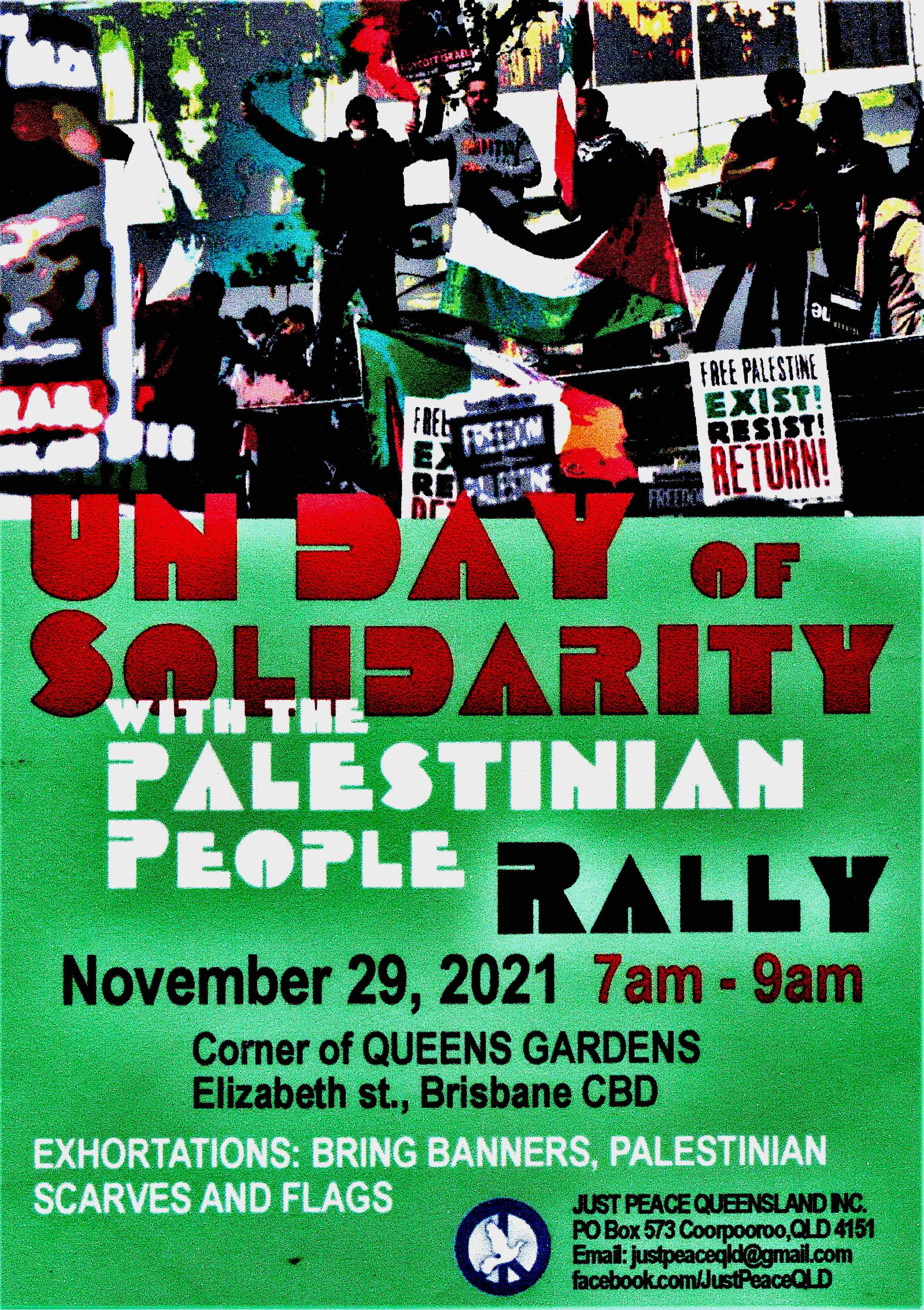


 4PR - Voice of the People