Workers BushTelegraph discusses current and past events, books and film with the aim of sharing worker political education and consciousness.
WBT poses 3 questions: who owns the land, workers control of production and democratic rights.
Today’s show Senior officials split with their unions on coal Rocking the foundations – Building Labourer’s BLF Green Bans Ian interviews Michael McNally – Qld State Secretary of the National Tertiary Education union
Podcast
Playlist Zellanach – Song for the Djap Wurrung people in Victoria Joni Mitchell – Big Yellow Taxi Jumping Fences – On the chain Phil Monsour – One more day than them
Transcript
Consensus vs Class Politics The Australian Labor Party was formed by the unions to gain parliamentary political power. From its formation a debate constantly raged as to the extent of compromise acceptable to achieve this goal. In the 1980s and 1990s this internal battle chose between adherence to the working class or opportunistic pluralism to attain parliamentary power. It was finally resolved during the Hawke-Keating Labor governments. The importance of parliamentary power became paramount. This meant that the intellectual base of the party was embroiled in the conventional debates of the ‘pluralistic’ society, whose parameters were dominated by the ruling elites. ALP politicians and trade union officials followed, avoiding a socialist critique of society, in an attempt to increase credibility across classes. Consensus politics superseded class politics.
Queensland is a coal state. In the lead up to May Day 2019 we investigate whether Queensland unions have effective policies on climate change. This research is taken in the context of statements this week by two senior officials breaking ranks with their unions and ALP policy on the proposed Carmichael Mine in Clermont in the Galilee basin in Central Queensland. It is 12 years since former ALP leader Kevin Rudd declared that climate change is ‘the great moral challenge of our generation’.
So let’s go to the National Climate Summit at Parliament House, in Canberra in 2007 to hear what Kevin Rudd said:
Neither the ALP nor the union most concerned with mining coal, the Construction Forestry Mining and Maritime and Engineering Union (CFMMEU) have come out against opening up new mines in Queensland’s Galilee Basin. But the cracks are starting to show.
State Secretary of the Maritime Division of the CFMMEU, Bob Carnegie, came out this week and said:
“We stand by our mining brothers and sisters in the CFMEU mining division but as Queensland state branch secretary I do not stand by the fact that another coal mine is going to be built to further enrich the world’s CO2 emissions. The world doesn’t need another thermal coal mine.”
Despite Bob Carnegie’s comment, the CFMMEU national secretary Michael O’Connor said “the union has a single position regarding proposed coal mine developments”.
“If they meet the appropriate economic, social and environmental approvals and offer secure, well-paid employment, then we support them.”
There is no questioning Bob Carnegie’s sincerity on this issue. He has a long association with the Miners and their federation. Listen to Bob introducing Chris from the Miners during the 2015 Hutchinson Dispute at the Port of Brisbane. Bob Carnegie (MUA) and Chris from the Miners chained themselves to the railway track during the ’98 MUA Here to Stay dispute:
Bob Carnegie’s challenge to his own union is based on the approach taken by Jack Mundey from the Builders Labourers Federation when he led his union into the Green Bans against Sydney’s Rocks development. Carnegie urged the union movement to follow in the steps of “the finest living trade unionist“, Builders Labourers Federation NSW secretary Jack Mundey, who led the union’s Green Bans in the 1970s.
So lets go to the National Film and Sound archives to hear the opening sequence of Pat Fiske’s 1985 documentary Rocking the Foundations about the BLF’s Green bans.
In contrast to the ALP and the CFMMEU, the National Tertiary Education Union has a policy on the opening up of a 20 year coal mine at Carmichael in the Galillee Basin. It states:
NTEU will continue to advocate to see the Carmichael Mine stopped and will work with our allies to campaign against this mine and other similar proposals.
There have been many claims about the number of jobs that the Adani mine will create but Peter Ong, the Qld State Secretary of the Electrical Trades Union was reported as saying that Adani had refused to engage with his union and warned the mine was unlikely to provide decent wages or conditions.
“You open up another coal mine and all it’s going to do is put further downward pressure on the price of coal – and it’s basically flat at the moment – and it’s going to put pressure on the already operating coal mines.” – AFR article “MUA leader declares opposition to Adani“
He said the mine should not get the go-ahead on that basis and Labor should focus on ensuring decent jobs in renewable industries such as solar.
“As a Labor government they should be saying this is the way of the future. We should be looking to transition, not opening up more coal mines, especially not in this current climate.”
The lie: “Dolce et decorum est pro patria mori It is sweet and proper to die for one’s country” – Horace
“Tunnelling through the night, the trains pass in a splendour of power, with a sound like thunder shaking the orchards, waking the young from a dream, scattering like glass the old mens’ sleep, laying a black trail over the still bloom of the orchards; the trains go north with guns.” – Judith Wright
The Lies – Big Coal and Anzac Victoria interviews Andrew Harding – CEO Aurizon Ian interviews David Stephens – Heritage Guardians.
Big Coal Myths “Fiction is the lie through which we tell the truth.” ― Albert Camus Over the past few weeks people have been blocking coal trucks going out through the port of Brisbane. This has led to a variety of punitive actions by both state and federal governments and Aurizon, Australia’s largest freight rail company. Wild scenes occurred at the Brisbane Magistrates courts this week when police closed the court hearing charges against Aurizon Five. Paradigm Shift interviewed Aurizon’s CEO, Andrew Harding, about the conflict over coal.
VICTORIA: Please introduce yourself ANDREW HARDING: Andrew Harding, managing director and CEO Aurizon Holdings
VICTORIA: Previous employment ? ANDREW HARDING: Chief executive Rio Tinto’s iron ore business .
VICTORIA: What is your alma mater?
ANDREW HARDING: I went to the University of New South Wales and I
studied Engineering. At the same school was Greg Combet who went on to
be the leader of the ACTU and Minister for Climate Change.
VICTORIA: So you’re Maaates?
Andrew Harding: I wouldn’t say that.
VICTORIA: So why did most of Australia’s top engineers come from University of New South Wales if you’re not all maaaates?
ANDREW HARDING: UNSW is a prestigious university.
VICTORIA: I wonder how UNSW compares with Chinese Engineering schools. Why doesn’t Aurizon Holdings pay any tax? ANDREW HARDING: We do.
VICTORIA: A little over 1% of your net income ?
ANDREW HARDING: What is your source ?
VICTORIA: Michael West.
ANDREW HARDING: Michael West is not credible.
VICTORIA: He’s a forensic accountant who worked for Murdoch who supports coal.
ANDREW HARDING: Yes, but then Michael went rogue … fancy knocking mining
and energy companies for a living when they are the lifeblood of our
economy.
VICTORIA: Speaking about lifeblood, why did you withdraw your
application to construct a rail link between Abbot Point and Galilee
Basin?
ANDREW HARDING: We already own the corridor to Clermont plus we didn’t have the customers to justify such a project.
VICTORIA: What about Adani, why did you withdraw your application for
finance to build a 388k rail line from the Galilee to the coast? ANDREW HARDING: Adani don’t have final approval.
VICTORIA: Scott Morrison signed off on approval of water rights prior to going to the election this week. ANDREW HARDING: Yes but they have to get through the Queensland government approvals process.
VICTORIA: The heatwave and fires in Queensland have hardened local
opposition to the plan. You say you don’t have customers but aren’t you a
monopoly which allows various rail operators to use to central
Queensland rail network? ANDREW HARDING: Yes that’s true plus we have our own operator which is Aurizon Operationsproprietary limited.
VICTORIA: Then what about BHP, Hancock, Rio Tinto, Anglo American, Peabody and Clive Palmer.?
ANDREW HARDING: I can’t discuss them because of ongoing litigation.
VICTORIA: Is that about your failure to meet competition policy ?
ANDREW HARDING: We dispute that.
VICTORIA: But there are no competitors, your railway lines run over a
network which links to five coastal terminals at three ports.
ANDREW HARDING: That’s true, from North to South the terminals are Abbot
Point, Dalrymple Bay, Hay Point, Wiggins Island and RG Tanna coal
terminal.
VICTORIA: Then what about Gina Rinehart ?
ANDREW HARDING: We have no choice, we will work with Gina. We’re in
discussions with Jackie Trad about how much we can charge to carry
Gina’s Coal.
VICTORIA: Why have you taken out a strategic lawsuit against public participation against the front line action on coal.
ANDREW HARDING: They are blocking our coal trucks.
VICTORIA: So they are a threat?
ANDREW HARDING: Not really, we’re just managing risk.
VICTORIA: You mean that Australians are turning against coal. ANDREW HARDING: Coal is the lifeblood of Queensland. Mining in Queensland contributes 10% of gross state product.
VICTORIA: Isn’t the planet on fire and your refusal to change your
business model may have catastrophic impacts on the welfare of our
grandchildren?
ANDREW HARDING: We provide jobs and economic growth now and in the future.
VICTORIA: School kids say you’re a fossil fool so is Aurizon a train wreck just waiting to happen?
Andrew Harding: We are not worried about the young ones, we are more concerned about frontline action on coal (FLAC). Victoria: How so?
Andrew Harding: We have information that FLAC has rejected non-violent direct action. Victoria: To do what?
Andrew Harding: Our train drivers are very upset, they are worried about violence. Victoria: What’s your source? Andrew Harding: Extinction Rebellion SEQ’s facebook page.
Victoria: Sorry? What?
Andrew Harding: There is a world wide revolt against coal, it is
hitting our bottom line, investors are getting nervous and our
employee’s are out on the frontline every day facing FLAC. We have to
protect our people.
Victoria: But FLAC signed an agreement to pull back from NVDA, didn’t they?
Harding: Yes but we think that has spurred the young people on to
jump in front of trains. They are placing our employees lives at risk. Victoria: What proof do you have of that?
Harding: One of our men grazed his knuckles trying to open a lock-on device. Victoria: That’s hardly ‘lives at risk’.
Harding: Don’t be too sure young lady, there are the extreme groups like the wobblies. Victoria: But FLAC is concerned about the planet that you are putting at risk.
Harding: Where are you from? Victoria: 4ZZZ Harding: I think we will have to leave it there.
That was Andrew Harding CEO of Aurizon, I think he left it there
In
the interest of full disclosure, like Andrew, I also attended
University of New South Wales. I studied Accounting and Tax Law. We were
never Maaaates.
NB: This is a satirical piece with the names of the parties left in so that we do not protect the guilty.
On Battleship Hill’s caved in trenches, A hateful feeling still lingers, Even now, eighty years later. Cruel nature … has won again – PJ Harvey
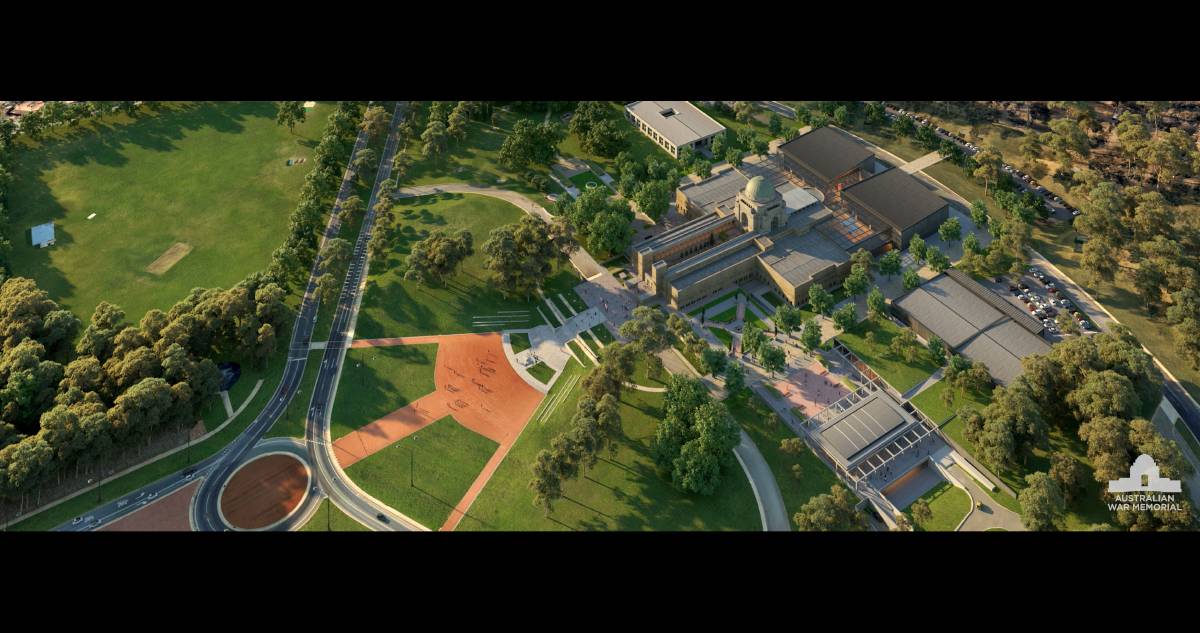
$$500M War memorial extension in Canberra
War Memorial extensions Ian interviews David Stephens from the Heritage Guardians about the government’s proposal to spend half a billion dollars on extensions to the War Memorial in Canberra. [Special thanks to Andy for coming up with this interview].
Playlist Andy Paine – Song for Wollar Wilfred Owen – Dolce et decorum est pro patria mori PJ Harvey – On Battleship Hill Mick Thomas – Gallipoli Rosemary Neil Young – Pochohontas
There are men who struggle for a day and they are good. There are men who struggle for a year and they are better. There are men who struggle many years, and they are better still. But there are those who struggle all their lives: These are the indispensable ones. — Bertolt Brecht
12pm Fri 19 Apr 2019:
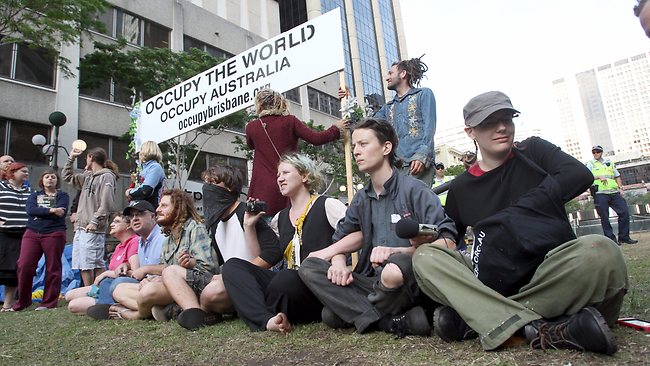
Ian presents a soundscape of Occupy Brisbane made by Corey. Franz Dowling on weapons in church. Assange extradition
Assange Extradition
Why are we discussing Assange’s guilt or innocence on a range of matters while the helicopter pilots go free for murdering unarmed civilians in Baghdad, or why George W can go to parties and get blind drunk or not without a single hand laid upon him.
‘Last Train’ for Julian Assange?
Then a friend reminded me: “Because not only do the victors write the history, but they also prosecute in the courts.”
That said, here are my concerns.
I have read a little about the sex allegations on and off since 2010
when the allegations were made by two women. The facts stated say that
Assange refused the plea of one woman to use a condom during sex. That
he ‘interfered’ with a condom with the second and later, while she was
asleep, began unprotected sex with her. Both women asked that he submit
to an STD test which he didn’t.
I think that on these facts alone, if true, he is guilty of sexual
misconduct and should be held accountable for it. If true, I think what
he did was rape.
However I can’t see how Assange can be held to account for rape while
locked up in a terrorist cell in Belmarsh Prison awaiting extradition
to the US. I think the two women in Sweden were the victims of a
‘sting’, their experiences with Assange were used to manipulate a
situation where he could be prosecuted by the US Attorney General for
releasing classified information with the assistance of Chelsea Manning.
Manning refused to be a party to any of it and that is why she is
locked up again even though Obama pardoned her. They may crack her yet …
but they already have all the info needed to prosecute Assange. Their
problem is that they can’t legally get hold of him. He eluded them for 7
years with the help of an anti-yankee Ecuadorian government. But in the
end his mental and physical health suffered and the authorities used
this to get him out of the embassy. When I saw his face last week as he
was dragged from the embassy I was shocked by the toll that it had taken
upon him.
This could indeed be ‘the last train’ for a person who
revealed to the world the atrocities of the Iraq war but who also, by
releasing a cache of Hillary Clinton’s emails before the presidential
election, might have contributed to the election of Trump – which is an
international disaster. Mind you, I do not think Clinton would have been
much better, if at all.
For what it is worth, that is my take on the long sad story of Julian Assange.
Last Train to Mirabad Julian Assange took on the US Wikileak’d ten years war in Afghanistan Julian roams downstairs in Woolwich Court Thinking what would Pilger and Ellsberg do now? Waiting to be taken through tunnel to Belmarsh Prison Where ghosts of IRA meet Ronnie Biggs in special secure unit No Wikileaks today about Sapper Jamie Larcombe No mention of his Afghan mate Both dead in Mirabad – Ian Curr
Corey’s soundscape on Occupy eviction in Brisbane 2011
Occupy Brisbane prior to Eviction
KC’s “Three weeks people, three weeks!”
We have held our ground, we have been chased around the city … caged in and caged out of public spaces. The question we have to ask (mayor) Quirk and (premier) Bligh and the whole world is:
“What are they afraid of?”
They say we a fading away, they say that we are irrelevant.
If that is the case why are they treating us like this?
Why are they surveillancing? Why have we got people watching us
twenty-four hours-a-day? They know just as we do that we are not
irrelevant. We are not going away. They know that we are everything that
matters at the moment because we are hope … hope of a fair world and
that is all that matters because it is awakening people. It is bringing
freedom to the 99% who have suffered for so long, under their rules,
their exploitation their aggression.
They are using every law in the book at the moment to try to silence
us. They have scoured their bi-laws to find anything they can use
against us. No matter what we do they will find some way to use their
laws against us because the laws are written to protect their system.
And the reality is that what we are facing now is nothing new, these
laws are used every day against the poor and the dispossessed. ..being
chased around the city, being chased off communal land, this has been
the reality of aboriginal people in this country for over 220 years and
we must never forget that.
The whole of this system is designed to protect the wealth of the 1%.
We must prepare ourselves to stand strong and do what we know is right.
Not what they say is right. The legal protection that we had today is a
product of the struggles of the past. We must learn from those
struggles. And we must learn to rely on our own strength. We can’t
plead; we must stand our ground and demand our rights.
For the right of the 99% to fight for a better world.
Eviction notice from occupy
And we are growing in strength, we can’t afford to get disheartened
in any way or allow ourselves to be worn down… the support is out there
and is growing. Some people are threatened by this, some people in the
99% are threatened by this, some people believe the lie that they are
wounded, some people are beaten down by the system and the constant
struggle to survive, they can’t see that we are fighting for them and
with them. But if we stay and we stand our ground, then people will
realise who we are and what we are saying. It will happen because it has
to, humanity has no other alternative than to take control of society
from the 1%. We have to believe in the people, we are the 99%, and we
shouldn’t see ourselves as shepherds on them. Believing in the people
starts with believing in ourselves. It is our movement, not one of us is
any more important than any other one of us. Everyone here matters,
what we do matters. Everyday this system tries to make us feel small,
tries to make us fell irrelevant. It promotes celebrity and status to
make us feel worthless. The political system disempowers us, the
economic system alienates us, we are taught from day one to defer … to
accept authority.
This occupation is a giant school in learning how to resist. Learning
to be ourselves, we are reclaiming our dignity, we are re-claiming our
humanity, we need to hold on to that because right now nothing else in
this world matters.
The only thing that matters is our collective strength, our strength
of standing together, the strength that we have built by working
together to build through all sorts of barriers … three weeks, three
weeks we have held our ground, that strength, that strength that built
this occupation of building human solidarity, human solidarity and that
is what they are afraid of. We are not fighting each other, if we are
putting each other down; if we are hanging on each other then they don’t
have to do it. They don’t have to oppress us. They tell us every day
that humans are naturally selfish and greedy. Every day we are proving
them wrong. We are working for a better world by taking control of our
lives and collectively, and with more people joining this movement we
will take control of society, we will in the interest of human needs. We
have seen it, humanity is beautiful, they can’t take that away from us
because human solidarity is a motivator a billion times more powerful
than their filthy money, than their stinking careers, it is a billion
times more powerful than their institutional power. We’ve seen what
human solidarity can achieve, they are trying to crush us because they
know if more people experience what we have in the occupation over the
last three weeks, the more people that feel that, then there is no way
they are going to be able to crush us.
They’ll try, they’ll use their laws, they will try to force us, they
will do whatever they can to say we are hopeless and not ready, but we
are ready we are going to hold onto that vision, we are not going to
extinguish the flame of a new society, we will be true to ourselves we
will be true to the struggle, stand by each other, stand by the 99%,
we’ll grow, we’ll win because we have found our strength, we have found
human solidarity.
KC Newnam at Occupy Brisbane
5 Nov 2011
[transcribed from YouTube video by David Jackmanson]
Arms in Church
If God’s on our side He’ll stop the next war – Bob Dylan ‘With God on our Side‘
Premier Annastacia Palaszczuk together with
former Federal Attorney General George Brandis were in the front row at
St Stephens in Brisbane last Sunday surrounded by fully armed soldiers
showing off their weaponry. Surely this is not a response to
Christchurch?
Palm Sunday Peace rally patron Claire Moore was in
the front row with Palaszczuk and Brandis. It would have been
interesting to ask Senator Moore why she chose to be there. Labor Party
politics … how awkward, especially when Ms Moore has been rolled by
Palaszczuk’s AWU faction for pre-selection in a winnable Senator spot.
All these nominal catholics in one spot for an ANZAC mass, how weird,
how factional.
Recently Queensland minister, Cameron Dick, announced that a Regional
Growth Fund will be given to the Rheinmetall Nioa Munitions joint
venture to open a factory in Maryborough to manufacture munitions and
tanks.
Meanwhile the Courier Mail reports that “International
missile manufacturer MBDA is understood to be considering setting up a
presence in the state to get a share of the cash, while Rheinmetall has
promised to set up an $80 million research fund in conjunction with the
Queensland University of Technology and other tertiary institutions if
it wins.”
Maryborough like the rest of regional Queensland
is in recession. In the past it always had heavy industry. So Minister
Cameron Dick said today ‘The economy (is) on the march with all guns blazing‘.
I’m sure the pun was intended but the decision is mad. A $7.5 million
government grant from the Jobs and Regional Growth Fund will be given to
the Rheinmetall Nioa Munitions joint venture to open the factory.
Premier Annastacia Palaszczuk and Minister Cameron Dick looking for an arms led recovery in Queensland.
All this under the familiar jobs, jobs, jobs mantra. Why not make
electric cars or trains? Insted of Australian governments spending
$billions on arms why not build a very fast train linking the capitals.
“The shell forging plant will be one of a kind in Australia,
contributing to the establishment of sovereign capability in the state
to support the Australian Defence Force and defence exports, while
creating around 100 full-time jobs when the plant is fully operational,” RNM Director Robert Nioa said.
‘Sovereign capability‘,
what a joke when Brisbane does not even honor its first nations people
with a cultural centre – a place that would engage many capable
aboriginal artists in employment, education and cultural business. The
working class keeps getting sucked in by jobs, it is time to change
that.
Thanks to Tony Robertson and Frontline film for the footage.
We will be loud against the silence Angry at the greed We will not beg We are defiant Tell it like it is – Phil Monsour and the Crisis Actors, ‘Our House is on fire‘
‘We can’t just replace big oil with big solar’ – Sadie
Paradigm Shift 4ZZZ fm 102.1 Fridays at Noon 12 April 2019
Ian speaks with Sadie and Hanna about direct action against coal. Both are activists who, along with others, have challenged Australia’s largest freight carrier, Aurizon, for its participation in the climate changing coal industry. Both have been hit with a SLAPP (Strategic Litigation against Public Participation) suit by Aurizon and are facing large damages, bankruptcy and jail time. Paradigm Shift supports these activists in their struggle against big coal. Will you? Have a listen and decide for yourselves. Aurizon joined the Aurizon five to its writ against Front Line Action on Coal.
Hannah and Sadie speak on stopping big coal on the Paradigm Shift at 4ZZZ studios 12 April 2019.
It was Anna Bligh’s Queensland Labor government that sold Queensland Rail to QR National for $15B. QR national was later rebadged to Aurizon Holdings Ltd. Aurizon Holdings Ltd is a monopoly that runs the Central Queensland Coal Network (CQCN). It allows various rail operators to run rolling stock on CQCN. The Queensland government retained shares in Aurizon some which the Campbell Newman LNP government sold for $1.5B. Therefore both Labor and LNP participated in the privatisation of Queensland Rail.
India’s Mundra Port signed a 99-year lease on Abbot Point Terminal 0 in 2011. The deal cost Adani Group $1.83 billion.[ Adani is seeking to expand the terminal to allow another 35 million tonnes of thermal coal exports per year, on top of the current 50 million tonnes of capacity.
Environmental Activists ‘The Aurizon Five’ face
$375,000 in Damages After Stopping Coal Trains Headed to Adani’s Port
Aurizon
(formerly Queensland Rail), has been under public scrutiny for the role their
rail lines will play in the controversial Adani Carmichael coal project and
subsequent development of the Galilee Basin. Between October 2018 and January
2019, four activists blocked coal freight from entering Adani’s Abbot Point
coal terminal near Bowen and the fifth halted a train headed to the Port of
Brisbane, demanding that Aurizon rule out a partnership with Adani and refuse
haulage contracts with any new coal mines.
Sadie Jones, a Zoology student at the University of Queensland, sees the Aurizon case as a shameful tactic representative of the stranglehold that large corporations have on democracy.
“A company that grossed over 3 billion last year trying to bankrupt a handful of students and schoolteachers over environmental protests is almost laughable. But then I remember what’s happening to us and wonder just how our system became so broken.” Jones.
“People raising concerns held by the majority of Australians have been flagrantly ignored by the government and corporate sector,” says co-defendant, Hannah Doole, “now those standing up are being targeted. Aurizon’s attack relies on their position of power, because in reason they fall way short. This abuse of power only highlights the need to stand up against the corrupt coal industry”.
For Greg Rolles, a 37-year-old geography teacher, money is not the issue. “We are in the midst of climate catastrophe. We are doing our best to protect ourselves where previous generations have failed us. I just want a safe home for the next generation. Taking me to court, won’t stop me from fighting for that.”
To Clancey Maher, a 23yr old Nursing & Public Health student from the University of Canberra, the legal action by Aurizon’s lawyers resembles the ‘trained attack dog’ strategy that AJ & Co law firm promised to utilize on behalf of Adani, in a document that was leaked to media in February 2019.
“Aurizon is instigating a SLAPP suit against us; this is symptomatic of the fossil fuel industry’s strategy when faced with dissent. We’ve already seen it happening in the way Adani has treated indigenous leaders who stand up for their homeland, and are essentially crushed with the threat of bankruptcy.” said Maher.
The Aurizon Five will oppose the damages in court, determined to preserve their right to protest in the face of corporate intimidation.C
After the shooting and murders in Christchurch, the question remains, why?
In an attempt to find answers to the massacre, Ian plays speeches by Uncle Sam Watson and Basil from ‘Muslim Lives Matter’. Sam describes the massacre of his own people and the affinity he has with muslims.
Fairouz sings ‘We will Return’
Ian interviews Pauline Hanson* and Andy Gray (Yellow Monday).
Pauline puts out her usual bigotry.
Andy Gray describes how he visited Iraq and Syria and the destruction wrought by the coalition of the willing and Howard’s refusal to liste to the Australian people.
After the shooting and murder in Christchurch, the question remains, why? Ian plays speeches by Uncle Sam Watson and Basil from ‘Muslim Lives Matter’. Fairouz sings ‘We will Return’ Ian interviews Pauline Hanson* and Andy Gray (Yellow Monday).
“Who says all is lost; I come to offer you my heart.” – Fito Paez in Yo Vengo a Ofrecer Mi Corazon
“We are stardust…billion year old carbon, caught in the devil’s bargain…. and we got to get ourselves back to the garden” – Joni Mitchell
This program offers its heart to all the victims, their family & friends in Christchurch last Friday. The student strike for climate justice on 15 March 2019 demonstrated that there needs to be more contemporary issues discussed as part of public education.
Political leaders like Annastacia Palasczchuk and Scott Morrison came out against the student strike. State schools forbade their students to march as a group. For example Brisbane State high school students were told not to march for climate justice and not to go to the demonstration as a state high contingent.
Fortunately this did not stop the students.
I saw a group of 15 State high school students marching as a group.
The response by students in Brisbane and across the country was inspirational. Mums dads and friends marched with the kids. George Street in Brisbane was awash with students carrying placards advocating climate action, our future depends on it.
At the other end of the education system, the University of Queensland has a long history of political activism. This can be divided into three main campaigns:
Campaigns the democratic rights against repressive governments firstly in 1967 when the government banned street marches for the first time. It was concerned about the growing anti-war movement as a result of government sending conscripted trips of 19 years of age to flight and imperialist war in Vietnam. Again in 1977 Queensland government banned street marches, this time to stave off the growing anti-uranium movement. And lastly in 1985 the government declared a state of emergency to deal with workers who had been sacked from the electricity industry from organising to save their jobs from contract labour.
The anti-war campaigns that occurred in the 1960s early 1970s. The focus of organisation was at the University of Queensland union complex which has a strong heritage of Independence critical thinking and political activism.
The campaigns against racism – in 1971 against the apartheid South African rugby to and the smash the axe campaign waste by aboriginal activists from the University of Queensland remove Queensland own version of apartheid.
This program highlights a new generation that is fighting for climate justice and against all forms of racism. The University of Queensland has proposed to introduce Ramsey Centre for western civilisation that promotes a chauvinist view of Australian history.
On 21 March 2019 I attended the forum at the University of Queensland to hear students and staff criticise a proposed history of western civilisation major that is to be funded from outside University by the right wing think tank. Both students and staff made a connection to the racist attack on Muslims in Christchurch on 15 March 2019 where a person espousing similar views attacked and killed 50 innocent people at two mosques in that city.
I interviewed hey Elyse Fenton from the national tertiary education union about the campaign. I recorded some of the debate from the forum.
Student strike for climate justice Brisbane 15th of March 2019 George Street Brisbane Photo by Lachlan Hurse
Andy and Ian interview students from Schools strike for climate justice and forum protesting the introduction of Ramsey history of the western civilisation at the University of Queensland.
Ian speaks with Elyse Fenton from the National Territory education union.
We listen to speakers from the Ramsey forum at UQ: Jeff Rickertts (Save UQ Union Complex) Priya De (Student Councillor) Professor Or (Law School) UQU Pres. Georgia Milroy Alex Asher (Student activist) Elyse Fenton (NTEU rep for casual staff). And other unamed speakers.
Playlist Christine Johnson – The dream before Rita Martinson – Soldier we love you Dusty Springfield – Windmills of your mind (from the Thomas Crown affair).
At the end of the show Jumping Fences performs this beautiful song Yo Vengo a Ofrecer Mi Corazon by Argentinian Fito Paez from his album ‘Giros’ where he sings:
Y hablo de países y de esperanzas,
And speaking of countries and hopes,
hablo por la vida, hablo por la nada,
speak for life, speak of nothing,
hablo de cambiar ésta, nuestra casa,
I talk about changing this, our home,
de cambiarla por cambiar, nomás.
changing to change, just.
¿Quién dijo que todo está perdido?
Who said that all is lost?
yo vengo a ofrecer mi corazón.
I come to offer my heart.
– fito paez
‘Yo vengo a ofrecer mi corazón’ sung by Sue Monk with Jumping Fences
Hard words rang across the factory floor Juan heard the sound of hate bitter words to injure a shout that sent the signal for the war to come – ‘Brisbane Barrio’ by Jumping Fences
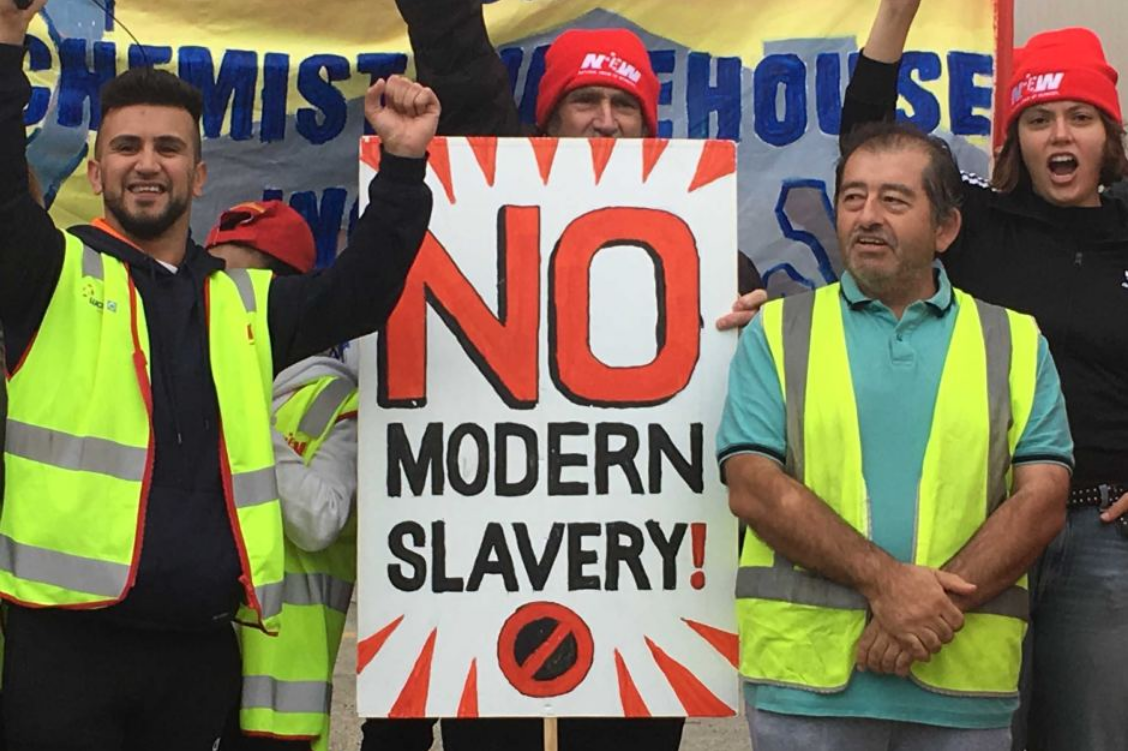
Workers on picket line at Chemists Warehouse in Melbourne
Disparity between rich and poor is growing. Offshore wages are catching up with Australian conditions. Political parties of the centre have supported real wages decline and for profit increase. Leader of the opposition Bill Shorten has called the 2019 Federal elections a wages election. Liberal Prime Minister has rejected wages growth and opposed the ACTU’s national minimum wages case for an increase. Labor refuses to say how much wages should increase in $$$ terms.
Ian talks with Martin De Rooy (National Union of Workers), Corey Cullen (NUW lawyer), Thomas, Jacob and Isaac (workers at Chemist Warehouse in Eagle Farm in Brisbane). Please support the strike by Boycotting Chemist Warehouse and showing solidarity at the picket line on Trade Coast Road at Eagle Farm, Brisbane and at Preston and Somerton in Melbourne.
Playlist
Stella Donnelly – Old Man
Jumping Fences – Brisbane Barrio
International Women’s Day 2019 Ian talks with Betty Taylor (Red Rose Foundation) about violence done toward women and institutions that discriminate against women.
Ian talks with Pamela Curr AOM about growing up as a woman in the 1960s. Pamela Curr later became an activist with the Asylum Seeker Resource Centre.
What is a woman? Angela Davis once said ‘radical simple means getting to the root‘. At the 1910 2nd International Conference of Working Women, delegate Clara Zetkin successfully moved for an International Women’s Day to be celebrated every year. People have marched ever since for women’s rights and to end discrimination against women.
There are many events around Brisbane this week where people can celebrate gains made by women and to organise for struggles ahead. Last night women celebrated IWD at an event hosted by Union Aid Abroad highlighting the international character of this struggle. In the trade unions, the National Tertiary Education union has organised events for its members. There are two rallies planned for tomorrow one in Emma Miller Place starting at 10 am and another at 2pm in Queens Park. We encourage our listeners to support these events where possible.
During International Women’s Day 2018 in Brisbane a singer was heckled because she held up a sign that said trans people cannot be women.
IWD 2019 has split because of the acrimony existing within the women’s movement over this issue.
For many there are other issues facing women that are more pressing: preventing violence against women, the pay gap, discrimination and sexual harassment in the workplace, women’s control over their own bodies and fertility, and why are women doing the bulk of unpaid caring and domestic work. There are other pressing issues.
It is important for the discussion about transgender to be out in the open and not behind closed doors. So what are the questions that go to the heart of this division in the women’s movement and what is a remedy (if one is possible)?
We do not claim to be experts and can only ask questions that go to the heart of this issue:
What is a woman? What is a feminist? What are internal, inside the psyche, that influence relations between women and men? What are the structural elements in society that determine inequality faced by women?
A woman. At a biological level a woman is a primate who can lactate, menstruate and give birth to children. She is an adult female human being who has a uterus, ovaries and a hormonal spectrum that allows gestation, birth and support of an infant. This gives rise to a set of experiences singular to women. Transgender denotes or relates to a person whose sense of personal identity and gender does not correspond with their birth sex (Oxford dictionary) . Intersex women are those born with sexual characteristics that do not fit typical notions of male or female.
Human beings have been assigned different gender roles by society, much depends on race and class.
Throughout the ages, gender has been used to discriminate against all women. All women, no matter what country (be it advanced capitalist or developing), have been subjected to violence.
In 14th century English the words ‘gender’ and ‘sex’ were roughly synonymous. It was not till the 20th century that the women’s movement challenged this assumption and showed how gender was used by patriarchal societies to deny women human rights afforded to men only.
A woman’s mind In ‘A Room of One’s Own‘ Virginia Wolfe wrote this passage: “In each of us two powers preside, one male, one female… The androgynous mind is resonant and porous… it transmits emotion without impediment… it is naturally creative, incandescent and undivided.”
Paradigm Shift 4ZZZ 102.1 FM Friday 22 Feb 2019 at noon
Forum – A meeting or medium where ideas and views on a particular issue can be exchanged. From Latin, literally ‘what is out of doors’, originally denoting an enclosure surrounding a house; related to fores ‘(outside) door’ – Oxford Dictionary
“The UQ forums were open to anyone who dared to speak, to dissect, mock or defend the government, war, conscription, the education system, capitalism, civil rights. The number of speakers grew to include a quite stellar cast of lecturers and students of various persuasions. The audience grew too, and over time this created an almost communal setting, a public space that belonged to the students and university staff.” – Annie Richards in Demonstrating defiance.
UQ Forum, a student space On Monday lunchtime about 100 people turned up to hear a wide range of speakers defend the UQ Union Complex. Many passers-by listened in, so did security guards and officals from union and university administration. The rally was chaired by Jeff Rickertt, an historian and librarian at the University.
Munnenjarli and Biri Gubba man, Sam Watson, spoke about a songline that goes through the University over land never ceded by first nations people. Sam spoke of the failure of the University to record this in any way to show respect to first nations people.
Speakers challenged the role of the University and the billion dollar business it has become, its conservative and racist roots in empire turned into an uncritical degree producing factory serving industry and capital.
In contrast Queensland state parliament outlines its conception of what the role of the University is in “Functions of university in the University of Queensland Act:
The university’s functions are— (a) to disseminate knowledge and promote scholarship; and (b) to provide education at university standard; and (c) to provide facilities for, and encourage, study and research; and (d) to encourage the advancement and development of knowledge, and its application; and (e) to provide courses of study or instruction (at the levels of achievement the senate considers appropriate) to meet the needs of the community; and (f) to confer higher education awards” – University of Queensland Act“
Jeff Rickertt introduced the forum Jeff said that the forum is a student space, that should be owned and controlled by students. He said that the forum was once a university within the university. Rickertt criticised the assumption of the University administration that it can decide how the space is used. He criticised the Vice-Chancellor and his administration for colonising a space that has been in the hands of students and their union since 1960.
Sam Watson gives welcome to country In his welcome to country, Sam Watson spoke of the connection the Aboriginal community has with the Forum at UQ, how there was a conference on racism held in the union buildings in the early 1970s and how his Uncle Ross Watson set up the first Murri radio at 4ZZZ studios under the refectory.
Di Zetlin talking on an educated mind Di argued that the University should produce an educated mind that is critically engaged and analyses what we do on a day to day basis. In the forum 50 years ago Zetlin said that we were asking questions about the Vietnam War and how an authoritarian corrupt government claimed to be a strong government (sending young men to their deaths in a futile imperialist war).
The Tyger Speakers posed alternatives. For example former Lecturer in English at UQ, Dan O’Neill, argued that the University administration had refused to discuss or justify its corporatist approach to tertiary education. He said that a University is a place of reasoned argument and reliance upon evidence that informs people how to act in the world. He quoted from John Henry Newman about the important of the Forum:
It will give birth to a living teaching, which in course of time will take the shape of a self-perpetuating tradition, or a genius loci, as it is sometimes called; which haunts the home where it has been born and which imbues forms, more or less, and one by one, every individual who is successively brought under its shadow.” – from ‘On the scope and nature of University Education’ by John Henry Newman 1852. Dan O’Neill said that UQ (along with Monash Uni) had been foremost in challenging critically the mainstream view of society. He referred to a document ‘Up the right channels‘ that had been published as a result of discourse in the UQ Forum, a document that challenged the role of the University in society and analysed each department at the University.
O’Neill even invoked the famous poem by William Blake asking whether the forum and the buildings around it came out of real contradictions in the university. He quoted:
When the stars threw down their spears And water’d heaven with their tears: Did he smile his work to see? Did he who made the Lamb make thee? – William Blake, The Tyger
1967 arrest sheet
‘The day of the political street march is over’ – Qld premier Joh Bjelke-Peterson.
This statement by Petersen was a lie because people never stopped marching for political objectives on the streets of Queensland. They challenged his ban with defiant civil disobedience.
At the forum there was some reminiscing about past struggles. There was mention of the anti-vietnam war protests, the defiant civil liberties march of 1967, the anti-racist strike at UQ against the Springbok tour in July 1971; there was mention of the democratic right struggles from 1977 to 1979. Rosemary Severin spoke about the civil liberties coordinating committee (CLCC) organising defiant marches against the ban on street marches by the Bjelke-Petersen government.
The democratic rights struggle of 1977-79 was the longest sustained period of civil defiance in Australian history with many marches and over 3,000 arrests. The one exception to this is aboriginal resistance to colonisation that has lasted over 230 years.
During the state elections in 1977 there were a total of 219 arrests, 197 on the eve and 12 on election day. Assembly, marching and organising were banned by the government of the day culminating in over 3,000 arrests in a two year period from 4 Sept 1977 till July 1979.
Election Day 1977 In this photo members of the CLCC are being confronted by police and media after a march from the UQ forum area into King George Square where 197 people were arrested in the ‘valley of death‘. Queensland police are telling democratic rights activists to leave the central square in Brisbane on election day 12 November 1977, thus denying them one more democratic space, a forum for their ideas and calls for action against uranium mining and export, for women’s rights, for aboriginal land rights for a better world without capitalism.
Dan O’Neill (centre), to his left in the background is Harley West, to his right is Malcolm Bell, and to his left beside the film camera is the author, Ian Curr. Date 12 Nov 1977. Photo: Stephen Zaborowski.
SEQEB Dispute At the forum Professor Carole Ferrier remembered how, in 1985, 3,000 SEQEB workers and their supporters prevented Premier Joh Bjelke-Petersen from being presented with an honorary doctorate of laws by Qld Governor Ramsay. The forum area raised the importance of the SEQEB dispute with students and staff of the university.
Save the UQ Union Complex (SUQUC) put its defence of the forum and all that surrounds it in a leaflet widely circulated during Orientation week 2019:
“UQ management’s disregard for democracy and its history seems calculated. Its plan would trample on the democratic legacy of the thousands of students, staff and others who made this precinct the most important site in Queensland for defending civil liberties and social rights during the autocratic and corrupt rule of Johannes Bjelke Petersen. Not content with awarding Bjelke Petersen an honorary doctorate of laws in 1985, the university management now seems hell bent on erasing the very place where democracy, independent culture and critical media were kept alive during his premiership. It’s Joh-style ‘progress’ all over again; the same vision of progress that justified the demolition of the Bellevue Hotel, Cloudland and Her Majesty’s Theatre on the grounds they were ‘old’ and ‘run down’.
This rally has been called to say NOT AGAIN. We are a group of current and former UQ students and staff and concerned citizens committed to preserving this site both as a democratic space for students and an important piece of Queensland heritage.“
NTEU and UQ Councillor call out University Administration
The University of Queensland accepts controversial philanthropic funding from the Ramsay Centre and Dow Chemicals who made naplam for use against the Vietnamese people. Ramsay is a think tank headed by former Liberal PMs Howard and Abbott set up to introduce new Western civilisation majors, despite an emphatic rejection of the idea by union branches and universities of Sydney and ANU. The University of Wollongong has accepted the Ramsay proposals.
“At a meeting on 6 February, Queensland members of the National
Tertiary Education Union demanded that the university withdraw its
expression of interest in establishing a partnership with the Ramsay
Centre for Western Civilisation. The NTEU said a “packed” lecture
theatre had overwhelmingly endorsed the resolution, with just one
person voting against it.” – John Ross
Former PM Howard on board of Ramsay Centre
At the forum on Monday student councillor Priya De spoke out against
Ramsay’s ‘buying space’ in the humanities for racist propaganda.
Conclusion As if to spit in the eyes of those that organised the forum, the University Senate passed a resolution that evening to accept the Ramsay Centre on campus. The Ramsay Centre is a colonialist version of what a university stands for, drawing on a European history that underpins colonial exploitation and theft of land from first nations peoples.
The University in effect can be bought by the highest bidder as shown during the Dow Chemicals $39M purchase of a space at UQ to promote its business. The corporate University is a privatised space with intellectual freedom sold for the dollar.
In these circumstances the University of Queensland (and like tertiary institutions) should have its right to confer degrees taken from it.
A national database should be introduced to confer higher degrees on students by an independent public authority.
Playlist Down City Streets by Archie Roach Black Boy by Coloured Stone On the chain by Jumping Fences
The University has become a student industrial complex. The UQ Senate that gave Premier Joh Bjelke Petersen a doctorate of laws and set up a multi-million dollar shrine to Dow Chemicals that helped napalm millions of Vietnamese people now wishes to demolish the last vestige of resistance, the UQ Forum area, the refectory, the Schonell, and Student Union Building. If this ideological move by the University is successful UQ will have put the last touches to a once-was institution of higher learning and critical thought into a multi-billion dollar corporate dreamworld of shopping malls, collaboration plazas and food and beverage opportunity. There are no ‘nuanced negotiators’ on this show they are for creative freedom and political action.
Paradigm Shift discussion saving the UQ Union Complex between Annie Richards (author & academic), Lee Duffield (Journalist), Jeff Rickertt (Librarian & Historian), Priya (Student union Councillor & Socialist Alternative). Hosted by Ian. Historic clip of Joh Bjelke-Petersen’s only foray into the University. The University Senate tried to present Joh with an honorary doctorate of laws at Mayne Hall but 3,000 SEQEB workers and their supporters stopped them.
These are the issues addressed:
1. What is a university ? 2. Do universities teach ‘critical thinking’? 3. When I first went to the university of Queensland in 1968 only the top 2% of secondary school students enrolled at university; most of these were from private schools, has this changed and why? 4. What are the bosses up to at the University of Queensland? Why do they wish to demolish the UQ Union complex and the Schonell theatre that were built in the 1950s & 1960s? 5. Here is a photo that shows the UQ forum area in 1970 during the anti-vietnam war campaign. The sign in the background refers to a construction underway as a ‘commercial redevelopment’ of the UQ Union complex which includes the addition of the Schonell theatre and an extension to the refectory. How did this ‘commercial redevelopment’ differ from UQ Senate proposals to redevelop the site to provide “student based retail food and beverage opportunities and collaboration plazas”?
6. Many students do not attend universities these days, their lectures and assessment are online, they also hold down multiple jobs to satisfy their needs under a consumer society. Angela Davis says radical mean’s ‘grasping things at the root’ what is the relevance of the UQ forum area today? 7. University students pay fees and in return they obtain skills which helps them gain employment and better paying jobs. So are students customers of universities? 8. On the other hand, a worker is paid wages for turning up and doing work for the boss. Is there any similarity between a student at university and a worker at her boss’s workplace? 9. In 1972 Queensland University had grown into the size of a small town. Over 20,000 people attended and worked there each day. This was similar to the population of Mount Isa at the time. Lecture theatres were overcrowded. Exams were held at the end of the year. Students gravitated to the refec. There was a lot of sitting around talking and socialising. Universities were free. Labor was in power in Canberra. The Radical activities of the late 60s and early 1970s were on the wane. The radicals of the New Left had moved on. We had to wait another 5 years for an upturn with the right to march movement trying to bring down the Bjelke-Petersen government. Society changed as a result. How do you see universities of the current era? Can they produce similar critical thinking and a desire for change or have they given themselves over to corporatism, free enterprise and the neoliberal dream?
10. Next Monday the Committee to Save the UQ union complex is putting on a forum and picket at the University of Queensland, can you please tell us about that?
Playlist View from a wooden chair by Jumping Fences Brisbane Barrio by Jumping Fences
Plus archive of Paradigm Shift (4ZZZ fm 102.1 Fridays at noon)





 4PR - Voice of the People