Workers BushTelegraph discusses current and past events, books and film with the aim of sharing worker political education and consciousness.
WBT poses 3 questions: who owns the land, workers control of production and democratic rights.
Andy does an interview with Marian from Undercurrent that goes into schools and talk about sex, violence, gendered violence … Undercurrent tries to get up a conversation about social issues, sex education and things that impact of young students lives.
Based in the western suburbs of Melbourne, Undercurrent is a diverse and experienced team of volunteers who develop and deliver a comprehensive program of workshops around issues of healthy relationships, domestic violence and sexual assault, gender and sexuality, and consent and communication. (http://www.undercurrentvic.com/)
Ian and Andy discuss Al Naka (The Catastrophe) 15 May 2106 when Palestinians lost their homeland in 1948 to armed zionist organisations. Al Nakba is remembered in King George Square that night and they go out with Rafeef Ziadah and Phil Monsour’s Shades of Anger about the current situation in Palestine.
Playlist
The Lurkers – Post-post-feminist revolution
Camp Cope – Jet fuel can’t melt steel beams
Albion Gold – Bored and braindead
Gunk – Doll
Pikelet – Trish
Heaps Tuff – Don’t ask me what I’m doing after the revolution
Carrie and the Cut Snakes – Wild
Rafeef Ziadah and Phil Monsour – Shades of anger
Ian reads excerpts about the birth of May Day in Australia from Jeff Rickertt’s new book The Conscientious Communist – Ernie Lane and the rise of Australian Socialism.
Playlist
This Bike Is A Pipe Bomb – We shall not be moved
Rebel Diaz – Which side are you on (remix)
The (International) Noise Conspiracy – Abolish work
Jack Flash – Shearers strike
[Paradigm Shift 4zzz fm 102.1 broadcast on friday 22 Apr 2016]
Andy and Ian pay tribute to Tiga Bayles, aboriginal radioman, activist and father of 9 daughters. Tiga passed away last weekend. We send our condolences to his family and friends.
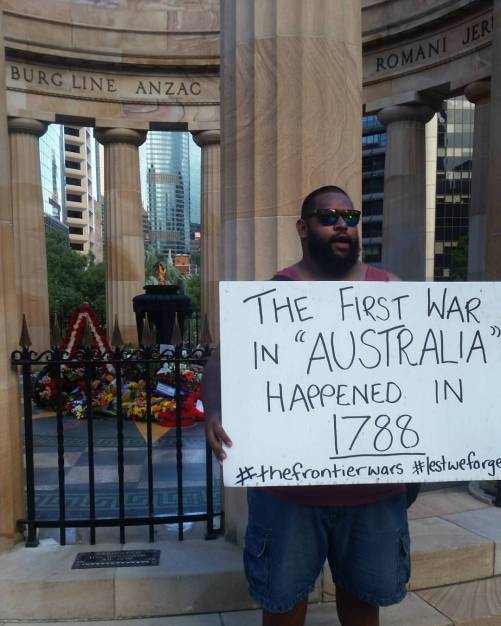
Andy looks at the ANZAC myth and how it overlooks the colonisation of a hundred years before, now called The Frontier Wars by authors like Henry Reynolds.
Listen to the show here. Pls note this show may not come online for a few days.
The Biggest Estate on Earth by Bill Gammage
The show features an interview with long time peace activist Graeme Dunstan who talks of ANZAC and the frontier wars and how it changed his view of country.
Andy speaks of how it affects his own perception of country where he grew up around Mugee. Before colonisation the Wiradjuri people lived there for millennia. Andy tells the story of Windradyne (c. 1800 – 21 March 1829) who was an Aboriginal warrior and resistance leader of the Wiradjuri nation; he was also known to the British settlers as Saturday.
Windradyne led his people in the Bathurst War, a frontier war between his clan and British settlers.
Ian talks about his own ancestor Edward Curr who settled near the Murray River on Yorta Yorta country and his close shave with warriors defending country. Edward Curr wrote widely on Aboriginal languages. Ian acknowledges the struggle waged today by Yorta Yorta activist Stephen Atkinson for justice and land rights. Ian tells of how his ancestor’s book ‘Squatting in Victoria’ was used by the Federal Court against the Yorta Yorta people to deny them land rights.
Andy and Ian present a show on refugee detention on Manus and Nauru and its consequences. You can listen to the show on demand here or listen to the podcast on Paradigm Shift’s soundcloud archive. The link is below.
After the interview, Andy and Ian discuss targeting companies that benefit from inhuman offshore detention organised by successive governments.
The show ends with a few words by a refugee from Guatemala at a recent BBQ put on by the Qld Council of Unions (QCU) and a song of hope and identity, Cantombe Mulato, by Jumping Fences. The lyrics and my (poor) translation are in the comments section.
Ian Curr
17 April 2016
Playlist
Tu P feat Lex Primost – Border Force (f)Act(s)
Phil Monsour – Who killed Reza Berati?
Ollie MC feat Izzy Brown – AZADI
Jumping Fences – Cantombe Mulato
[Andy, John and Ian, Paradigm Shift (4zzz fm 102.1 fridays at Noon) – 8 April 2016]
Andy: Three years before the Fitzgerald Inquiry, in the years of fear caused by the Rat Pack’s rule, Pig City dared to raise the questions: Who was the bagman? Who was the hit man in the National scam? In this Pig City edition of Paradigm Shift, 4ZZZ’s unofficial crime reporter, Dr John Jiggens, examines this period of Queensland’s history and the new interpretation of those years given in Matt Condon’s trilogy of books about Terry Lewis, the legendary corrupt police commissioner who began as the bagman in the National scam.
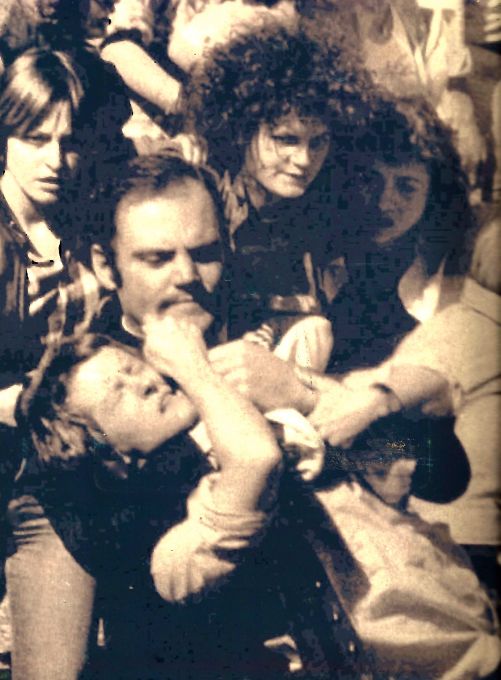
Senior Constable John Watt (Task Force) arrests woman at International Women’s Day 1978 during the Bjelke-Petersen ban on street marches.
[Plays ‘Pig City’ by The Parameters, the song that exemplifies the horror felt by many older 4ZZZ listeners and announcers about the police in Queensland during the first decades of this station’s life.]
John Jiggens: Matt Condon’s True Crime trilogy, Three Crooked Kings, Jacks and Jokers, and All Fall Down, cover the police career of Commissioner Terrence Murray Lewis. These books are best described as Brisbane noir, a chronicle of that dark period in Brisbane’s past, evoked by the song Pig City, when a group of corrupt detectives, known as the Rat Pack – whose leader were Terry Lewis, Tony Murphy and Glen Hallahan – were given control of the police by Premier Bjelke-Petersen, with an unspoken understanding that the police force would be used as a private army against Bjelke-Petersen’s political enemies. In return, Lewis and co. were given carte blanche to run organised crime in Queensland – prostitution, drugs, gambling – as well as covering-up a score of murders, including the Whiskey au Go-Go fire- bombing, in which fifteen people died.
Listen to Pig City here or listen to Matt Condon at the 17 Group here:
The trilogy has been a phenomenal best-seller in Queensland, with tens of thousands of copies sold: for many older Queenslanders, the traumatic Bjelke-Petersen/Rat Pack era represents a collective scar in their memories, a time when power was blatantly abused, and when they were lied to on an industrial scale by a complicit media. For many, Condon’s work serves as a correction for those years of cover-ups by the mainstream media, and as an antidote for the poison they spread thru their hero-worship of Commissioner Lewis and Premier Bjelke-Petersen, an idolatry that 4ZZZ never succumbed too.
JJ: We join Dan O’Neil’s Group 17 soiree in West End, as author Matt Condon explains how he was gifted the job as Terry Lewis’ biographer, and the moral dilemmas posed for him as a biographer by Terry Lewis’s seemingly permanent estrangement from the truth.
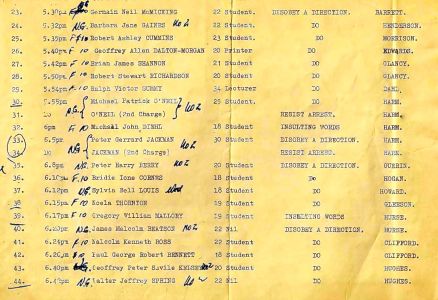
A page from the arrest list for the 1967 Civil Liberties march against Nicklin’s ban on street marches
JJ: Three crooked Kings begins with the young Terence Murray Lewis joining the police force in 1949 and follows his career as he becomes a detective, teaming up with Glen Hallahan and Tony Murphy. He graduated to become the bagman for ‘the big Fella’, Police Commissioner Frank Bischof. Under honest Commissioner Whitrod, Lewis was exiled to Cunnamulla; and Three Crooked Kings ends on the day in June 1976 when Lewis first met Premier Bjelke-Petersen at the Cunnamulla airport. What happened that day has been a subject of frequent speculation: Was a plan to remove Whitrod discussed? Was Lewis promised a promotion to Brisbane? We rejoin author Matt Condon at his West End talk.
JJ: Jacks and Jokers, the second part of Matt Condon’s history begins in 1976 after the fraudulent Terry Lewis replaces the honest Ray Whitrod as Police Commissioner. It chronicles the destruction of the honest police who were tasked under Whitrod with keeping the Rat Pack out of influence and power. Once Lewis became Commissioner, the Rat Pack’s opponents found themselves the hunted. The honest cops were destroyed relentlessly and ruthlessly. Like the corrupt everywhere, Murphy and Lewis feared the power of a good example.
JJ: By this purge of the honest, by the promotion of the corrupt, by removing those who criticised the misuse of police for a political agenda, the police force was transformed into a private army that supported Bjelke-Petersen, spying on and hounding his political opponents. Lewis’s support for Bjelke-Petersen was reciprocated by Bjelke-Petersen, who defended Lewis’s corruption. The result was a police force always on the lookout for an ‘earner’, devoted to monitoring and monstering student demonstrators, trade unionists, environmentalist, communists, aboriginals, punks, hippies, druggies, etc. These were the pigs who ruled Pig City.
JJ: The most dangerous verse of Pig City asks: Who was the bagman? Who was the Hitman? Who were the front men? Who were the big men in the national scam? The National scam refers to the National Hotel, which was the subject of a royal commission into police corruption and prostitution in 1964, headed up by Sir Harry Gibbs, after whom the Commonwealth Law Court in North Quay is named. Gibbs cleared the National Hotel, Commissioner Bischof and the Rat pack of involvement in prostitution, earning enduring fame as the only man in Brisbane who couldn’t find a prostitute at the National Hotel.
JJ: In the next grab, author Matt Condon backgrounds the causes of the National Hotel inquiry and explains how Bischof and the Rat Pack managed their escape.
JJ: So when did the Queensland police force go wrong? Matt Condon believes the basis for the Lewis years was the decade when Frank Bischoff was Police Commissioner when Lewis became Bischof’s bagman.
JJ: I’d recorded Matt Condon talking at Reading Brisbane’s dark past at Brisbane Square Library in February 2014. At that reading, Condon spoke about Frank Bischof, Queensland police commissioner from 1959 to 1969, with abhorrence and disgust. He promised that in the opening 50 pages of his second book, Jacks and Jokers, there would be revelations about Bischof that would shock us all.
JJ: The shocking revelation turned out to be that Bischof was a paedophile. Considering Bischof established the Juvenile Aid Bureau and appointed his bagman Terry Lewis as its head, this disclosure seems to have contributed to the collapse in trust between Condon and Lewis.
JJ: After six years and three large volumes, Condon vows to continue his research. He does not believe he will ever learn the truth from Lewis from the man himself, but he believes the truth is out there. He anticipates the McCulkin murder trials for the light they might shed about the Whiskey fire-bombing and the Rat Pack’s cover-up of that crime.
JJ: Despite the years spend interviewing Lewis and poring thru his archive, Condon’s portrait of Lewis remains puzzlingly unfinished because an honest portrait was not what Terry Lewis wanted. Condon’s sense of mission has changed. His desire now is to seek retribution for Commissioner Whitrod and the honest police crushed by Lewis through the Faustian bargain he made with Bjelke-Petersen in Cunnamulla forty years ago. It is, he believes, an important story for Queenslanders to know.
[Ian on Paradigm Shift 4ZZZ fm 102.1 Friday, 1 April 2016]
Four Indigenous women from South Australia and the Marshall Islands are touring four cities over four days to speak about how nuclear testing has impacted their lives, and why a treaty banning nuclear weapons is urgently needed.
Sue Coleman-Haseldine, Kokatha-Mula, and Abacca Anjain-Maddison, Republic of the Marshall Islands, spoke to over 150 governments at the Third Conference on the Humanitarian Impact of Nuclear Weapons in Vienna, December 2014. They are joining forces again to bring their personal stories to Adelaide, Melbourne, Sydney and Brisbane.
What is the speaking tour Black Mist, White Rain about?
How has your mob been affected by the tests at Maralinga, Emu Field and Montebello Island? Refer to McClelland Royal Commission into British Nuclear tests at Maralinga South Australia in 1953?
Do you have support from any unions, community groups or political parties?
Is the nuclear industry a threat to aboriginal sovereignty?
What remedy are you seeking? Has there been any compensation paid? Who to?
What is SA Premier Jay Weatherall saying about waste dumps and nuclear reactors in SA?
What was the conference in Vienna that you attended all about? What was the aim of the conference?
Can a ban on nuclear weapons be achieved through the United Nations when nuclear armed countries have a right of veto over those who oppose nuclear bombs (not asked in this interview).
The Tour Schedule: Monday April 4 in Adelaide
Tuesday April 5 in Melbourne
Wednesday April 6 in Sydney Thursday April 7 in Brisbane Metro Arts 109 Edward St, Brisbane at 6pm. More detail is available at: www.icanw.org/au/bmwr
Please contact tour organiser Gem Romuld to arrange interviews with the speakers and/or representatives of the International Campaign to Abolish Nuclear Weapons: gem / 0421 955 066.
Big Ride for Palestine In 2016 Red Spokes are again setting out on the road for Palestine solidarity. This year we want to focus on the UK arms trade with Israel. There are now no restrictions on arms exports from the UK to Israel. This growing market is seen as business as usual, just another opportunity to make money out of human suffering. – See more at: http://www.redspokes.co.uk/thebigride/#sthash.N5E5yF3X.dpuf
This slideshow requires JavaScript.
Playlist
Rafeef Ziadah – Chronologies
Rafeef Ziadah – We teach Life
Red Spokes – Big Ride for Palestine 2016
Yothu Yindi – Treaty
Kylie Sambo – Mukaty
Today, my body was a TV'd massacre that
 had to fit into sound-bites and
 word limits
                             - Rafeef Ziadah
[Paradigm Shift 25 Friday 2016 4ZZZ Fm 102.1 Fridays at Noon].
Ian spoke with Phil Monsour about the National tour of Palestinian performance poet, Rafeef Ziadiah. Rafeef is a Palestinian refugee currently based in London. She is heavily involved in the Palestinian resistance being a representative on the cultural boycott committee and involved in the International BDS campaign.
Ian on Paradigm Shift [4zzz fm 102.1 Friday 18 Mar 2016 at noon] presents two aspects of the struggle for Sovereignty and Solidarity.
Campaign against nuclear waste dump. In the wake of the Mukaty victory against a nuclear waste dump on their land, Meret and Hilliary go on a grand tour of the 6 new proposed sites put up by the federal government (it will never give up defending the nuclear industry). The government is seeking for communities to take responsibility for its failure and that of the nuclear industry. Six communities say no to the federal government. Communities will speak with government when the nuclear industry stops making more waste.
A podcast of 6 week summer 2015/16 road trip through the 6 proposed nuclear waste dump sites in Australia. Including interviews with community members across the country. covering issues of radioactive waste, community health, water, and connection to country. More information at beyondnuclearinitiative.com/ … Photo is of proposed site at Wallerberdina SA near Yappalla
‘Dominant Society Needs A Slap in the Face’: Sovereignty Solidarity & Decolonisation’ – A more philosophical discussion about the role of non-indigenous people in struggles of First Nations people. Photo byJagath Dheerasekara of Muckaty grandmother smoking whitefella baby 26 Feb 2011 during the struggle to save Mukaty from nuclear waste.
Andy: Welcome to the Paradigm Shift on 4ZZZ 102.1 where we challenge the assumptions of our current society, to resist oppression and investigate alternative ways of living for a world based on justice, solidarity and sustainability.
(Music …) Yes, welcome to the Paradigm Shift on 4ZZZ 102.1 FM. We do acknowledge the traditional owners of the land to which we are broadcasting. And today on the Paradigm Shift we are going to be talking Syria.
Click to enlarge (Syria is in the north-west of the map near Turkey)
Ian: Yes, people who have been following the news would know that a really big section of the northern hemisphere has been on tenterhooks in the last couple of weeks because there’s a very difficult conflict playing out there between a number of heavily armed states around Syria including Israel, the United States, Russia and Turkey. And last week, just on the eve of the ceasefire that was called by both the US and Russia, I had this interesting interview with David McIlwain which we will be playing today. He comes from a Syrian-Australian group that is asking for reconciliation in Syria so (it’s called) Australians for Reconciliation in Syria. David can explain that and we will have a bit of a chat about the consequences of that as we go through the hour. Andy: The consequences of course go far beyond Syria and its immediate neighbours when you consider the nations that involved in this. You already mentioned also in that region Saudi Arabia, Iran, these very powerful countries all have some stake in Syria in some ways, it’s the crux of a global conflict at the moment.
Ian: That’s right, and I think that thankfully the ceasefire has held since the interview I did on Friday morning, We are 7 days away and that’s good, for the large part anyway, that the ceasefire has held and it shows that the Syrian people are exhausted by 5 years of war. It does suggest that Russia at least is looking for political settlement and the question is whether the other players will come to the party and stop all the warmongering in that area. Andy: So let’s have a listen to David McIlwain and what he has to say.
Ian: Could you please introduce yourself.
David: Yes, my name’s David McIlwain. I am a resident of Victoria and I became involved with some local Syrian community near the beginning of the Syrian war in 2011, and then became involved with a movement called (AMRIS) Australians for Reconciliation in Syria which has been set up by Syrians to encourage reconciliation between people and the taking up of amnesties – that’s the basis of it.
Ian: What sort of work does Australians for Reconciliation in Syria do?
David: Well, in Australia we make submissions to the government, we act locally by attending meetings. (We don’t …) There’s not very many of us, we have support from the Syrian community, but there’s also the organisation Hands Off Syria which is based in Sydney, which does take part in protest rallies at times. But we are really in connection with the movement in Syria which is about this reconciliation and trying to heal communities that have been split by sectarian divisions. And also, back in September when Australia decided to extend its commitment into Syria we put out a press release stating the position on what we believe is the Syrian reality and what Australia should be doing.
Ian: When did Australia first become involved in the humanitarian disaster that the Syrian war has become?
David: Well, if you are cynical, you could say that Australia was involved in creating the humanitarian disaster by supporting these exiled opposition groups and supporting the US and other allies who basically created this war on Syria in pursuit of their own interests, so it’s deteriorated into the terrible situation it is now because of the ongoing support of the West, and Australia is still involved in the same way.
Ian: Why did Australia commit to support and arm those opposition groups?
David: Well we couldn’t say that Australia directly supported and armed them. That’s been really the role of America, the CIA, Turkey, Saudi Arabia, Qatar. But Australia has contributed politically quite significantly by supporting the so-called Friends of Syria, which is a group of all the people who aren’t actually friends of Syria, who are friends with Muslim Brotherhood, with other exiled Syrian people, and Gulf states who have a desire for a regime change in Syria basically.
Ian: When Australia decided to increase its commitment how much public debate was there and where did that occur? In the parliament? In the media?
David: There was practically none really. What happened initially back in September 2014 under Tony Abbot, when the US went in there (IRAQ) notionally with the pretext of saving the Yazidis (in Iraq), a minority who were being threatened by Islamic State, that was their pretext, and we followed quite shortly with Tony Abbot’s talk about “the Death Cult” and the threat to the world, and it wasn’t until a year later in fact that we extended our commitment into some airstrikes into Syria.
Ian: Oh, so Australian warplanes actually began bombing Syrian towns?
David: Not Syrian towns, well bombing… The pretext on which Australia went into Syria was quite different from the US one which isn’t widely appreciated. Australia operated at the bequest of the government of Baghdad, and our pretext was that we were protecting Iraqis from cross-border attacks launched by Islamic State from Syria, and that we had therefore the right to go across this desert border and target Islamic State militants in Syria. Whereas the US operates really independently of Baghdad in accord with the Kurdistan Regional Government in Erbil in the north of Iraq, and (not really …) it’s a strange division really because Baghdad is not really very supportive of the US actions. So our actions are quite separate.
Ian: Who was supposed to be making cross-border attacks from Syria into Iraq?
David: Well, Islamic State in fact did have a convoy of vehicles that came from presumably around Raqqa in Syria across the border and into Ramadi, and took over Ramadi, which has only quite recently been taken back from them. This was quite controversial in fact because this convoy went across hundreds of kilometres of open desert in full view of satellite monitoring and with no interference from US forces. And the same thing applied to movements of Islamic State into the Syrian ancient city of Palmyra This has been pointed out why did the US not strike these convoys of IS vehicles and this is one of the paradoxes, if you like.
(Music …) Part 2
Andy: On 4ZZZ community radio that track there was Spindles out of Sydney with Revolution a new song from her. And we have been talking Syria with David McIlwain from the Australian-Syrian reconciliation group.
Ian: Yes, Australians for Reconciliation in Syria, and they have linked up with a number of other groups both in Australia and in Syria as well. In the next part we talk about the connection between the debacle that was the Iraq War and the regime change that was effected there against Saddam Hussein in 2003 by the Coalition of the Willing. But a different story came this time where there was an attempt by the United States and its allies including Australia trying to effect regime change in Syria against the Assad government and they failed and it looks like they are just going to have to get used to the fact that Assad is not going.
Ian: How many Australian personnel are involved in Syria?
David: Well, there’s about 800 (Australians) involved in the specifically Iraqi Syrian deployment. There are 6 Super-Hornet fighter aircraft and a couple of support aircraft which engage in bombing runs into Iraq and Syria. So the two things cannot really be separated because it operates really under the control of Baghdad and supposedly with this pretext of protecting Iraqi people from Islamic State. And there’s about 300 ground troops near Baghdad who are training Iraqi soldiers to fight Islamic State in Iraq on the ground. But in fact to my mind, and other Syrians I would say, the object of the deployment to Iraq was always about Syria. It’s the war in Syria which is the focus of Western attention and the reason that the US went back into Iraq. It’s not really about Iraq which itself is a terrible mess. It’s hard to explain the intricacies of the power relationships there.
Ian: So what you’re saying is that rather than attacking Islamic State the Australian government on the request of Baghdad began operations against the Assad government. Is that what you’re saying?
David: No, no, no, no, I’m not saying that. I’m saying that the operations that the Australian air force has done has been against Islamic State targets, small vehicles or militant groups, and never far from Iraq, only in that north-east area of Syria which is mainly controlled by Islamic State, and it’s mostly desert. No, Australia’s military involvement definitely is not in any way involved, as far as I know, in the west of Syria where most of the people live, and where all the other terrorist groups operate along with Islamic State, where the Russian army and Syrian army are currently fighting them. So Australia’s involvement in Syria is really political and you’d have to say, through propaganda.
Ian: So is it a continuation of the debacle that was Australia’s commitment to the Iraq War?
David: Well it is in a sense. The Iraq War is seen as a debacle and also widely seen as being something launched on a false pretext of weapons of mass destruction, and perhaps in recognition that they couldn’t pull that one across us again; that the pretext for going into Syria has been about humanitarian intervention. You know, we have to go in there because there’s massacres and any number of things have been staged or contrived by opposition forces: claims of massacres by the Syrian government, including the chemical weapons attack which was a classic false flag operation designed to frame Syria as a pretext for military intervention. And I think now including Islamic State, which … um, US military figures have come out, and other information has come out showing Islamic State is being supported by the US like they supported al-Qaeda in Afghanistan against the Soviets. So the resolution to fight Islamic State is really a pretext to go in there and then target the Assad government, and as it happened now they have to target Russia as well which has complicated things no end.
Ian: Is it true to say that out of the Arab Spring a number of oppositional movements began and government regimes in the region began to topple? I’m talking here about Mubarak in Egypt, Gaddafi in Libya, and other places as well – in Tunis. So NATO, the US and Australia supported regime change but for some reason the desired regime change in Syria didn’t occur. So the wishes of the West were not realised. And now the US and Russia have called a ceasefire to commence later today. Does that mean that the US and Australia have given up on their objective of regime change in Syria.
David: Well you might think that they would have done by now! Because as you say the regime change operation in Syria has failed, and the main reason it has failed is because the Syrian people want their president. They re-elected him in 2014 by a huge majority and the UN certified it a free and fair election even, but we don’t accept that here. Australia doesn’t accept that the Assad government is legitimate. And the arguments that have gone with this Geneva talk and with Russia – Russia will not budge from its position that it’s up to Syrians to decide who their government will be, and Syrians have already chosen Assad, and given the chance they would choose him again. And Assad is only the president and he leads the Syrian army which is universally supported by Syrians in Syria. And it’s the Syrian army that is protecting them against these foreign mercenaries and terrorists who have done so much damage and killed so many Syrian soldiers. 60-70 thousand Syrian soldiers have died as the result of attacks by various terrorist groups. So the West should accept that their project of supporting these groups by one way or another, covertly through the Gulf states, has failed. They have come to this agreement with Russia a couple of days ago about the ceasefire, but already John Kerry has got up on television and said that if the ceasefire fails then we’ll go for Plan B which means that Assad will have to go. Well, Assad is not going. The Russians have got to the point where they can’t communicate sensibly with the West any longer because the West is persistent in its desire to get rid of Assad and replace him with chaos really. They’re not offering anything except that they want Syria, they want to split Hizballah and Lebanon from Iran, they want influence and control, they want a gas pipeline for Qatar to run through Syria, they want safety for Israel, all these other reasons, but Russia is standing in the way and will continue to. So the terms of the ceasefire, and the Geneva agreement which they have signed up to, say this: that the Syrian people have to decide. Syrians are getting very tired of this and look to Russia to save them. So we hope that maybe, maybe, this ceasefire will succeed if the West will keep to the terms of it. I take it Turkey hasn’t abandoned its plans, it is currently in Syria supporting Al-Nusra Front but also supporting ISIS/Islamic State which it has been supporting by taking thousands of truckloads of oil a day out through Turkey, selling them and providing the arms back to ISIS over the border, And Turkey is a bit of a wild card, Turkey is not agreeing with the ceasefire and hasn’t even been really mentioned!
(Music …) Part 3
Andy: On the Paradigm Shift on 4ZZZ. It’s just after half past 12. That song was Borders by MIA. And we have been talking about the conflict in Syria and the possibilities of ceasefire, of peace in Syria. We are talking with David McIlwain from Australians for Reconciliation in Syria. Shall we just go to Part 3? Yeah!
Andy: On the Paradigm Shift on 4ZZZ. It’s just after half past 12. That song was Borders by MIA. And we have been talking about the conflict in Syria and the possibilities of ceasefire, of peace in Syria. We are talking with David McIlwain from Australians for Reconciliation in Syria. Shall we just go to Part 3? Ian: Yeah!
Ian: Can you describe the connection between Australia and what is happening in Yemen? How is it connected to our operations in Iraq and the current engagement in Syria?
David: Yes, well the connection is not an official connection. But what has happened when Australia pulled out of Iraq in 2009 was that we moved our base to the UAE to a base called al-Minad south of Dubai under a status forces agreement with the Emirates, which means that our troops can’t be prosecuted in the event of some dispute, as an agreement that we also have with Baghdad, which is why we operate from Baghdad. And the Major General Mike Hindmarsh, who was head of the contingent in Iraq at the time of the move, became associated with the UAE’s own Presidential Guard, and became a leader of a group. And apparently during this engagement in Yemen of the Saudi Arabian coalition, of which UAE is a big part, Mike Hindmarsh was in Yemen assisting UAE forces against the Houthi rebel uprising in Yemen.
Ian: So what you’re saying is that at the end of the engagement in Iraq Australia left Baghdad but remained in the region under the auspices of the Emirates of Dubai.
David: Well, yes, it was based on their territory under this agreement, so it’s not a form of cooperation with the Emirates, but nevertheless it is because of the way that this happened. And this Mike Hindmarsh is no longer an Australian employee, he’s working as a private soldier for the Emirates. But the involvement of the Emirates with Saudi Arabia in Yemen but also in Syria is most significant because Saudi Arabia is the chief backer of numbers of terrorist groups fighting the Syrian army and being targeted by Russia at the moment, and the supporter of the Syrian opposition groups in Geneva. So this link I see puts Australia very much on the side of Saudi Arabia and the opposition against Syria.
Ian: So the opposition groups in Syria they have a formal representation at the UN in Geneva, is that right?
David: Yes, well, Saudi Arabia hosted numbers of representatives of the exiled opposition but also representatives of what Syria refers to as terrorist groups in Syria such as Jaish al-Islam, Islamic Army, and other groups as well like al-Nusra Front, Ahrar ash-Sham, which are loosely classified really by the UN as terrorist groups, but Saudi Arabia is persisting in saying that they are not and sending their representatives to Geneva. So there’s a bit of a disjunction between these two sides there. Saudi Arabia has played a very central role in supporting the rebels in Syria in conjunction with Turkey.
Ian: So the Coalition of the Willing, of which Australia was a part, they managed to effect regime change in Iraq, they got rid of Saddam Hussein. There was a change of government I believe, that Saudi Arabia managed to put in a puppet government in Yemen, but now the deposed government of Yemen and the Houthis are fighting back and being successful in their opposition to the Saudi troops.
David: Yes, that’s the essence of it. That the government of Abd-Rabbu Mansur-Hadi, that the Saudis support and which they say is the internationally recognised government, is not recognised by very many Yemenis. And the Saudis launched this attack on Yemen on the basis it was against these Houthi rebels who are backed by Iran, but in fact they are just a part of the whole resistance forces. Most Yemenis don’t support Saudi Arabia, they don’t want to be Saudi Arabia’s country, they want independence. And there’s a government called Ansarullah of which the Houthis are a part. And so the Houthis probably with popular support are having successes against Saudi coalition troops who don’t have many actual forces fighting on the ground.
Ian: But they have been bombing the capital of Yemen, Sana’a. They have been bombing it, is that right?
David: Well, they have, yes. They’ve bombed all over the country, and bombing indiscriminately, and hitting wedding parties and schools, hospitals, houses; maybe sometimes hitting Houthi militia forces, but most of the deaths have been civilians and with huge injuries. As well, along with the bombing there has been a blockade which is the cause of the humanitarian crisis which we periodically hear about – you know, Saudi enforced blockade! Saudi enforced, but also with the assistance of France and other Western nations. And all this has been happening with the full cooperation of UK and US, both supplying arms, providing drone reconnaissance, airstrikes, and selling arms too. In fact the EU has just passed a motion against the selling of arms to Saudi Arabia today, which Saudi Arabia is protesting about, because of what’s been happening in Yemen.
(Music …)
Part 4
Ian: Is there anything you would like to add, and particularly are there any ways in which our listeners can find out about what is happening and what the activities of Australians for Reconciliation in Syria are?
David: Well, Australians for Reconciliation in Syria has a website which has got a lot of reports from over the past 4 years and some new ones. I would advise Australians to start listening to what mostly Russian media is saying. RT Russia Today, which actually broadcasts on SBS at 0300 o’clock in the morning every Tuesday morning, gives you an hour of news which gives an entirely different perspective, They have got reporters on the ground in Syria who are with the Syrian Army. And Russian media generally. Personally I write for a site called Russian Insider which is publishing a lot of articles with an alternative viewpoint. But the problem for Australians is that the reality is just so far from what we have been told for the last 4 years that even with friends I know they can’t accept it. So it’s very exasperating trying to put the right information out there into people’s minds.
Ian: Well thank you very much David. We will hope to, on this radio station at least, try to cover the areas that you have alerted us to and try to interview other people who are involved and on the ground, particularly so we can look at the human rights of Syrian people and see what can be done by just ordinary Australians, since there is no debate in the parliament or in the media about it, maybe we can start up a debate elsewhere.
David: Thank you so much for letting me express my opinions and share the views of what I believe are those of most Syrians on the matter.
Discussion
At the close of the show Andy and Ian discussed the situation. At one point religious came up and this was Ian’s off-the-cuff response:
“… Bringing in religion, Saudi Arabia is really a Caliphate where there has been a reconciliation between the Wahabis and the actual military, the state. And that reconciliation goes back 300 years. The United States says that it opposes Islamic State who want to set up a Caliphate in Iraq and Syria, but they support a Caliphate in Saudi Arabia effectively which has got all of those fundamentalist beliefs behind it.
And so there can’t be any solution by on the one hand supporting this Caliphate and on the other hand saying this other Caliphate is reprehensible and they behead people. You’ve got to think about why does this Islamic State exist? I don’t know whether people know for sure, but it seems to me that ordinary people do get drawn to those ideologies if they are poor, if they have no future and they have nowhere to look, and there’s no-one proposing a more meaningful human existence. And it seems to me that a lot of the people that start supporting the more extreme groups are the people who have come out of very poor backgrounds and have very little education.
And that’s where the solution has got to come. It’s got to be more equality for people and not to be just led by a sophisticate who is bourgeois like Assad (is). It’s got to come from the people, and there’s not a lot of that happening.
In Lebanon there was civil war for 30 years (actually it was from 1975 to 1990). There was invasion by Israel into southern Lebanon. The people became totally exhausted by that war. They were invaded by Syria as well, by the way. A group developed the military discipline to drive Israel out and to prevent any further incursions into their borders, that group was Hezbollah [Israel were pushed out from Lebanon on May 24, 2000]. And they (the Lebanese people) had 5 years of peace. And the economy started to get going again. Then you’ve got the CIA, all these people want to interfere, start manipulating right there on the border (of Lebanon & Syria), and so on.”
Two things are infinite:
the universe and human stupidity;
and I’m not sure about the universe!
- Albert Einstein
[Paradigm Shift on 4zzz fm 102.1 Friday 19 Feb 2016]
There are nine countries with nuclear weapons: USA, China, Russia, France, India, Pakistan, Israel, North Korea, and the UK.
Andy and Ian discuss the movement to ban nuclear weapons. They play a 3CR Melbourne show about “The New Movement to Ban Nuclear Weapons”.
This is a crucial time in world affairs because of threats by Turkey and Saudi Arabia to escalate the war in Syria. Three states neighbouring Syria have access to nuclear weapons: Turkey, Russia and Israel not to mention nuclear states United States, Britain and France who have provided rebel groups with weapons to overthrow the Assad government in Syria.
 Andy and Ian talk about May Day and the future of Unions.
 [Paradigm Shift 4zzz fm 102.1 broadcast on friday 22 Apr 2016]


 Decolonise our land, not your mind
-Anon
Decolonise our land, not your mind
                             -Anon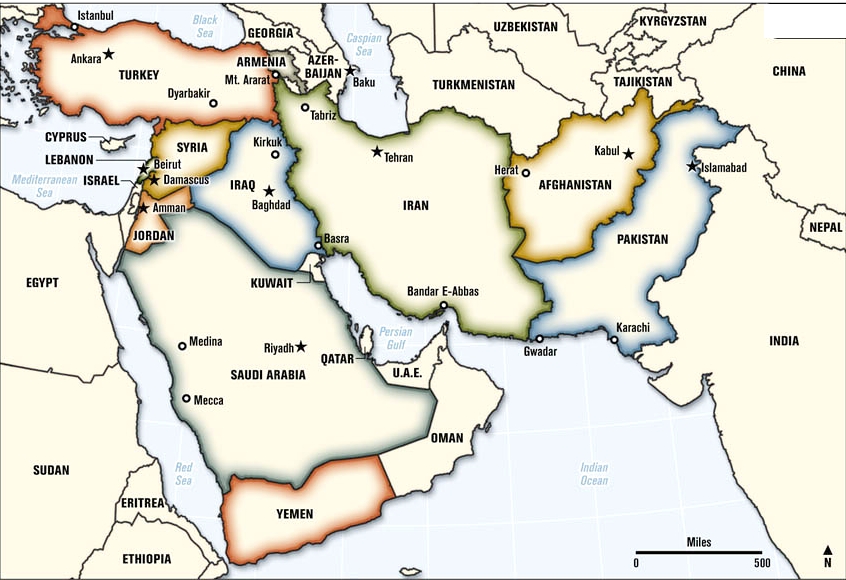
 4PR - Voice of the People